How to Buy Collectible Design: Where to Look, What to Ask and What It Really Costs
Last updated: 7 November 2026
Researched and drafted with AI assistance from published sources; edited and published by NorwegianSpark SA. Editorial policy
The short answer: to buy collectible design, buy from a specialist design gallery, a design fair or an auction house's design department, and do not pay until you have the piece's attribution, date, edition details, provenance and a condition report in writing. Then add the costs that are not on the price tag: the buyer's premium at auction, shipping, insurance and any import tax. Collectible design is furniture, lighting and objects bought as works by a known designer, with the documentation that makes them resaleable. A chair bought only because it looks good in the room is decor, which is a perfectly good purchase but a different one.
Search for "how to buy collectible design" and you mostly find fair listings and gallery adverts. This guide is the step before that: what the term means, where these pieces are sold, what to ask before you buy, and how to avoid paying a collector's price for something that is not collectable.
What "collectible design" means
There is no legal definition. The term is used by the people who sell it to describe furniture, lighting and objects that are bought for their designer and their place in design history, not only for their use.
Design Miami, founded in 2005 by the collector and developer Craig Robins, calls itself "the definitive global platform for collectible design" and describes its standard as "museum-quality 20th and 21st century furniture, lighting, and objets d'art". The gallery Carpenters describes itself as a gallery for "functional art and collectable design". Both descriptions point to the same idea: these are objects you can use, bought the way you would buy art.
In practice, what is sold under the name falls into three groups:
| Type | What it is | What makes it collectable | Main risk |
|---|---|---|---|
| Historic pieces | Furniture and lighting made in a designer's lifetime, or by the original maker, often decades ago | Original production, documented maker and date, condition | Misattribution, later copies, heavy restoration |
| Contemporary editions and unique works | New pieces made by a living designer in a limited edition, or as one-offs, usually sold through galleries | The designer's reputation, the edition size, the gallery's documentation | Paying gallery prices for an edition that turns out to be large |
| Licensed reissues | New production of a classic design under licence | Usually the design, not the object; bought to use | Paying a premium as if it were a historic original |
None of these is wrong to buy. The mistake is paying for one while being sold another.
Where collectible design is sold
Design fairs. Fairs put many specialist galleries in one place, which makes them the fastest way to see what is available and what it costs. Design Miami's flagship fairs take place in Miami Beach each December and in Paris each October; the Miami fair runs from 1 to 6 December 2026. PAD, whose site describes its events as premier art fairs held in Paris and London, lists PAD London for 13 to 18 October 2026, PAD Paris for 31 March to 4 April 2027 and PAD Saint-Tropez for 1 to 5 July 2027. Dates come from the fairs' own sites, read on 7 November 2026; confirm them before you travel.
Specialist galleries. Galleries represent designers or deal in historic pieces, and they are where most contemporary editions are first sold. Friedman Benda, for example, says it represents prominent designers and artists, as well as historically significant estates, and has done so since 2007. A good gallery will tell you exactly what an object is, how many were made and where it has been.
Auction houses. The large houses run dedicated design sales. Phillips describes its design department's range as running "from Art Deco and European Modernism to Contemporary Design and Studio Ceramics". Auctions are where historic pieces most often change hands and where prices are public afterwards, which makes past results a useful check on any price you are quoted elsewhere.
Before you buy: what to ask for in writing
Whatever the source, ask for these details and keep them with the invoice. They are what a future buyer, insurer or auction house will want to see.
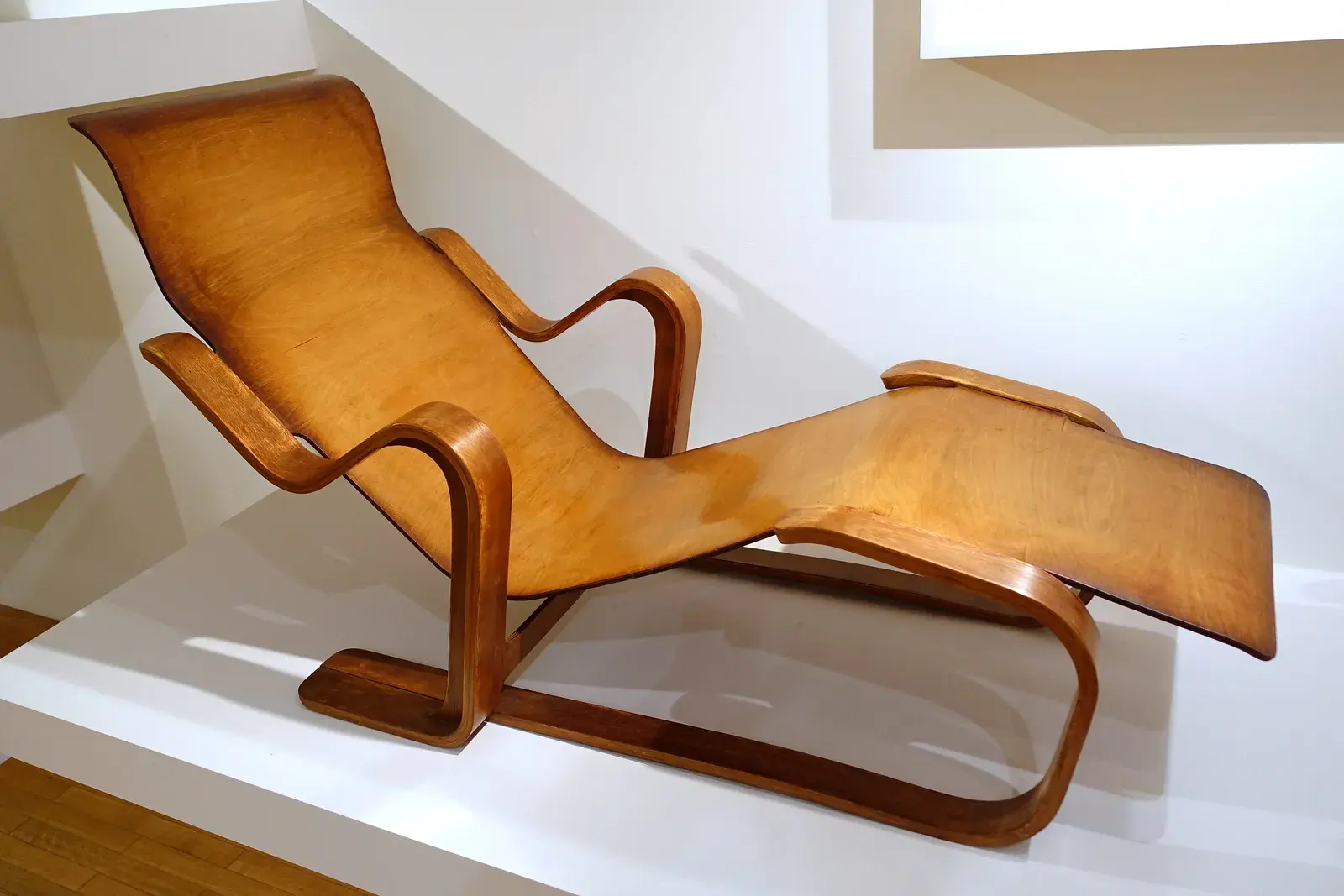
- Attribution. Who designed it, and who made it. For historic design those can be different people or firms: the photograph at the top of this page shows a reclining chair designed by Marcel Breuer in 1935 and made by the Isokon Furniture Company in London.
- Date of production. When this particular object was made, not only when the design first appeared. A design from the 1930s made in the 1990s is a different object, and usually a different price.
- Edition details. For contemporary work: is it unique, a prototype, or one of an edition? If it is an edition, how many are there in total, including any proofs or prototypes, and is the number marked on the piece?
- Provenance. Where it has been: previous owners, the gallery that first sold it, exhibitions and publications. Gaps are normal for older furniture; an invented history is not.
- Condition. A written condition report covering repairs, replaced parts, refinishing and reupholstery. Many historic pieces have been restored; what matters is that you know how much.
- Marks and labels. Maker's labels, stamps or signatures, and photographs of them.
- The documents. Any certificate of authenticity, together with who issued it. A certificate is only as good as the person or gallery behind it.
If a seller cannot or will not answer these questions, treat the piece as decor and pay accordingly.
The words that change the price
Catalogues and dealers use careful wording, and it matters.
- "By" or a plain attribution means the seller is confident about who designed and made it.
- "Attributed to" means the seller believes it but is not certain.
- "In the style of" or "after" means it was not made by that designer or their maker. It is a homage or a copy.
- "Model designed in [year]" tells you when the design appeared, not when this example was made. Look for the production date separately.
At auction, the descriptions and the conditions of sale explain exactly what each term commits the house to. Read them before you bid.
The costs that are not on the label
- Buyer's premium. At auction you pay the hammer price plus a buyer's premium, a percentage set by each house and often charged in bands. Phillips publishes its rates by location on its website; read the current schedule for the saleroom you are buying from before you set your maximum bid.
- Shipping and crating. Furniture is large, heavy and easy to damage. Get a quote from a specialist fine-art shipper before you commit, especially across borders.
- Import tax and duties. Buying from another country can add import VAT or duties on arrival. Check your own country's rules for furniture and antiques.
- Insurance. Add the piece to your home insurance at its replacement value, with photographs and the documents above.
Collecting or decorating: be honest about which
Some buyers want a piece that will hold its value and could one day be sold; others want something beautiful for a room. Both are good reasons to buy design. Problems start when a decorative object is priced as a collectable, or when someone spends a collector's budget and ends up with an object that has no documentation behind it.
If you are furnishing a room, buy what you will enjoy and stop there. Our Art & Decor page makes the same distinction and links to the one decor partner we work with, a studio that sells finished sculptural pieces without edition numbers or certificates, which is exactly what you should expect from decor. If you are collecting, do the research above, buy fewer and better pieces, and do not buy anything as an investment: design prices can fall as well as rise, and nothing here is a prediction of future value.
How to start
- Look before you buy. Visit a fair or two and the design galleries of a museum, and look through recent auction results for designers you like.
- Pick a lane. A period, a material, a country or a designer. A focused collection is easier to research and usually easier to sell.
- Start with something you will use. A chair, a lamp or a small object teaches you about condition, shipping and documentation at a lower cost.
- Build the file from day one. Invoice, photographs, condition report, certificates and correspondence, kept together.
For the art side of the same habit, see how to start collecting art and Sotheby's vs Christie's explained. If you would rather have a piece made for you, read commissioning bespoke furniture, and for the background to much of the 20th-century furniture on the market, a short history of Scandinavian design.
Frequently asked questions
What is collectible design?
There is no legal definition. Sellers use it for furniture, lighting and objects bought for their designer and place in design history, not only for their use. Design Miami describes its standard as "museum-quality 20th and 21st century furniture, lighting, and objets d'art".
Where can you buy collectible design?
At design fairs such as Design Miami (Miami Beach each December, Paris each October) and PAD (London and Paris), at specialist design galleries, and in the design sales of auction houses such as Phillips.
What documents should come with a collectible design piece?
The attribution (designer and maker), the production date, edition details for contemporary work, provenance, a written condition report, photographs of any marks or labels, and any certificate of authenticity together with who issued it.
Is collectible design a good investment?
Treat it as a purchase, not an investment. Prices can fall as well as rise, resale costs (premiums, shipping) are high, and the value depends heavily on documentation and condition. Buy pieces you want to live with.
What does "attributed to" mean in a design catalogue?
It means the seller believes the piece is by that designer or maker but is not certain. "In the style of" or "after" means it is not by them.
We earn a commission from some links on this site; it can influence which providers we feature. We have no commercial relationship with Design Miami, PAD, Phillips, Carpenters or Friedman Benda. Fair dates and descriptions are from designmiami.com, padesignart.com, phillips.com, carpenters.art and friedmanbenda.com, read on 7 November 2026. Photo: Isokon reclining chair, designed by Marcel Breuer, 1935, Museum für Angewandte Kunst Köln, by Daderot (CC0, via Wikimedia Commons).
Sources
Continue Reading



Continue in this collection



Found this useful? Explore more in the Journal.
BACK TO JOURNAL