How to Start Collecting Art Without Embarrassing Yourself at Frieze
Last updated: 16 October 2026
Researched and drafted with AI assistance; reviewed, fact-checked and approved by Thomas Lovas Lokoy. Editorial policy
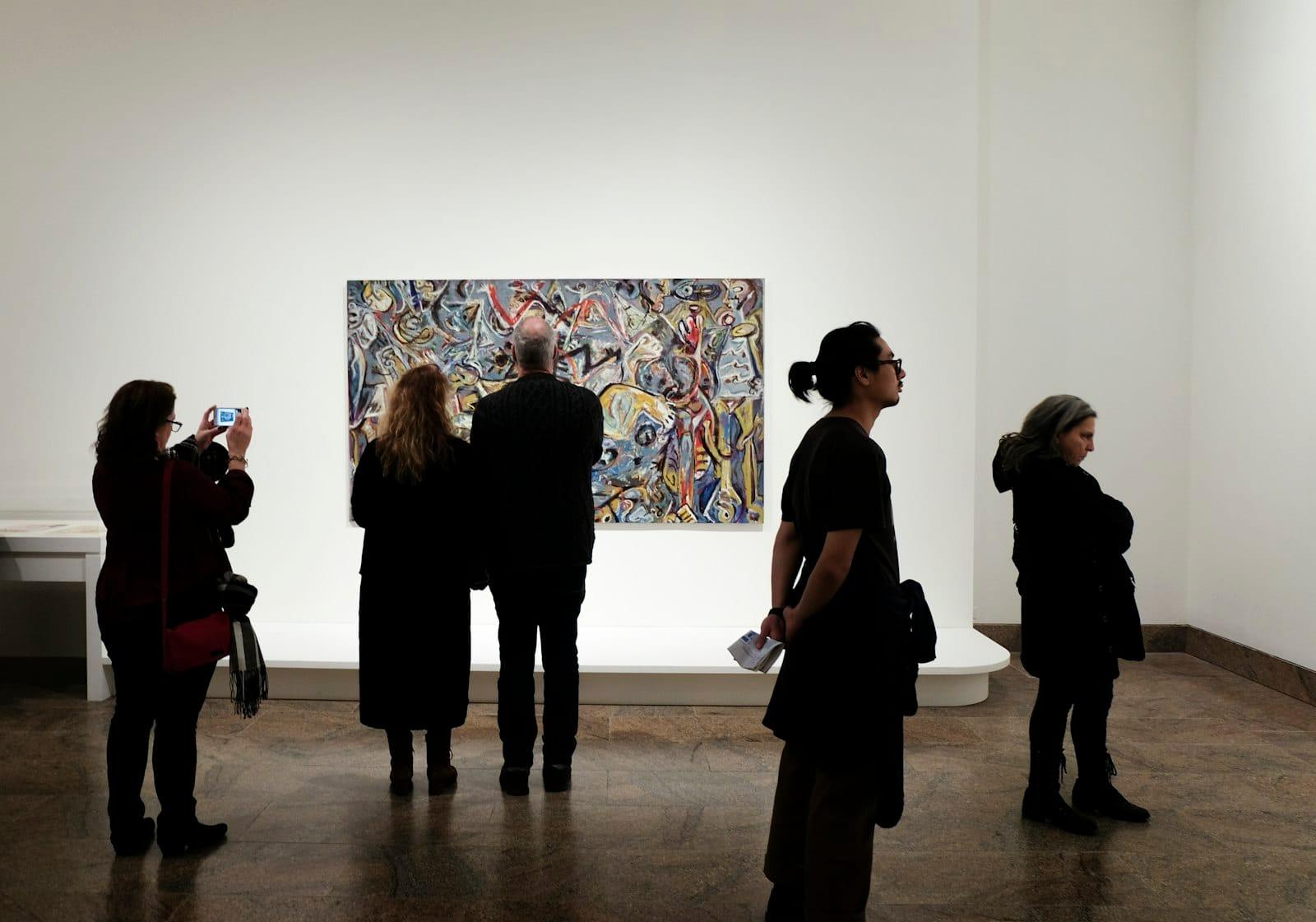
A primer for the aspiring patron who knows their Basel from their Braque but prefers not to be mistaken for a middle-manager from a mid-market private equity firm.
The short answer: to start collecting art, spend a few months looking before you buy — galleries, museums, fairs — until you know what you respond to. Then start small with limited editions from reputable publishers or galleries that state the edition size in writing, move to unique works once your eye is trained, budget for the costs beyond the price, and buy what you want to live with rather than what you hope will rise in value. An advisor is worth paying for once the sums get serious.
The Perils of the Tent
There is a specific brand of vertigo that strikes one somewhere between the VIP entrance of Frieze London in Regent’s Park and the first glass of Ruinart. It is the realization that, despite owning three homes and a modest fleet of carbon-fibre toys, you are currently the least important person in a very expensive room.
The art market is the world’s last unregulated frontier, a place where social capital, historical provenance, and sheer, unadulterated gall perform a delicate three-way dance. For the uninitiated—the individual who has decided that their drawing-room walls in Östermalm or Mayfair are looking a trifle pedestrian—the entry into this world is fraught. One does not simply "buy art." One "acquires" it. Or, more accurately, one "builds a dialogue with a collection."
The goal here is to avoid the "Nouveau Gaffe": buying a massive, shimmering canvas that looks like it belongs in a high-end Dubai hotel lobby, or worse, asking a gallery director for the price within the first ten seconds of an introduction. Price, in the upper echelons of the primary market, is treated like a vulgar relative: everyone knows it’s there, but it is considered poor form to mention it until the wine has been poured and the intentions are clear.
This guide is for those who wish to navigate the season with their dignity intact. The market has cooled since the post-pandemic frenzy of 2021, which is good news for you. It means the "flippers"—those tiresome people who buy a Genieve Figgis one week only to let it go at Sotheby’s the next—have largely retreated. What remains is a market for the serious, the patient, and those who realise that a collection should reflect a personality, not a spreadsheet.
The Chronology of Taste: From the Salon to the White Cube
To understand why you are about to pay £150,000 for a sculpture that looks remarkably like a discarded radiator, one must understand how we got here. The art market wasn't always a high-speed chase through an Alpine tax haven.
In the 18th and 19th centuries, collecting was an exercise in pedigree. You bought what the Academy told you was good. The Paris Salon was the ultimate arbiter, and if you weren't buying classical landscapes or hagiographic portraits of the aristocracy, you weren't a collector; you were a radical. Then came the Impressionists—those glorious, blurry rebels—and the birth of the dealer-critic system. Men like Paul Durand-Ruel didn’t just sell paintings; they manufactured value by convincing the public that "new" was synonymous with "better."
Fast forward to the 1960s and 70s, the era of Leo Castelli in New York. This was the moment the dealer became a star. Castelli didn’t just sell Jasper Johns and Robert Rauschenberg; he curated a lifestyle. The market shifted from the dusty backrooms of Bond Street to the cavernous lofts of SoHo.
By the time the 1980s arrived, the art world had discovered the adrenaline of the auction house. This was the era of the "Japanese Bubble," where Van Gogh’s Sunflowers sold for $39.9 million in 1987—a price that seemed astronomical at the time but now looks like a bargain-basement clearance figure compared to the $450 million paid for the Salvator Mundi in 2017.
Today, we live in the era of the "Mega-Gallery." We are talking about the "Big Four": Gagosian, Hauser & Wirth, David Zwirner, and Pace. These are not merely shops; they are multinational corporations with footprints in Hong Kong, Seoul, Paris, and St. Moritz. To start a collection today is to engage with this global machine. It is a world where a blue-chip artist like George Condo or Rashid Johnson is managed with the same precision as a Fortune 500 CEO's public image.
Deciphering the Hierarchy: Who is Who and Why it Matters
Before you set foot in the tent, you must understand the cast of characters. The art world is a feudal system, and you are currently a wanderer at the gate.
The Gallery Director: Do not mistake them for sales staff. A director at a gallery like Esther Schipper or White Cube is more akin to a diplomat. Their job is to protect their artists from people who have "more money than sense." They are looking for "good homes" for their works. A "good home" means a collector who will hold the piece for decades, lend it to museums, and perhaps eventually donate it to the Louisiana in Denmark or the Moderna Museet in Stockholm. If they suspect you are a "flipper," you will be blacklisted faster than you can say "crypto-royalty."
The Art Advisor: This is the person you hire to keep you from buying rubbish. A good independent advisor has the "access" you lack. They can get you into the "VIP Preview" (the 11:00 AM slot, not the 2:00 PM slot for the riff-raff). They do the due diligence—ensuring the provenance is clean and the price hasn't been arbitrarily hiked. They charge a fee or a percentage of the purchase — agree which, and how much, in writing before they start — but they save you from the embarrassment of buying a "B-grade" work by an "A-list" artist.
The Artist: Increasingly rare to see in the wild at fairs. If you do spot a major artist, do not ask them what their work "means." It is a tedious question that results in a glazed expression. Simply nod and mention how much you enjoyed their last institutional show—perhaps the one at the Serpentine or the Palais de Tokyo.
The Strategy: Building the Foundation
How does one start? Not by buying the first thing that catches your eye at Frieze Masters. You begin with a period of "visual starvation."
For six months, buy nothing. Visit the galleries in Mayfair (Thaddaeus Ropac for the heavy-hitters, Sadie Coles HQ for the edgy) and the Marais. Go to the Venice Biennale—not just for the parties at the Bauer, but to actually walk through the Giardini. See what resonates. Are you drawn to the "New Leipzig School" (think Neo Rauch’s brooding, surrealist narratives)? Or are you more inclined toward the "Post-Internet" aesthetic of someone like Katja Novitskova?
Once you have established a "gut" feeling, start small. Look at "Editions." A limited-edition print by an established artist, sourced from a reputable print publisher or gallery, is a sensible entry point. It lets you own serious work for a fraction of the price of a unique painting, without the terrifying commitment of a primary-market canvas. Buy editions from the publisher or from a gallery that will state the edition size and your number in writing — that documentation is most of what you are paying for, and a retailer that omits it is not selling you the same thing at a discount.
When you are ready for a unique work, look at the "Secondary Market." This is where art that has already been owned is resold. Auction houses like Phillips (often more agile with contemporary works than Christie’s or Sotheby’s) are excellent barometers of value. Study the "hammer prices" — the winning bid before the "buyer’s premium", which the auction house adds on top and which can add a stinging share to your bill; check each house's current schedule before you bid. If a young artist’s auction prices are consistently three times their gallery prices, you are looking at a bubble. Step away.
The Fair Protocol: How to Behave in the Tent
Frieze London and Frieze Masters, held each October in Regent’s Park, represent the apex of the social and commercial calendar. If you are there to buy, you must move with purpose.
The most important work is often sold before the fair even opens. Galleries send out "PDF previews" to their top clients weeks in advance. If you see a "red dot" or are told a work is "reserved," it was likely sold while you were still deciding which Patek Philippe to wear that morning.
However, do not be discouraged. Use the fair to build relationships. Approach a booth—let’s say, Gladstone Gallery—and focus on a specific artist. Ask about their "practice." This is the magic word. It implies you care about the intellectual rigour behind the work, not just the colours.
“I’ve been following Anicka Yi’s exploration of olfactory senses for a while; how does this new series expand on her previous installation at the Tate Modern?”
This sentence marks you as someone worth talking to. You will likely be invited to the back room—the "sacred inner sanctum"—where the better champagne and the more "difficult" works are hidden.
A note on logistics: if you do buy, remember that the price you see is just the beginning. There is the "VAT" (which can be reclaimed if the work is leaving the country, but is a headache nonetheless), insurance from a specialist fine-art insurer, and shipping. Specialized shippers like Momart or Hasenkamp do not just move boxes; they treat your new acquisition like a transplant organ. Do not skimp on this. Having your new $80,000 sculpture arrive with a crack because you used a standard courier is a rite of passage you should strive to avoid.
The Ethics of the Hunt: Why We Collect
Ultimately, why do we do this? There are easier ways to make money. If returns are the point, buy an index fund and go skiing in Åre.
Collecting art is about "cultural participation." It is a way of ensuring that you are not just a passive observer of your time, but a patron of it. There is a profound, quiet thrill in sitting in your study and looking at a work by an artist like Wolfgang Tillmans or Olafur Eliasson—knowing that you are a small part of that artist’s journey.
It is also, let’s be honest, about the community. The "Art World" is a nomadic tribe that migrates from London in October to Miami in December, then to Hong Kong in March and Basel in June. It is a world of private dinners in 17th-century palazzos and "after-hours" tours of the Prada Foundation in Milan. It is intoxicating, pretentious, often absurd, and occasionally genuinely moving.
Just remember: a collection is a portrait of the collector. If you buy because you think it’s a "good investment," your walls will look like a bank vault. If you buy because a work challenges you, confuses you, or captures a specific, fleeting emotion, you will have something far more valuable. You will have a home that actually says something about who you are.
And if you happen to bump into Hans Ulrich Obrist at the Serpentine brunch, for heaven’s sake, don’t ask him for a selfie. Just nod, sip your coffee, and look like you have somewhere much more interesting to be.
The Takeaway
- Hire an Advisor: Unless you have years to dedicate to research, a professional intermediary is the difference between an "asset" and a "dust-collector." Expect to pay for their expertise, and consider it an insurance policy against your own bad taste.
- The "Six-Month Rule": Look at everything, buy nothing. Visit at least three major fairs (Basels and Friezes) and ten gallery shows before writing your first significant cheque. Your eye needs training as much as a champion pointer.
- Focus on Provenance and Practice: Don't just buy a pretty picture. Research where the artist has exhibited. A solo show at a museum like the Pompidou or the Whitney is a much stronger indicator of longevity than a frantic Instagram following.
- Master the Vocabulary: Use terms like "curatorial narrative," "discourse," and "materiality" with caution and precision. If you aren't sure, say nothing. Silence is often mistaken for profundity in the presence of an Abstract Expressionist canvas.
- Budget for the "Hidden Costs": Always budget well above the sticker price for taxes, shipping, specialist framing (never use the local shop around the corner), and high-value insurance. A collection is a living thing that requires a maintenance budget.
If you are buying for someone else rather than for your own walls, see art as a gift; if you want to buy online, our guide to buying fine art online covers what to check, and the tutorial on buying art for the first time covers certificates, editions and the resale royalty.
Related reading: the 2026 art market report, a concise history of the great auction houses and watches, wine and whisky as alternative investments.
FAQ
How do you start collecting art?
Look before you buy: spend a few months visiting galleries, museums and fairs until you know what you respond to. Then start with limited editions from reputable publishers or galleries, and move to unique works once your eye is trained.
How do you start collecting art on a budget?
Limited-edition prints, works on paper and pieces by emerging artists at graduate shows and smaller galleries are the usual starting points. Insist on written documentation — edition size, your number and provenance — because that is most of what you are paying for.
Is collecting art a good investment?
Not reliably. Prices are volatile, selling costs are high and most works do not rise in value. Buy what you want to live with; if returns are the goal, other assets are simpler.
Do you need an art advisor?
Not for your first editions, but once the sums get serious an independent advisor helps with access, due diligence and provenance. Agree their fee or percentage in writing before they start.
What costs come on top of the price of a work of art?
Taxes and, at auction, the buyer’s premium, plus specialist shipping, framing and fine-art insurance. Budget for them before you commit.
Continue Reading
Continue in this collection


Found this useful? Explore more in the Journal.
BACK TO JOURNAL