A Short History of Scandinavian Design, and Why It Endures
Last updated: 16 October 2026
Researched and drafted with AI assistance; reviewed, fact-checked and approved by Thomas Lovas Lokoy. Editorial policy
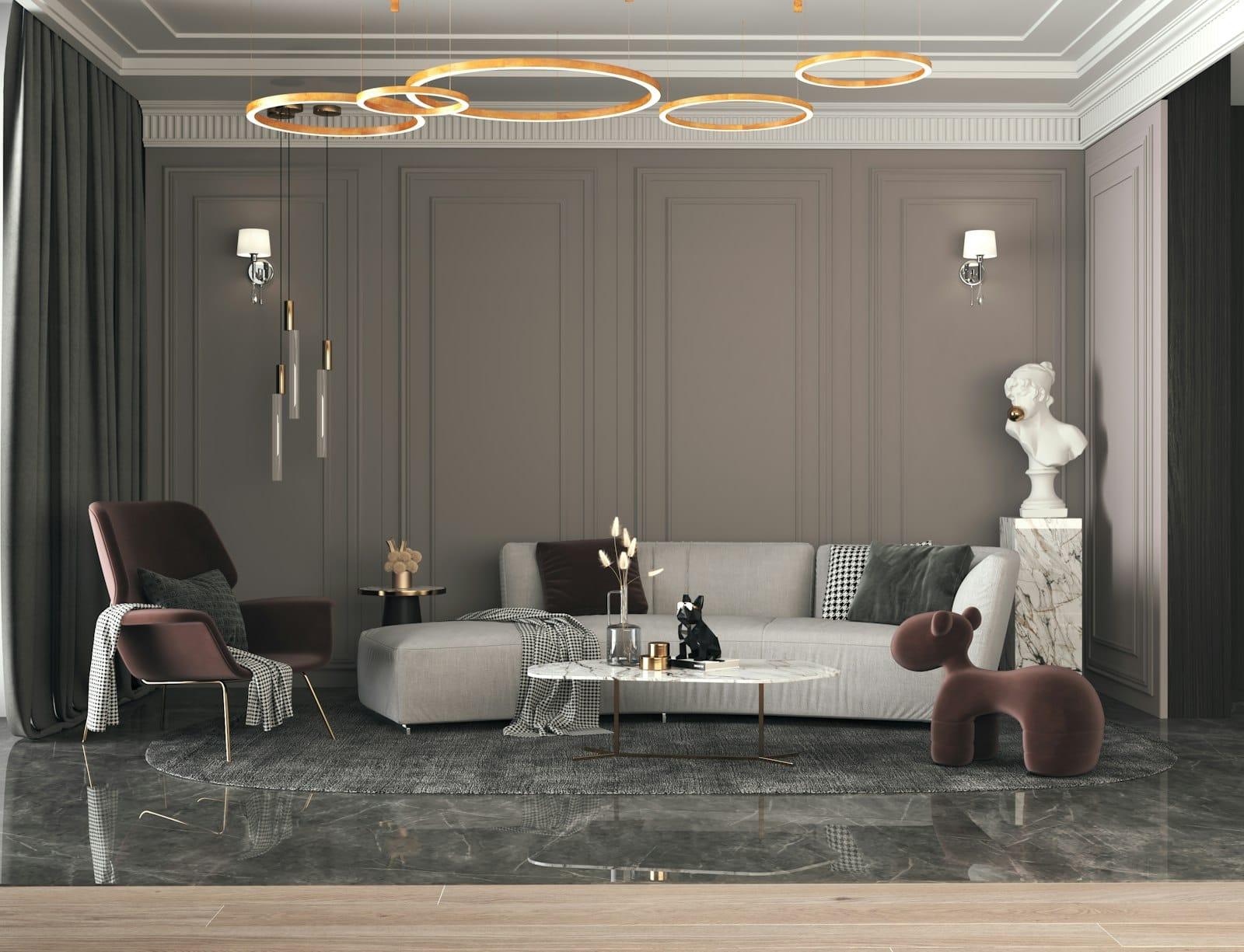
Scandinavian design, in one paragraph: it became a movement at the 1930 Stockholm Exhibition, whose slogan "Acceptera!" told Swedes to accept functionalism and mass production; it humanised modernism through designers such as Alvar Aalto, who bent birch where the Bauhaus used steel, and Kaare Klint, who measured bodies before drawing chairs; it conquered America as "Swedish Modern" at the 1939 New York World's Fair and then through the Danish mid-century masters, Wegner, Jacobsen, Juhl and Henningsen; IKEA democratised it from the 1970s; and brands such as HAY and Muuto revived it after 2000. It endures because its classics are still in production, its materials age well and its quiet, light-filled rooms answer a need that has only grown. Here is the history, the pieces worth knowing, and how to tell the real thing from the look.
From the workshops of the 1920s to the minimalist billionaire's bunker: the stubborn persistence of the bentwood chair and the lightbulb you never see.
The great northern myth
There is a particular fatigue that sets in when one hears the word "hygge" for the ten-thousandth time, usually from someone trying to sell a candle that smells like a synthetic forest. "Scandinavian design" has become shorthand for "beige and vaguely expensive", a look as at home in a Tokyo boardroom as a Tribeca loft.
Behind the pale oak and the march of the flat-pack bookcase, though, lies a history of genuine radicalism. It begins with climate. In the far north of Scandinavia the sun does not rise at all for weeks in midwinter, and even in Copenhagen or Stockholm December daylight is short and low. When the light is scarce, how you light a room stops being a matter of taste. Add small populations, limited wealth in the early twentieth century and abundant timber, and you get the movement's foundation: democratic functionalism made with local materials, disguised as high art.
1930–1939: Acceptera and the plywood revolution
The movement's coming-out party was the Stockholm Exhibition, which ran from May to September 1930 on Djurgården and drew about four million visitors. Its intellectual leader, the art historian Gregor Paulsson, and its head architects, Gunnar Asplund and Sigurd Lewerentz, used it to argue for functionalism, standardisation and mass production under a one-word slogan: "Acceptera!" The fair helped make functionalism the dominant architectural style in Sweden.
In Finland, Alvar Aalto treated birch with the reverence others reserved for marble. His Armchair 41, the Paimio chair of 1932, was designed for the patients' lounge of the tuberculosis sanatorium he built at Paimio, and its back is reputedly angled to ease breathing. It was curved, organic and made of bent plywood rather than the chromed steel tube favoured by the German Bauhaus.
In Copenhagen, Kaare Klint, often called the father of modern Danish furniture, measured people and historic furniture to arrive at proportions that fit the body. His Safari Chair of 1933 shows the method: a light lounge chair in which proportion, not decoration, does the work.
By 1939 the idea had a name abroad: "Swedish Modern" was launched at the New York World's Fair, and the blond Swedish style drew an enthusiastic response from international audiences. Americans were hooked; the real explosion came after the war.
1945–1970: the golden age of the Danish masters
The post-war decades produced the names now stamped under chairs that cost more than a small car.
Hans J. Wegner designed almost 500 chairs, according to Carl Hansen & Søn, his long-time manufacturer. His Round Chair of 1949, made then by Johannes Hansen and now by PP Møbler, became known in America simply as "The Chair", and on 26 September 1960 both John F. Kennedy and Richard Nixon sat in it for the first televised US presidential debate. His CH24 Wishbone Chair has been in continuous production since 1950.
Arne Jacobsen took the idea of total design to its limit at the SAS Royal Hotel in Copenhagen, built between 1956 and 1960. He was responsible not only for the architecture but for all its fixtures and fittings, from the furniture and textiles to the crockery and the cutlery used in the restaurant. The Egg and the Swan chairs were created for it; the Egg, sculpted in foam rather than built on a frame, made a private room inside a public lobby.
Finn Juhl drew his Chieftain Chair in 1949, a sculptural armchair that the House of Finn Juhl relaunched in 2002 and still makes.
Poul Henningsen solved the problem of light. His PH 5 pendant for Louis Poulsen, designed in 1958, uses a three-shade system that hides the bulb completely; the maker describes the downward light as "100% glare-free". It remains the reference for light over a dining table.
1970–1990: the blue box and the bold print
From the 1970s the story shifts from the artisan to the mass producer, and the elephant in the room is IKEA. Purists shuddered, but IKEA did something remarkable: it took the principles of Aalto and Wegner, swapped hand-rubbed oil for particle board and Allen keys, and sold the look at prices that did not require a second mortgage. The Poäng chair, designed by the Japanese designer Noboru Nakamura and launched in 1976 as "Poem" (it was renamed in 1992), is essentially a bentwood homage produced at enormous scale.
Colour came from Finland. Marimekko, founded in Helsinki in 1951 by Viljo and Armi Ratia, supplied the splash that kept Nordic minimalism from turning clinical, and Maija Isola's Unikko poppy print of 1964 became one of the most recognisable patterns of the century.
Denmark contributed system furniture. Peter J. Lassen, who had worked at Fritz Hansen, founded his own company on Funen in 1982 and developed the Montana modular shelving system, built to be rearranged and passed on rather than replaced.
2000 onwards: New Nordic and the quiet luxury effect
By the early 2000s there were whispers that Scandinavian design had become a victim of its own success. Then came a new generation of brands. HAY was founded in Copenhagen in 2002 by Mette and Rolf Hay, and Hee Welling's "About A" chair series for the company became one of its most popular designs, found in offices and cafés worldwide. Alongside Muuto and Gubi, the new brands took the heritage of the masters and added colour and playfulness for open-plan living.
The fashion for "quiet luxury" in the late 2010s played straight into Nordic hands. For a certain kind of wealthy buyer, gold leaf and rococo became gauche; the status signal became a room that looks nearly empty but holds a Juhl chair and a single perfect ceramic. That is why the aesthetic refuses to die: it scales, from a student's flat-pack table to a minimalist house in the Oslo archipelago.
The pieces worth knowing, in one table
| Piece | Designer | Year | Made by today |
|---|---|---|---|
| Paimio chair (Armchair 41) | Alvar Aalto | 1932 | Artek |
| The Round Chair ("The Chair") | Hans J. Wegner | 1949 | PP Møbler |
| Chieftain Chair | Finn Juhl | 1949 (relaunched 2002) | House of Finn Juhl |
| CH24 Wishbone Chair | Hans J. Wegner | In production since 1950 | Carl Hansen & Søn |
| Egg chair | Arne Jacobsen | 1958 | Fritz Hansen |
| PH 5 pendant | Poul Henningsen | 1958 | Louis Poulsen |
| Unikko print | Maija Isola | 1964 | Marimekko |
| Poäng (originally Poem) | Noboru Nakamura | 1976 | IKEA |
A seventy-year production run is the best evidence there is that a design will not date, which is the same test we apply in designing rooms you keep for thirty years.
How to tell the real thing from the look
- Check the maker, not the silhouette. Most of the classics above are made under licence by a named company. A "wishbone-style" chair from an unnamed factory is a lookalike.
- Look for marks. Vintage pieces usually carry a maker's stamp, label or burn mark; reputable dealers photograph it and state the production period.
- Feel the material. Solid wood, real leather, wool and linen are the point. If it looks like wood but feels like plastic, it is not Nordic design in any sense that matters.
- Mix freely. A vintage Juhl chair sits happily beside a contemporary shelf from Montana, String or Muuto; the tradition is about quality and function, not period purity.
Why it endures
The deepest reason is psychological. We live with digital clutter and sensory overload; at home we want the opposite. Pale woods that bounce light, natural textiles, lighting that hides the bulb and the absence of unnecessary ornament work as a visual sedative. The look also rewards longevity over novelty, which is now a sustainability argument as much as an aesthetic one.
You do not need a Juhl chair to start. Textiles are the cheapest way in: linen bedding from a maker such as GroundLuxe brings the pared-back materiality into a bedroom without redesigning it, and our luxury home decor guide sets out the anchor pieces, the budget split and the step-by-step tutorial for a Nordic-inspired home puts it together room by room.
Related reading: Scandinavian versus French luxury, 2026 interior design trends, the art of the library room and commissioning bespoke furniture.
Frequently asked questions
When did Scandinavian design start?
As a movement, with the Stockholm Exhibition of 1930, whose slogan "Acceptera!" promoted functionalism and mass production. It was named abroad as "Swedish Modern" at the 1939 New York World's Fair and peaked in the Danish mid-century work of roughly 1945 to 1970.
Who are the most famous Scandinavian designers?
Alvar Aalto (Paimio chair, 1932), Kaare Klint (Safari Chair, 1933), Hans J. Wegner (The Round Chair, 1949; Wishbone Chair), Finn Juhl (Chieftain Chair, 1949), Arne Jacobsen (Egg chair, 1958) and Poul Henningsen (PH 5 pendant, 1958).
Why is Scandinavian design so popular?
It combines function, natural materials and soft, glare-free light with designs that do not date; many of its classics have been in production for more than seventy years. Its calm, uncluttered rooms also suit a period of constant digital noise.
How can I tell an authentic Scandinavian design piece from a copy?
Buy new from the licensed maker or an authorised dealer, or vintage from a dealer who photographs the maker's mark and states the production period. Unmarked "style" pieces are lookalikes, and usually fail on materials and joinery.
Sources
- en.wikipedia.org/wiki/Stockholm_Exhibition_(1930)
- bgc.bard.edu/exhibitions/exhibitions/48/utopia-and-reality
- artek.fi/en/products/paimio-armchair-41
- carlhansen.com/en/designers/hans-j-wegner
- en.wikipedia.org/wiki/The_Round_Chair
- collections.vam.ac.uk/item/O112473
- finnjuhl.com/collection/lounge-chairs/chieftain-chair
- louispoulsen.com/en-gb/catalog/private/pendants/ph-5
- en.wikipedia.org/wiki/Poäng
- en.wikipedia.org/wiki/Marimekko
- smow.com/peter-j-lassen
- en.wikipedia.org/wiki/HAY_(company)
Continue Reading
Continue in this collection


Found this useful? Explore more in the Journal.
BACK TO JOURNAL