Private Banking in the Nordics: Minimums, Deposit Guarantees and Fees in Norway, Sweden, Denmark and Finland
Last updated: 12 November 2026
Researched and drafted with AI assistance from published sources; edited and published by NorwegianSpark SA. Editorial policy
The short answer: the big Nordic banks publish their private-banking entry levels, which many international private banks do not. On the banks' own websites, DNB in Norway asks for at least NOK 6 million of investable wealth, Nordea asks for at least SEK 5 million in Sweden, DKK 4 million per household in Denmark and more than €500,000 in Finland. Fees for advice and discretionary management are usually quoted individually rather than published. Deposit guarantees differ more than people expect: NOK 2 million per customer per bank in Norway, SEK 1,150,000 in Sweden since 1 January 2026, and the equivalent of €100,000 in Denmark and Finland.
Search for "beste private banking", "bästa private banking" or "bedste private banking" and you mostly find awards and adverts. This guide covers what you can actually check before you choose: the entry thresholds the banks publish, what the deposit and investor guarantees cover in each country, what fees look like, and what changes if you live abroad. It is written in English for a worldwide readership, including people moving to or from the Nordics, and it is general information, not investment advice.
What counts as private banking in the Nordics
The core offer is the same as anywhere: a named adviser, investment management (either advisory, where you take the decisions, or discretionary, where the bank does), lending against your portfolio, and help with tax, pensions and succession. What is different is that the large Nordic banks run private banking as a segment of a domestic universal bank and publish where it starts. Above that, most of them have a further tier for very large fortunes, often called family office.
The published entry thresholds
| Country | Bank | Published threshold | Source |
|---|---|---|---|
| Norway | DNB Private Banking | At least NOK 6,000,000 of investable wealth | dnb.no |
| Sweden | Nordea Private Banking | Wealth of at least SEK 5 million to place or manage | nordea.se |
| Denmark | Nordea Private Banking | Household investable wealth of DKK 4 million or more, which can include cash, pension funds and securities | nordea.dk |
| Finland | Nordea Private Banking | More than €500,000 of investable assets, for individuals, families, entrepreneurs and foundations | nordea.fi |
| Finland | Nordea Family Office | Investable wealth of more than €10 million | nordea.fi |
Thresholds were read on the banks' websites on 12 November 2026. Two details in the small print change who qualifies:
- What counts. Nordea Denmark counts pension savings as well as cash and securities, and measures the household rather than the individual. Nordea Finland counts assets held with the bank: accounts, funds, shares and investment insurance. A household that does not qualify on one person's savings may qualify on the combined total.
- What you are asked to move. A threshold describes the wealth the bank wants to manage or see, not necessarily a sum you must deposit on day one. Ask whether the bank expects you to consolidate your assets with it, and over what period.
Other Nordic banks and specialist houses offer private banking too, and many do not publish a threshold at all. Treat the table as a guide to the market's entry level, not as a ranking.
Deposit guarantees: the numbers are not the same
Every country in the region protects bank deposits, but the limits and the details differ.
| Country | Scheme | Limit per depositor per bank | Notes |
|---|---|---|---|
| Norway | Bankenes sikringsfond | NOK 2 million, from the first krone | Covers customers of a Norwegian bank in Norway; at a Norwegian bank's branch abroad the limit is €100,000 or the local equivalent unless the bank has also joined the Norwegian scheme |
| Sweden | Riksgälden (Swedish National Debt Office) | SEK 1,150,000 since 1 January 2026 | Raised from SEK 1,050,000; separate investor compensation of up to SEK 250,000 if a firm cannot return your securities |
| Denmark | Garantiformuen, run by Finansiel Stabilitet | An amount equivalent to €100,000 | |
| Finland | Financial Stability Authority (Rahoitusvakausvirasto) | €100,000 | Proceeds from selling your primary residence are fully covered if deposited no more than six months before the bank fails and meant for a new home; payout within seven working days |
Sources: Bankenes sikringsfond, Riksgälden, Finansiel Stabilitet and the Financial Stability Authority.
Two practical points follow. First, the guarantee is per bank, so a large cash balance can be spread across banks that belong to different schemes or groups; in Finland, check how the rules treat banks in the same group. Second, for a private-banking client most of the wealth is usually in securities, not cash. Ask any bank how your securities are held, in whose name, and which investor-compensation scheme applies; Sweden's, for example, exists for the case where a firm cannot hand your securities back.
What Nordic private banking costs
Here the region is less transparent than its reputation. The large banks generally quote advisory and discretionary fees individually, so the published price lists say little.
One Swedish example shows the structure. Carnegie's private-banking price list, dated 25 February 2025, sets a base private-banking fee of SEK 10,000 a year including VAT, lists both advisory and discretionary management as "enligt offert" (by quote), and charges brokerage of 0.45% on Nordic listed shares, or 0.10% online, with a minimum of SEK 200.
That pattern is common: a modest fixed fee, a management or advisory fee agreed with you, and transaction costs on top. Because the main fee is negotiated, the only way to compare banks is to ask each for the same thing in writing:
| Ask for | Why |
|---|---|
| The annual management or advisory fee for your asset level | It is usually the largest cost, and it is negotiable |
| Whether custody is charged separately | Some banks include it, others do not |
| The ongoing charges of the funds they would use, and whether they are the bank's own | Fund costs sit inside the fund and are easy to miss |
| Brokerage and currency-exchange rates | They matter if you trade foreign shares or hold several currencies |
| One total, as a percentage and in kroner or euros | The only number you can compare across banks |
For comparison, two private banks in Monaco publish full tariffs, with discretionary mandates between 0.50% and 1.60% a year; our guide to private banking in Monaco sets them out line by line. Our comparison of five major international private banks covers how Swiss and US banks disclose their fees.
Living abroad, or moving to the Nordics
Cross-border clients are where Nordic private banking gets complicated.
- Leaving Norway. DNB says customers living outside Norway can be served by DNB Luxembourg, which offers wealth advisory services and financing. Its own page also warns that the bank does not send tax reporting to other countries, so the customer must handle that reporting.
- EU and EEA. Sweden, Denmark and Finland are EU members; Norway is in the European Economic Area. That generally makes it simpler for a Nordic bank to serve customers elsewhere in Europe than for a bank outside the EEA, but every bank decides which countries' residents it will take.
- Moving in. A newcomer with foreign assets will be asked to document where the money came from. Expect the same source-of-wealth questions as at any international private bank.
If your wealth and your life are spread across several countries, a Nordic bank's domestic strength is less of an advantage. Our guide to Swiss private banking versus international banks explains when a cross-border booking centre earns its cost, and what to look for in wealth management applies whichever bank you choose.
How to choose
- Start with the threshold. If you are well above it, you have room to negotiate; if you are just above it, ask which service tier you would actually be placed in.
- Ask for the total cost in writing, in the same format from every bank.
- Check the guarantee schemes that cover your cash and securities, especially if you hold large cash balances after selling a home or a company.
- Meet the adviser, not the brand. Ask how long they have been at the bank and how many clients they look after.
- Look past the awards. Several banks advertise prizes; none of them tells you what you will pay.
Frequently asked questions
How much money do you need for private banking in Norway?
DNB says its Private Banking service is for people with at least NOK 6,000,000 of investable wealth. Other banks set their own levels, and some do not publish one.
What is the minimum for private banking in Sweden?
Nordea says its Swedish Private Banking service is for people who want to place or manage wealth of at least SEK 5 million.
What is the minimum for private banking in Denmark and Finland?
Nordea Denmark accepts households with investable wealth of DKK 4 million or more, including pension savings. Nordea Finland's threshold is more than €500,000 of investable assets, and its Family Office service starts above €10 million.
How much does private banking cost in the Nordics?
Advisory and discretionary fees are usually agreed individually rather than published. Carnegie in Sweden, for example, publishes a base fee of SEK 10,000 a year including VAT and quotes management fees on request. Ask every bank for one annual total covering management, custody, fund costs and trading.
How much of my money is protected if a Nordic bank fails?
Per depositor per bank: NOK 2 million in Norway, SEK 1,150,000 in Sweden since 1 January 2026, and the equivalent of €100,000 in Denmark and Finland. Securities in custody are protected separately; Sweden's investor compensation, for example, pays up to SEK 250,000 if a firm cannot return them.
Can I use a Nordic private bank if I live abroad?
Sometimes. DNB serves customers living outside Norway through DNB Luxembourg, and other banks have their own rules. Ask whether the bank may serve residents of your country before you apply.
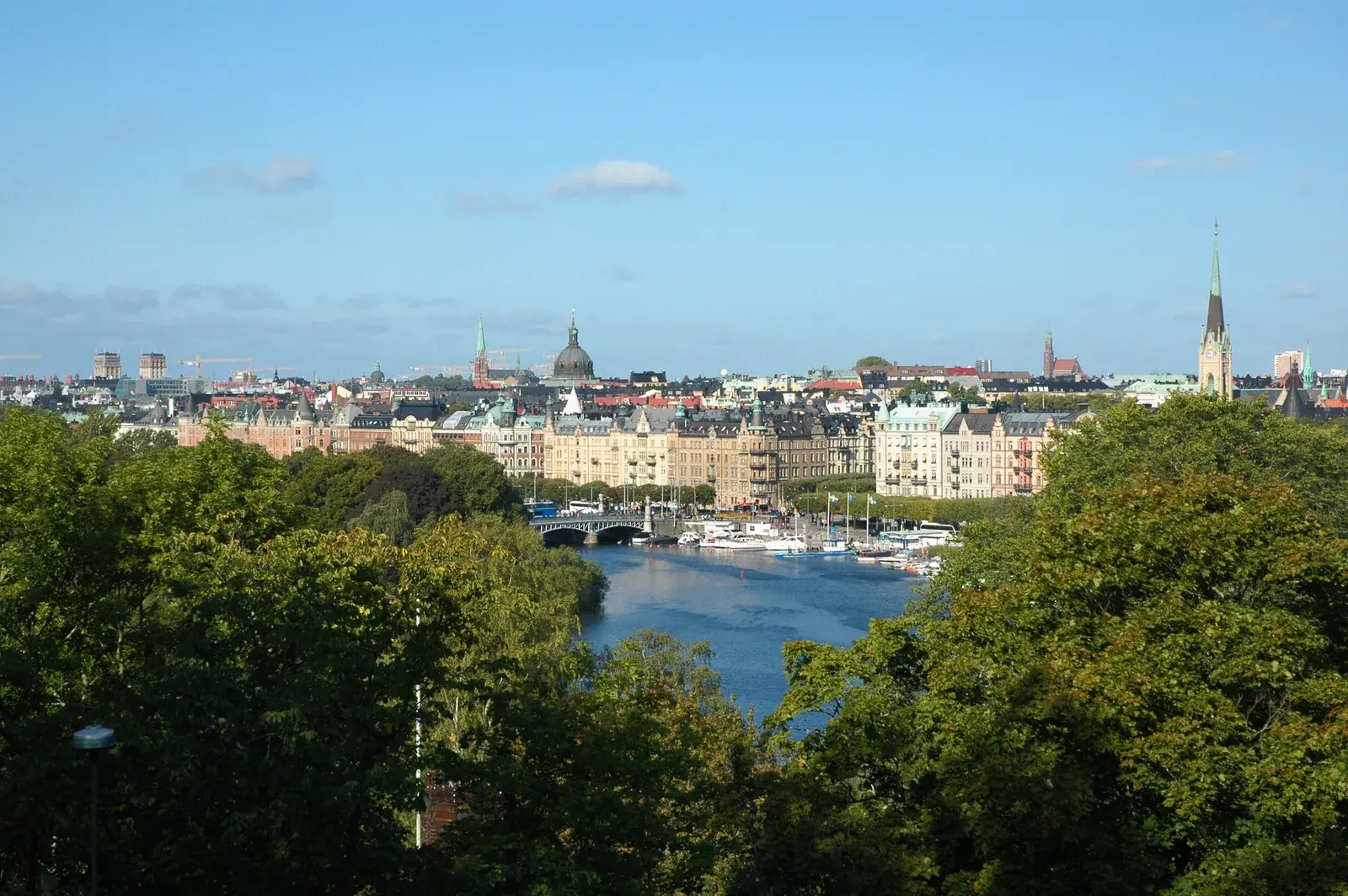
General information, not personal financial, tax or investment advice. Thresholds, guarantee limits and fees are from the banks' and schemes' own websites and price lists, read on 12 November 2026, and can change. We have no commercial relationship with DNB, Nordea or Carnegie. We earn a commission from some links on this site; it can influence which providers we feature. Photo: Strandvägen, Stockholm, seen from Skansen, by DimiTalen (CC0, via Wikimedia Commons).
Sources
Continue Reading


Continue in this collection



Found this useful? Explore more in the Journal.
BACK TO JOURNAL