Private Banking in Monaco: What It Costs, Who Regulates It and How It Compares With Switzerland
Last updated: 12 November 2026
Researched and drafted with AI assistance from published sources; edited and published by NorwegianSpark SA. Editorial policy
The short answer: private banking in Monaco costs, at the two banks whose published tariffs we read, roughly 0.5% to 1.6% a year for a discretionary mandate, depending on the bank, the size of the portfolio and the risk profile, plus custody of 0.15% to 0.35% a year where it is not already included, brokerage on every trade and a quarterly account fee. Monaco's banks are licensed and supervised by France's banking supervisor, the ACPR; cash deposits are protected by the French deposit guarantee fund, the FGDR, up to €100,000 per customer per bank; and on 30 October 2026 the Financial Action Task Force removed Monaco from its "grey list" of jurisdictions under increased monitoring. Compared with Switzerland, the practical differences are the currency (euro, not Swiss franc), the supervisor and the depositor-protection scheme, not the quality of the service.
Monaco is one of the few places where the question "private bank or family office?" is asked by people who already live next door to both. This guide explains how the principality's banking system is regulated, what the published fees actually are, how a private bank there compares with a multi-family office, and how Monaco stacks up against a Swiss booking centre. It is general information for a worldwide readership, not tax, legal or investment advice.
Who regulates a private bank in Monaco
Monaco is not a member of the European Union, but its banks work inside a French and European framework that goes back decades. The Monetary Agreement between the European Union and Monaco, published in the Official Journal of the EU on 13 October 2012, records that France and Monaco were linked "by bilateral agreements in the monetary and banking fields", most notably the Franco-Monegasque Agreement of 14 April 1945. Three bodies matter to a private-banking client:
| Authority | What it does for a private-banking client |
|---|---|
| ACPR (France's Autorité de contrôle prudentiel et de résolution) | Licenses Monaco's banks, supervises their solvency and handles resolution if one fails |
| CCAF (Commission de Contrôle des Activités Financières) | Monaco's independent authority for financial activities: portfolio and fund management, investment advice, order transmission, custody and multi-family office activities |
| AMSF (Autorité Monégasque de Sécurité Financière) | Monaco's anti-money-laundering supervisor, which also houses the financial intelligence unit that receives suspicious-transaction reports |
The split between the first and the last is worth knowing. In a presentation to Monaco's financial association on 20 June 2017, the ACPR listed five missions and said it exercises three of them in Monaco: licensing, prudential supervision and resolution. Anti-money-laundering and customer protection are not its job there. The CCAF describes itself as the independent administrative authority responsible for supervising financial activities carried out in the Principality, and says that, with exceptions, financial products and services in Monaco are marketed only by firms it has approved.
The FATF grey list: listed in 2024, removed in October 2026
In June 2024 the Financial Action Task Force placed Monaco under increased monitoring, the list usually called the grey list. The FATF says it does not call for enhanced due diligence on listed jurisdictions, but it encourages countries to take the listing into account in their risk analysis, which can mean more questions for money moving to or from a listed place.
On 30 October 2026 the FATF moved Monaco to its list of "jurisdictions no longer subject to increased monitoring", welcoming "Monaco's significant progress in improving its AML/CFT regime". The statement lists what Monaco did to get there, including:
- strengthening its understanding of the risk of money laundering linked to income tax fraud committed abroad;
- making more requests to other countries to identify and seize criminal assets abroad;
- applying more sanctions for anti-money-laundering failures and for breaches of beneficial-ownership rules;
- completing the resourcing of its financial intelligence unit; and
- adding resources for investigating judges and prosecutors.
The FATF added that Monaco "should continue to work with MONEYVAL", the Council of Europe body that evaluates it. For a new client, the practical point is to expect a thorough onboarding. Several of the items above concern the source of funds and beneficial ownership, so arrive with documented evidence of where your wealth came from.
Is my money safe in a Monaco bank?
Safety has two parts, and they are protected differently.
Cash deposits. The FGDR, France's deposit guarantee and resolution fund, states that it covers banks whose head office is in the Principality of Monaco, together with their branches in France, Monaco and the rest of the EU and EEA. Its own figures are up to €100,000 per customer per bank, paid within seven working days of the accounts becoming unavailable. A branch of a foreign bank in Monaco may fall under a different scheme, so ask which one applies to your account.
Securities. The FGDR also runs a separate securities guarantee of up to €70,000 per client per firm. Ask your bank whether it is a member of that scheme, how your securities are held and in whose name. For most private-banking clients, whose wealth sits mainly in investments rather than cash, the custody arrangement matters more than the deposit guarantee.
Currency. Article 1 of the Monetary Agreement says Monaco "shall be entitled to use the euro as its official currency". Your base currency in Monaco is the euro, which is an advantage if your life is in the euro area and a currency concentration if it is not.
What private banking in Monaco costs
Most private banks do not publish prices. In Monaco, at least two do, and their tariff sheets are the most reliable answer we found to the question "what does private banking in Monaco cost per year?". Both list fees as an annual percentage of assets, charged quarterly.
CMB Monaco, in its general pricing terms of 8 July 2026:
| Service | Published fee (per year unless stated) |
|---|---|
| Account package ("Team Monaco") | €300 per quarter, including VAT |
| Discretionary mixed-fund mandate | 1.05% from €500,000, falling to 0.90% above €25 million |
| Discretionary multi-asset mandate | 1.40% to 1.60% from €3 million, depending on risk profile, falling to 0.80% to 1.00% above €25 million; quarterly minimum €10,500 to €12,000 |
| Bespoke mandate | From €5 million, 0.10% on top of the standard fee |
| Advisory mandate | 0.30% to 0.65% depending on the service and size, with quarterly minimums of €2,250 or €8,125 |
| Custody | 0.35% below €5 million, falling to 0.20% above €25 million |
| Equity brokerage | 1.05% on trades under €100,000, falling to 0.75% above €500,000; minimum €250 per trade |
| Currency exchange | 1.20% under €100,000, falling to 0.25% above €500,000 |
Mandate and advisory fees are quoted excluding VAT. For its discretionary mandates, CMB states that custody and brokerage on equities, bonds and funds are included in the fee, that third-party brokerage is charged at cost, and that funds held inside a mandate may carry their own management fees.
Société Générale Private Banking Monaco, in its tariff sheet dated 10 March 2025:
- Entry-level mandate. The "Select" mandate is open from €250,000 and costs 0.50% a year, brokerage included.
- Larger mandates. Its profiled and personalised mandates cost between 0.50% and 0.90% a year depending on the mandate and the asset band, excluding custody and brokerage; the personalised mandate starts at €5 million. Minimum management fees of €2,000 and €5,000 a year apply.
- Advice. Advisory services start at €2 million, with advisory fees between 0.30% and 0.80% a year and a minimum fee of €5,000 for the two fuller advisory services.
- Custody. 0.35% up to €1 million, 0.25% from €1 million to €2 million, 0.20% from €2 million to €10 million and 0.15% above that, with an annual minimum of €1,000.
- Account services. €350 per quarter.
The bank states that its prices exclude taxes and can be changed with one month's notice.
A worked example: €6 million at CMB Monaco
Using only CMB's published figures, for a client with €6 million and a medium-risk profile:
| Discretionary multi-asset mandate | "Advisory Active" mandate | |
|---|---|---|
| Management or advisory fee | 1.30% = €78,000 | 0.40% = €24,000 |
| Custody | Included | 0.30% = €18,000 (see note) |
| Brokerage | Included for equities, bonds and funds | Charged per trade, with a 20% discount |
| Account package | €1,200 a year | €1,200 a year |
| Before fund costs and trading | About €79,200 a year | About €43,200 a year, plus brokerage |
The advisory column is our reading of the tariff: the custody table applies to invested assets and the advisory section does not say custody is included, so we have added it. Confirm with the bank. Either way, the arithmetic shows why the question to ask is not "what is your fee?" but "what is my total cost, in euros, including fund charges and trading, at my portfolio size?".
Private bank or family office in Monaco?
The two are not rivals so much as layers. A private bank holds your assets, lends against them and offers investment management. A family office coordinates the family's whole financial life: several banks, tax and legal advisers, property, reporting and governance.
In Monaco, multi-family offices are a regulated activity: the CCAF lists "multi family office" among the activities it approves. That gives a client something to check: whether the firm appears on the CCAF's list of approved companies for the activity it is offering you.
The economics follow the same thresholds as anywhere else. Our guide to private bank versus family office sets out the rules of thumb: below roughly USD 100 million of investable assets, a top-tier private bank backed by independent tax and legal advisers usually gives the best value; between about USD 100 and 250 million, a multi-family office often fits better. What Monaco adds is proximity. Bankers, multi-family offices and lawyers work within walking distance of each other, which makes a hybrid arrangement, with one or two banks for custody and lending and a multi-family office for coordination and reporting, easier to run than in most places.
Three questions settle it for most families:
- How many banks and jurisdictions are involved? One bank in one country rarely needs a family office. Three banks in three countries usually benefits from someone who consolidates the reporting.
- Who is independent? A bank's family-office desk is still part of the bank. A multi-family office is paid by you, which is the point, but ask how it is paid on any product it recommends.
- Who reports to whom? Ask to see a sample consolidated report before you sign.
Monaco or Switzerland?
People searching for a private bank in Monaco are often weighing it against Geneva or Zurich. On the points that can be checked, the comparison looks like this:
| Monaco | Switzerland | |
|---|---|---|
| Currency | Euro (EU Monetary Agreement) | Swiss franc |
| Bank supervisor | France's ACPR for licensing and prudential supervision | FINMA |
| Deposit protection | FGDR: up to €100,000 per customer per bank | esisuisse: up to CHF 100,000 per client per bank |
| EU single-market access | The Monetary Agreement gives Monaco's banks no right of establishment or to provide services in the EU | Switzerland is outside the EU and EEA |
| FATF status | Removed from the grey list on 30 October 2026 | Not on the October 2026 grey list |
The EU-access row deserves a sentence of explanation. Recital 7 of the Monetary Agreement states that it "shall not confer any right" on Monaco's credit institutions in matters of freedom of establishment or provision of services in the EU. In other words, a Monaco bank is not "passported" into the EU the way a Luxembourg bank is. If you live in an EU country, ask any non-EU bank, Monaco or Swiss, whether it is permitted to serve residents of your country and on what basis.
Beyond that, the difference is mostly about where your life is. A Monaco bank suits a family that lives in or near the principality, spends in euros and wants its banker a short walk away. A Swiss bank suits wealth that is spread across several countries and currencies, or clients who want part of their assets outside the euro. Our guide to Swiss private banking versus international banks covers the Swiss side, including Luxembourg and Liechtenstein, and our comparison of five major private banks covers how Julius Bär, UBS, Pictet, Lombard Odier and Coutts differ.
Before you open an account
- Ask for the tariff sheet in writing, for the exact service you would use, and calculate the total in euros at your portfolio size.
- Ask which deposit and securities guarantee schemes cover you, and how your securities are held.
- Ask whether the bank may serve residents of your country if you do not live in Monaco.
- Prepare your source-of-wealth file before the first meeting: sale contracts, company accounts, inheritance documents and tax returns.
- Check the CCAF's list if a firm other than a bank is offering to manage or advise on your money.
Frequently asked questions
How much does private banking in Monaco cost per year?
At the two banks whose tariffs we read, discretionary mandates cost between 0.50% and 1.60% a year depending on the bank, size and risk profile. CMB Monaco's multi-asset mandates cost 1.40% to 1.60% from €3 million, with custody and brokerage included; Société Générale Private Banking Monaco's mandates cost 0.50% to 0.90%, with custody of 0.15% to 0.35% charged on top. Account packages of €300 to €350 a quarter apply as well.
What is the minimum to open a private bank account in Monaco?
It depends on the bank and the service. Société Générale Private Banking Monaco's entry mandate starts at €250,000 and its personalised mandate at €5 million. CMB Monaco's mixed-fund mandate starts at €500,000, its multi-asset mandates at €3 million and bespoke mandates at €5 million.
Who supervises banks in Monaco?
France's ACPR licenses Monaco's banks and supervises their solvency. Monaco's CCAF supervises financial activities such as portfolio management, investment advice, custody and multi-family offices, and the AMSF supervises anti-money-laundering compliance.
Are deposits in Monaco banks guaranteed?
Yes, for banks with their head office in Monaco. France's FGDR covers them up to €100,000 per customer per bank and says it pays within seven working days. It also runs a separate securities guarantee of up to €70,000 per client per firm; ask your bank which schemes it belongs to.
Is Monaco still on the FATF grey list?
No. The FATF placed Monaco under increased monitoring in June 2024 and removed it on 30 October 2026, saying Monaco should continue to work with MONEYVAL to sustain its improvements.
Is a Monaco private bank better than a Swiss one?
Neither is better in general. Monaco suits euro-based clients who live in or near the principality; Switzerland suits wealth spread across several countries and currencies, or clients who want assets outside the euro. Both have deposit protection of about the same size, and neither offers EU passporting.
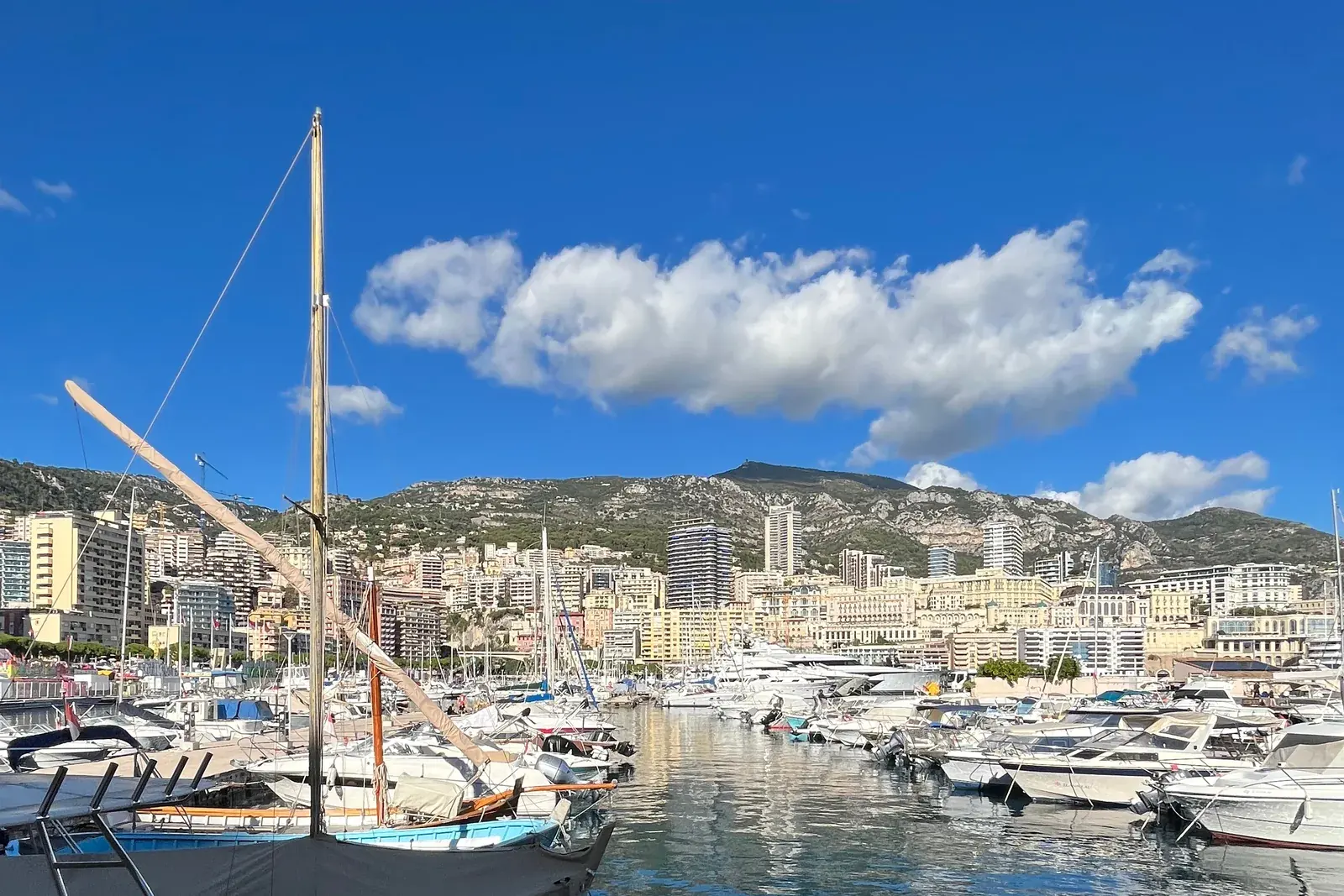
General information, not personal financial, tax or legal advice. Fees are taken from CMB Monaco's general pricing terms of 8 July 2026 and Société Générale Private Banking Monaco's tariffs of 10 March 2025, read on 12 November 2026; banks change their prices, so ask for the current tariff before you sign. We have no commercial relationship with CMB Monaco or Société Générale. We earn a commission from some links on this site; it can influence which providers we feature. Photo: Port Hercule, Monaco, by Benoît Prieur (CC0, via Wikimedia Commons).
Sources
Continue Reading



Continue in this collection



Found this useful? Explore more in the Journal.
BACK TO JOURNAL