How to Create a Nordic-Inspired Home Interior (Step-by-Step)
Last updated: 16 October 2026
Researched and drafted with AI assistance from published sources; edited and published by NorwegianSpark SA. Editorial policy
Disclosure: this page contains affiliate links. If you sign up through them we may earn a commission, at no extra cost to you. It does not change what we write.
To create a Nordic-inspired home, start with a warm, light base (warm whites and natural wood), edit out everything that is neither useful nor beautiful, layer natural textures, give each room one strong piece of art, bring in plants and raw natural materials, and light the room in layers with warm bulbs of around 2700K rather than one bright ceiling light. Then keep it that way with a one-in, one-out rule. The style is about calm, light and materials that age well, not about emptiness. This tutorial takes each step in turn, with the details that make the difference.
Step 1: Start With a Warm, Light Base
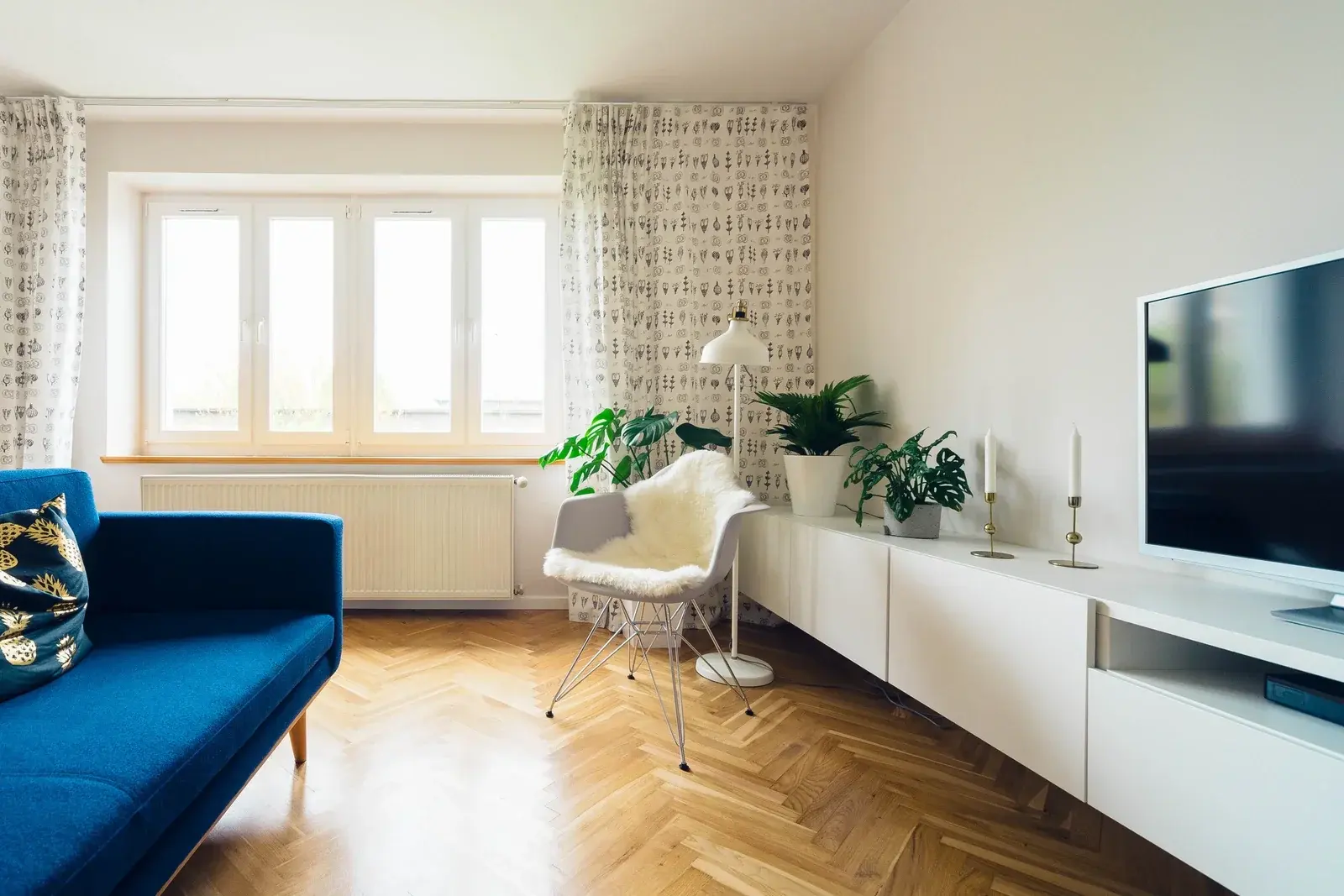
Nordic interiors begin with restraint, and nowhere more than in colour. The base is not sterile white; it is warm and considered: soft whites with a hint of warmth, pale greys with taupe undertones, and natural wood in oak, ash or birch.
Start with the walls. A warm white rather than a blue-white transforms a room. Farrow & Ball's Pointing (No. 2003), a warm, delicate white named after the lime pointing in traditional brickwork, is one example; any serious paint maker has an equivalent. Then the floor: existing wooden floors can be lightened with a white oil or left natural, and if you are starting fresh, wide oak boards in a matt finish are the classic choice, durable and refinishable for decades.
📸 What to look for: hold paint samples against your floor in the actual room, in morning and evening light. Paint makers note that colours shift in intensity as the light changes through the day, and Nordic rooms depend on natural light.
Step 2: Edit Ruthlessly
This is what separates a Nordic-inspired room from a merely minimal one. Minimalism removes for the sake of less; Nordic design removes for the sake of what remains. Every object should be genuinely useful or genuinely beautiful, ideally both.
Walk through each room and assess everything: the decorative bowl that holds nothing, the magazines no one rereads, the cushions that are moved every time someone sits down, the holiday trinkets. If an object is neither useful nor a pleasure to look at, it goes. Most people remove far more than they expect, and the effect is immediate: rooms feel larger, calmer and, paradoxically, more luxurious.
📸 What to look for: breathing room on every surface. A useful rule of thumb is that shelves should look no more than two-thirds full and a coffee table should keep clear space beside whatever sits on it.
Step 3: Layer Natural Textures
With the clutter gone and the palette quiet, add warmth through texture. This is where a Nordic room becomes cosy rather than cold; the Danish idea of hygge lives here. A chunky wool throw on a linen sofa, a ceramic vase of dried grasses on a wooden sideboard, a sheepskin over a dining chair: each material speaks a different tactile language.
Favour natural materials almost exclusively: wool, linen, cotton, leather, ceramic, stone and wood. They age well and feel better in the hand than acrylic, plastic or polyester. If you are shopping on a large marketplace such as DHgate for affordable accessories, filter by material and read the composition field before you read the product title.
Step 4: Give Each Room One Statement Piece
Art in a Nordic room is not wallpaper. Instead of a crowded gallery wall, choose one considered piece per room as the visual anchor, and give it space. It does not need to be expensive; it needs to be intentional: a photograph that holds a mood, an abstract whose colours echo your palette, a print by an artist you genuinely follow.
If you want mass rather than an image, ArtZ Miami makes stainless-steel wall pieces and mirrors that hold a neutral wall without dominating it; buy them as decor, since its site does not mention editions or provenance. If you would rather buy a documented work, our tutorial on buying art for the first time covers certificates, editions and framing.
Hang the piece at about eye level with generous wall around it. In a Nordic room, the empty wall around a piece is part of the frame.
📸 What to look for: photograph the wall and mock up the piece in place before drilling. Scale is everything: too small looks lost, too large overwhelms.
Step 5: Bring in Natural Elements
The Nordic connection to nature shows in plants and raw materials. A tall fiddle-leaf fig, a trailing pothos or an architectural snake plant brings life and colour, but treat plants as decoration and well-being rather than an air purifier: a review of studies by researchers at Drexel University found that ordinary ventilation dilutes indoor pollutants far faster than potted plants can remove them. Open a window for fresh air; keep the plant for joy.
Add raw natural materials too: a stone tray for candles, a piece of driftwood on a shelf, a bowl of pebbles, branches of dried eucalyptus. Aim for one significant plant and one raw natural element in each room.
Step 6: Light the Room in Layers
Lighting is arguably the most important element of a Nordic interior and the most often overlooked. In the Nordic winter, when daylight is short, artificial light has been refined into something close to an art.
The first rule is not to rely on a single overhead light, which flattens a room. Layer lower sources instead (table lamps, floor lamps, wall lights) at different heights. Choose warm bulbs: colour temperature is measured in kelvin, and around 2700K is the warm light most people prefer in living rooms, bedrooms and dining rooms; cooler light around 3500K suits kitchens and work spaces, and brighter bulbs of around 5000K suit reading lamps and desks. Fit dimmers wherever you can.
Candles are part of the look, but use them safely. The London Fire Brigade advises putting candles in heat-resistant holders on a stable surface, never leaving them unattended, and putting them out when you leave the room and before bed; LED candles are a safe alternative.
📸 What to look for: sit in the room after dark with only the lamps and candles lit. Look for dark corners that need another source and hot spots that need dimming.
Step 7: Curate, Do Not Collect
The last principle is ongoing: one in, one out. Every time something new arrives, something old leaves, which stops the slow accumulation that erodes any well-designed room.
Before buying anything for the home, ask three questions: where will it live, what does it do, and does it suit the room you have created? If you cannot answer all three, do not buy it. Walk through the house every few months with fresh eyes and remove whatever has crept in without earning its place.
Frequently Asked Questions
What colours are used in Nordic interiors?
Warm whites, soft off-whites and pale greys with warm undertones, set against natural wood in oak, ash or birch, with colour added through textiles and art rather than walls.
What light bulbs suit a Nordic home?
Warm bulbs of around 2700K for living rooms, bedrooms and dining rooms, layered in several low sources with dimmers. Cooler light of around 3500K suits kitchens and work spaces, and brighter bulbs of around 5000K suit reading lamps.
Do houseplants clean the air?
Not meaningfully in a normal home. Researchers at Drexel University who reviewed decades of studies found that ordinary ventilation dilutes indoor pollutants far faster than potted plants remove them. Keep plants for their look and feel, and open a window for fresh air.
How do I make a Nordic interior feel cosy rather than cold?
Layer natural textures such as wool, linen, sheepskin and ceramic; light the room with several warm, low sources instead of one ceiling light; and add plants and natural materials. Candles help, used safely in heat-resistant holders and never left unattended.
Continue in this collection


Found this useful? Explore more tutorials.
ALL TUTORIALS