Where the Ultra-Wealthy Are Actually Going in 2026 (Spoiler: Not St. Barts)
Last updated: 30 September 2026
Researched and drafted with AI assistance; reviewed, fact-checked and approved by Thomas Lovas Lokoy. Editorial policy
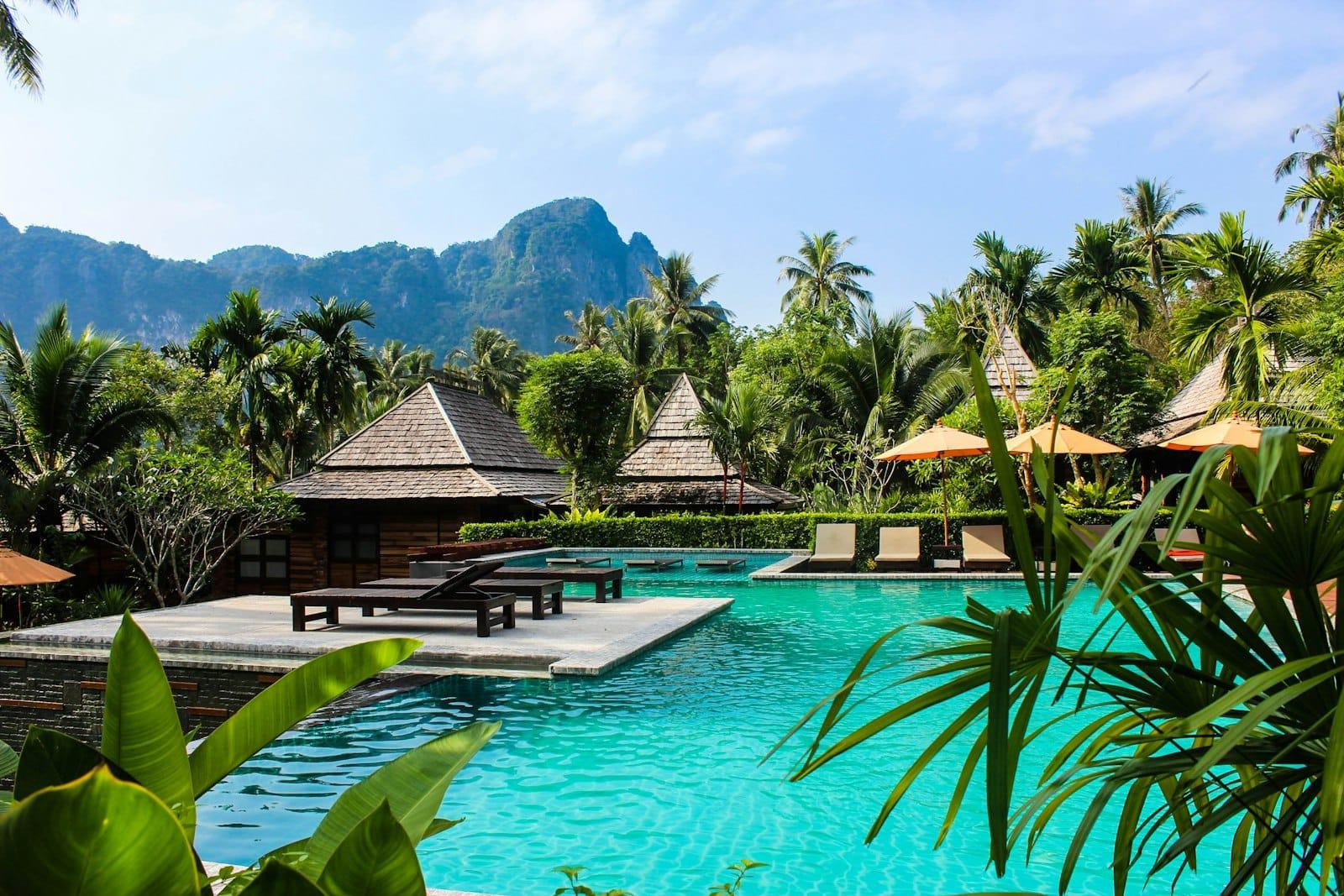
The inevitable decline of the Caribbean’s most tiresome sandbox has led those with real taste—and better passports—to seek quietude in the unexpected.
The problem with a jewel like St. Barthélemy is that eventually, it becomes too shiny. When the yacht basin at Gustavia becomes a high-speed parking lot for Russian oligarchs’ chase boats and influencers trying to look bored in front of Eden Rock, the game is officially up. If you can buy the same bottle of Dom Pérignon at a beach club in St. Jean that you can at a petrol station in Knightsbridge, the lure of the exotic has vanished.
For the 2026 season, the truly discerning—those whose wealth is measured in generations rather than quarterly dividends—are looking elsewhere. We are seeing a decisive pivot away from performative luxury and toward what we at Nordic CrEast call "The Silent Frontier." This is not about deprivation; it is about exclusivity through logistical difficulty and aesthetic purity. It is about places where the local mayor doesn't know what a Birkin is, but the olive oil is pressed by someone whose family has owned the trees since the Renaissance.
The Kingdom of Bhutan: Above the Clouds, Below the Radar
While the masses are still flocking to the Aman Tokyo for their "spiritual" fix, the 0.01 percent have shifted their focus to the high-Himalaya. Bhutan has long been the gold standard for high-value, low-volume tourism, but 2026 marks the maturity of the Trans-Bhutan Trail as a legitimate luxury corridor.
Even the small stops reward the effort: Neyphug Heritage, on the Paro–Thimphu highway about ten minutes from Paro airport, is a restored traditional rammed-earth complex housing a café, an art gallery and a farmers' market. It is not just about the crisp air; it is about the "Sustainable Development Fee," the daily tariff Bhutan charges every visiting tourist to fund conservation and keep volumes low. It was halved to $100 per night from September 2023, and travellers weighing a trip should check the current rate directly with the Department of Tourism before booking, since Bhutan has adjusted the fee before and may again.
The sophisticated traveler is booking the "Kingdom Traverse" via private charter from Bangkok or Singapore. The itinerary of choice involves a ten-day circuit between Amankora’s five lodges, but with a twist: the 2026 trend is "Ultra-Privacy Trekking"—a private mobile camp with its own cook, arranged through a licensed Bhutanese tour operator, for the privilege of sleeping on a ridge where the only other living things are blue sheep and perhaps a very confused snow leopard. Ask the operator for a written quote that separates the daily fee from everything else.
The dry wit of the Bhutanese is a bonus. They have monitored the West’s obsession with "mindfulness" and are more than happy to charge us five figures to sit in a drafty monastery and realise that perhaps we don't need that third offshore account. It is the ultimate flex: paying handsomely to be told that material possessions are an illusion, while drinking a 2015 Latour in a tent.
The Peloponnese: Greece Without the Glitterati
Mykonos is over. Has been for years. Santorini is a cruise ship gangplank disguised as a volcanic island. If you find yourself there in 2026, you have either lost your way or your taste. Instead, the smart money is heading to the Mani Peninsula in the southern Peloponnese.
This is the Greece of Patrick Leigh Fermor: rugged, austere, and deeply snobbish in the best way possible. By 2026, the Costa Navarino development will have fully bedded in, but we aren't suggesting you stay with the masses at the W. Instead, the target is the Mandarin Oriental, Costa Navarino, where private pool villas look out over Navarino Bay.
The Peloponnese offers something the Cyclades cannot: history that doesn't feel like a museum gift shop. Inside the walls of Monemvasia, restored stone houses occasionally come to market. These are not beach houses; they are stone houses with views of the Myrtoan Sea that haven't changed since the Byzantines were in charge.
Lunch is at a taverna in Kardamyli where the menu is verbal and the wine comes in a tin carafe, yet the person at the next table is likely the CEO of a Danish logistics giant. The cost is irrelevant, but the "insider" status is priceless. It requires a car—ideally a vintage Land Rover Defender imported for the month—and a willingness to drive on roads that would give a London taxi driver a nervous breakdown.
The Norwegian Fjords: The Rise of "Deep Chilling"
Winter is the new summer, or rather, the cold is the new heat. As the Mediterranean enters a permanent state of "conflagration" during July and August, the ultra-wealthy are heading north. We are calling it the "Grand Arctic Circuit."
The long-planned Svart hotel in the Meløy municipality, at the base of the Svartisen glacier, will be one of the most sought-after reservations whenever it finally opens—check its status before planning around it. Its circular design perched on stilts over the fjord is catnip for the architectural elite. But for our readers, the real draw is the water.
This isn't a cruise. This is a private charter on an expedition vessel such as Nansen Explorer, a Norwegian-flagged former research ship built in 1983 and now chartered for Arctic and Antarctic expeditions. Starting in Ålesund—a city that looks like it was designed by a particularly whimsical pastry chef—the route snakes through the Hjørundfjord. Unlike the Geirangerfjord, which is choked with ships that have the aesthetic appeal of a floating apartment block, the Hjørundfjord remains hauntingly empty.
The cost? If you have to ask, you should probably stick to the Baltic ferry. Charter rates vary widely by vessel, season and crew, so get a written quote from the broker—and budget separately for the Champagne, which, given Norwegian alcohol taxes, will not be cheap.
The Alentejo: Portugal’s Answer to the Hamptons (Before the Hamptons Got Loud)
Portugal has been "discovered" for a decade, but while the crowds are jostling for a selfie in Sintra, the quietest billionaire class has migrated south of Lisbon to the Alentejo. Specifically, the area around Comporta and Melides.
By 2026, the Vermelho Melides—Christian Louboutin’s boutique hotel—will have been open long enough to have shed the initial "fashion crowd" and settled into a haunt for those who appreciate maximalist decor in a minimalist landscape. However, the real prize is the private estates of Muda Reserve.
The Alentejo is about space. It is about cork forests that stretch to the horizon and beaches where the Atlantic swell is the only sound. In 2026, the most coveted invitation is not a club in Saint-Tropez, but a dinner party at a renovated quinta where the floor is polished concrete, the art is original Miró, and the dress code is "intentionally disheveled."
Prime land around Melides is priced for the few. Add a villa designed by an architect of the calibre of Vincent Van Duysen or Manuel Aires Mateus, and you are paying a very large entry fee to be part of a community that prides itself on never being mentioned in the tabloids. It is luxury as a defensive crouch: high walls, long driveways, and very, very good chilled Rosé from Herdade do Portocarro, inland in the Sado valley.
NW Namibia: The Skeleton Coast’s Final Frontier
Africa has always been a staple for the UHNW set, but the Serengeti is starting to feel a bit like a safari-themed Disneyland. In 2026, the movement is toward the "Hyper-Arid." Namibia’s Skeleton Coast is the destination for those who find the lush greenery of Botswana a bit too... easy.
The Shipwreck Lodge started the trend, but 2026 will see the opening of several "Ultra-Low Impact" camps in the Kaokoveld plateau. These are mobile, temporary, and cost more per night than a suite at The Savoy. The draw here is the total absence of humanity. You are not going to see the "Big Five"; you are going to see a single desert-adapted lion and spend three days tracking it via 4x4 and helicopter.
The logistics of 2026 Namibia travel are built around the private plane. Owners of Bombardier Global 7500s are landing in Windhoek and immediately transferring to Pilatus PC-12s to navigate the dusty strips of the north. Local networks are patchy at best out here, so a travel eSIM such as USim loaded before departure is the difference between staying reachable and going fully dark for a week. The price of privacy in the desert is high; ask each camp for its current per-person rate. It is a harsh, unforgiving landscape that makes the traveler feel like the last person on Earth—which, after a year of boardroom battles and divorce proceedings, is exactly what the ultra-wealthy are paying for.
A Chronology of the Great Migration (2016–2026)
To understand why we are here, we must look at how we got here. The evolution of the luxury travel map is a study in the "Contamination of the Cool."
- 2016: The Peak of the "Instagrammable" Destination. This was the era of the Amalfi Coast and Tulum. If it didn't look good with a filter, it didn't exist. Wealth was loud, tanned, and wore too much linen.
- 2019: The Pivot to "Wellness." Luxury travelers began to value their colons more than their cocktails. Long-established names such as the SHA Wellness Clinic in Spain and Amanpuri in Phuket became reference points. Travel became a form of high-end maintenance.
- 2022: The "Revenge Travel" Chaos. Post-pandemic, everyone with a credit card rushed to the South of France. The result was overcrowding, service collapse, and a €40 salad. The ultra-wealthy noted this and began planning their exit from the traditional circuit.
- 2024: The Year of the "Private Villa." Service returned, but the desire for isolation remained. The "Hotel" became a dirty word; the "Managed Estate" became the gold standard.
- 2026: The Era of "Aesthetic Isolation." We have reached the point where the greatest luxury is the absence of others. The 2026 destinations share a common thread: they are hard to get to, expensive to stay in, and offer very little in the way of "entertainment" beyond the sublime landscape and the company of one's own thoughts (or a very expensive therapist).
Why St. Barts Lost Its Crown
It is worth a brief post-mortem on our title’s victim. St. Barts didn't fail because it became poor; it failed because it became accessible to the "wrong" kind of rich. When a destination becomes a backdrop for a reality TV show, its days are numbered. The 2026 traveler looks at the traffic jams in Gustavia and sees only the stress they left behind in London or New York.
Furthermore, the climate play is real. The Caribbean hurricane season is no longer a suggestion; it is a statistical certainty. The smart money is moving to latitudes where the weather is more predictable and the sea levels aren't quite so ambitious. St. Barts was the party; 2026 is the quiet morning after, spent in a fjord or a desert, far away from anyone with a selfie stick.
The Takeaway
- Geographic Shift: Move your 2026 bookings North (Norway) or significantly further East (Bhutan). The "Middle Ground" (Italy, France, Spain) is for the tourists.
- The New Metric: Value is no longer measured in thread counts, but in "Human-Free Kilometres." If you can see another villa from your terrace, you have failed.
- Transport is Strategy: The private jet is no longer the luxury; it is the baseline. The real 2026 flex is the specialized secondary transport—the PC-12, the research vessel, or the custom-built off-roader.
- Quiet Luxury vs. Silent Luxury: Quiet luxury was about a Loro Piana sweater. Silent luxury is about being in a place where no one even knows what Loro Piana is, because they are too busy being genuinely interesting.
Related reading: inside Aman, Rosewood and Six Senses, sustainable luxury travel done right and the grand tour reinvented for modern Europe.
Sources
Continue Reading
Continue in this collection
Found this useful? Explore more in the Journal.
BACK TO JOURNAL