Home Library Design: How to Plan a Library Room That Works
Last updated: 16 October 2026
Researched and drafted with AI assistance; reviewed, fact-checked and approved by Thomas Lovas Lokoy. Editorial policy
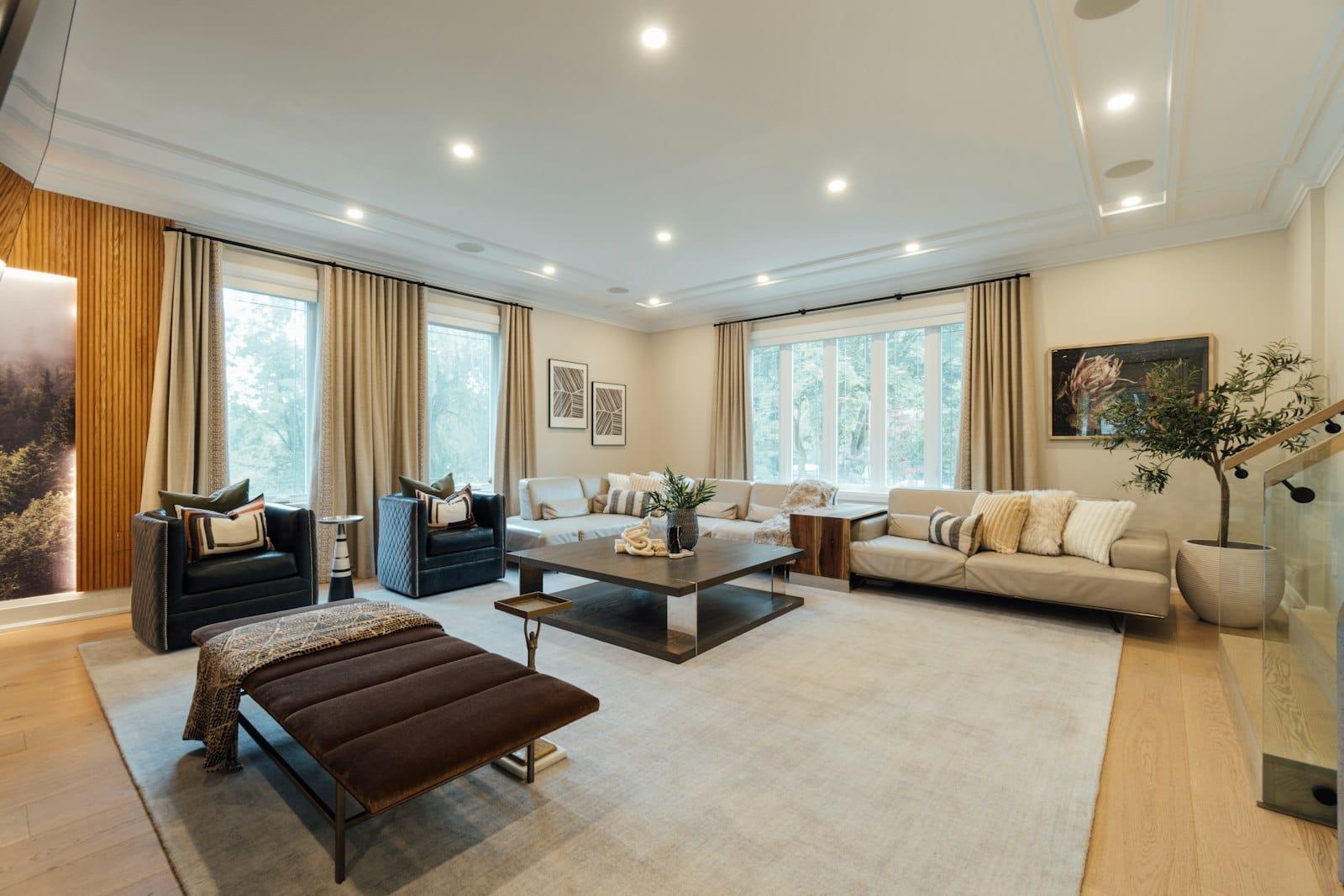
A home library that works is planned like a piece of architecture, not filled like a cupboard: shelving built for the real weight of books (a fully loaded bookshelf can weigh 9 to 18 kg per running foot, so check the floor and choose shelf spans that will not sag), a stable environment for paper (conservation guidance puts relative humidity at 30 to 50 per cent and warns that all light damages paper), three layers of lighting, a room that absorbs sound, one excellent reading chair and a large table. Then fill it slowly with books you actually want, leaving space to grow. This guide covers why the library has come back, the planning numbers, the design choices that matter and the mistakes that make a library feel like a set.
In an era of relentless digitisation, the private library has returned not as storage for paper but as a sanctuary.
Karl Lagerfeld said he collected nothing but books by the end of his life; his library ran, by his own count, to some 300,000 volumes (no one is known to have checked), served by rolling ladders and spiral staircases. Few of us need anything on that scale, but his instinct is spreading.
For two decades the library looked doomed. The paperless office and the arrival of the Kindle in 2007 suggested books were headed for the skip, and designers filled shelves with ceramic pebbles and brass objects and renamed the room the home office. The home office, though, turned out to be a place to answer emails while worrying about the Wi-Fi. A library is the opposite: a room that slows the pulse.
Why the library came back
In a world where any text can be streamed in seconds, access carries no prestige; curation and permanence do. Collectors are abandoning "books by the yard" bought to match the paint and returning to the hunt: first editions from specialist dealers, books with inscriptions, a subject followed for decades. A first edition is less about reading the text than about holding a physical fragment of its moment.
In the Nordic countries the look has changed too. The heavy Victorian mahogany library is giving way to light oak, large windows and minimal shelving such as Vitsœ's 606 Universal Shelving System, designed by Dieter Rams in 1960 and made by Vitsœ ever since as a kit of parts that can be rearranged as a collection grows. For the long history of the style, see a short history of Scandinavian design.
The planning numbers
| Element | Figure or rule | Why it matters |
|---|---|---|
| Shelf load | A fully loaded bookshelf weighs about 9 to 18 kg per running foot; 35 lb (about 16 kg) per running foot is used by some for library shelving | Long walls of books add up to a serious floor load; ask a structural engineer, especially in older buildings and flats |
| Shelf sag | Aim for initial sag of 1.7 mm per metre (0.02 in per foot) or less, because wooden shelves sag a further 50% over time | Choose thicker boards, shorter spans or a front edging strip; a shelf calculator such as the Sagulator does the maths |
| Humidity | 30 to 50% relative humidity, kept stable | Paper needs some moisture to stay flexible; too much invites mould and insects |
| Temperature | About 65 to 70°F (18 to 21°C) for rooms people use, stable | Fluctuation does more harm than a slightly imperfect average |
| Light | All light damages paper, irreversibly | Keep books out of direct sun; use UV-filtering film or blinds on sunny windows |
These figures come from woodworking and library-conservation guidance; a private library does not need museum conditions, but avoiding damp walls, radiators directly under shelves and full-sun windows makes a lasting difference.
The architecture of silence
A library that echoes is a failure. It should absorb sound, which is why materials matter more here than almost anywhere else in the house. Thick wool rugs, upholstered seating, fabric or grasscloth wall coverings and, above all, the books themselves soften a room. Hard floors and bare walls are the enemy.
Lighting needs three layers, just as in any room built to last (the scheme is set out in designing rooms you keep for thirty years):
- Ambient: soft general light from pendants or wall lights, never a single bright ceiling fitting.
- Task: a proper reading lamp beside every chair. Classic choices include the Castiglioni brothers' Taccia (1962) and Barber Osgerby's Tab for Flos.
- Accent: discreet LED strips behind shelf fascias to light the spines without heat.
The chair decides whether the room is used. A library without a deep reading chair is a storage locker. Hans J. Wegner's "Papa Bear" chair from the 1950s and the Eames Lounge Chair are the benchmarks; whatever you choose, sit in it for half an hour before buying.
The table. A large central table in walnut, oak or stone, for maps, art books and folios, turns the room into a reading room rather than a corridor of shelves.
From monastery to analogue reboot
The library room has always signalled its owner's status. In medieval libraries, books were so valuable they were chained to desks. By the eighteenth century the library had become a gentleman's room for reading, talk and port. At the start of the twentieth, J. P. Morgan built his private library in New York, designed by Charles McKim of McKim, Mead and White and erected between 1902 and 1906 to house his rare books and manuscripts: a cathedral to capital and culture. Mid-century, it shrank into "the study". Today it is the analogue reboot: the one room where screens are unwelcome. If there must be a television, hide it behind a panel.
Curation: building a collection, not a backdrop
The best libraries are never the ones where a decorator bought five feet of blue spines. They reflect an obsession: architecture, botany, a period of history, the work of one writer. Build around that thread, buy slowly, and keep a running wish list.
Leave room. The essayist Nassim Nicholas Taleb argues that the unread books in a library, which he calls the antilibrary, are more valuable than the read ones, because they represent what you do not yet know. A full library is a finished library; plan for gaps.
A few practical notes:
- Shelve oversized art books flat or on deeper bottom shelves; they are heavy and their spines suffer when they lean.
- Do not pack books tightly. Leave space to remove them without pulling the spine head.
- Dust gently and regularly, and keep food and drink away from rare volumes.
- A discreet drinks cabinet in the joinery is a classic library feature; for evenings without alcohol, a non-alcoholic spirit such as Sentia keeps the ritual.
Built-in or freestanding?
Built-in shelving uses the full height of the room, looks intentional and can hide doors, radiators and cabinets; it is the most rewarding place in a house to commission joinery, and our guide to commissioning bespoke furniture covers the brief, the wait and the cost. Freestanding or modular systems such as the 606 move with you and grow with the collection. Either way, specify solid wood or high-quality plywood rather than MDF for long spans, and check the sag before the books go in.
The emotional return
Why spend on joinery, lighting and books when the same text fits on a tablet? Because a library gives a sense of rootedness no other room offers. A kitchen dates and a bathroom becomes obsolete; a library is a diary of your intellectual life, and it gets better as it fills. In a Nordic sensibility that values the long view and the materials you touch every day, it is the quiet luxury that actually is quiet.
If you have a "media room" you never enjoy, consider tearing out the screen, bringing in the joiners and starting a library instead.
Related reading: 2026 interior design trends, our luxury home decor guide, Scandinavian versus French luxury and the tutorial on creating a Nordic-inspired home.
Frequently asked questions
How do I design a home library?
Start with the structure: shelving sized for the real weight of books, shelf spans that will not sag, and a floor checked by an engineer if the collection is large. Add three layers of lighting, sound-absorbing materials, a good reading chair and a large table, and keep books out of direct sun.
How much weight do bookshelves hold?
A fully loaded bookshelf weighs roughly 9 to 18 kg per running foot, and some designers use about 16 kg per running foot for library shelving. Aim for initial shelf sag of no more than 1.7 mm per metre, because wooden shelves sag a further 50% over time.
What is the best environment for storing books?
Stable conditions: relative humidity of 30 to 50 per cent and a comfortable, steady temperature of around 18 to 21°C for rooms people use. Keep books out of direct sunlight, since all light damages paper, and away from damp walls and radiators.
Should a library have empty shelves?
Yes. Leaving space lets the collection grow, avoids packing books so tightly that spines are damaged, and keeps the room a working library rather than a finished display.
Sources
Continue Reading
Continue in this collection


Found this useful? Explore more in the Journal.
BACK TO JOURNAL