The 2026 Art Market Report: What's Hot, What's Cooling, and Why Banksy Is Sweating
Last updated: 30 September 2026
Researched and drafted with AI assistance; reviewed, fact-checked and approved by Thomas Lovas Lokoy. Editorial policy
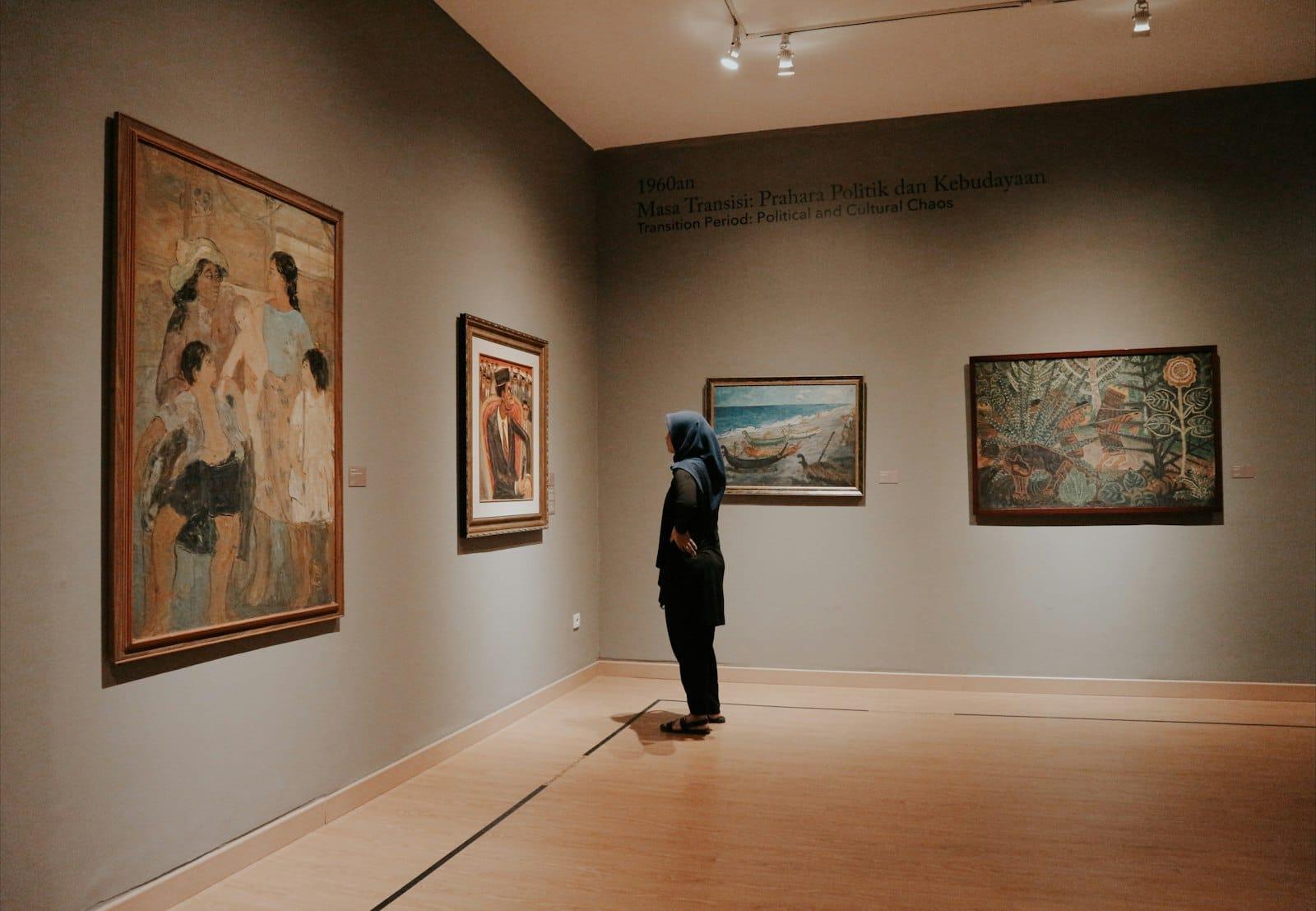
A discerning inventory of the canvases, pixels, and pedigrees currently dominating the auctions from Mayfair to Södermalm.
History, as any auctioneer with a penchant for Patek Philippe will tell you, does not repeat itself, but it does occasionally rhyme—usually with a commission. As we navigate the midpoint of 2026, the art market has finally shaken off the post-pandemic delirium that saw us all briefly pretending to care about animated monkeys and pixelated punks. We have returned, thankfully, to the tactile, the historical, and the unapologetically expensive.
The 2026 landscape is one of refined correction. The froth has evaporated, leaving behind a market that rewards patience, provenance, and, interestingly, a certain degree of anonymity. If the 2010s were defined by the loud, the neon, and the Instagrammable, the current era belongs to the quiet power of the "New Minimalists" and the surprisingly resilient secondary market for mid-century Scandi masters.
The Death of the Stunt: The Banksy Problem
Let us address the spray-painted elephant in the room. For twenty years, Banksy served as the gateway drug for the "new money" collector. The formula was reliable: a dash of anti-establishment sentiment, a shredding frame, or a self-destructing canvas, followed by a frantic bidding war at Sotheby’s. But as we sit in 2026, the joke has begun to wear thin.
The issue isn't aesthetic; it’s exhaustion. When rebellion becomes a line item on a balance sheet in the Cayman Islands, it loses its edge.
Authenticity is the only currency that matters in a downturn, and when your "rebel" artist is embroiled in trademark disputes that feel more like H&M corporate strategy than street art, the glow fades. Banksy is sweating because the market has finally developed a memory. The flippers who bought in 2021 are finding that the exit ramp is significantly more crowded than the entrance.
The Rise of "Tactile Transcendence"
If the street art bubble has finally popped, where is the liquidity flowing? Towards what we call "Tactile Transcendence." Discerning collectors are fleeing the digital and the ephemeral in favour of works that possess undeniable physical presence.
We are seeing a surge in demand for the "New Earth" movement—artists who utilize raw, geological materials to create large-scale works that look as though they were unearthed rather than painted. Leading the charge is the Icelandic polymath Hrafnhildur Arnardóttir (Shoplifter), known for immersive installations in synthetic and natural hair.
They are becoming the requisite backdrop for the Brutalist villas of the northern archipelago. The appeal is simple: you cannot mint a five-ton slab of volcanic glass and sheep’s wool on the blockchain. It requires a crane and a reinforced floor, which provides a certain comforting permanence in a world of deepfakes and generative AI noise.
The Return of the "Old" New: 1950s Nordic Revival
One of the more delightful trends of 2026 is the aggressive re-evaluation of post-war Scandinavian abstraction. For years, names like Asger Jorn and Pierre Alechinsky (of the CoBrA movement) were considered "staid"—the kind of things one’s uncle kept in his study in Frederiksberg.
The buyers?
This revival isn't limited to the CoBrA group. The market for mid-century Finnish glassware—specifically the more experimental, unique pieces by Tapio Wirkkala—is currently white-hot. A "Kantarelli" vase, if you can find one that hasn't been chipped by a clumsy housekeeper, is now a serious collector's piece. It’s a sophisticated play: high-liquidity, high-prestige, and perfectly suited to the "quiet luxury" aesthetic that continues to dominate the lifestyle of the UHNW demographic.
The AI Filter: Curation Over Creation
We cannot discuss the 2026 market without touching on Artificial Intelligence, though perhaps not in the way the Silicon Valley evangelists hoped. The 2024–25 period saw a flood of "AI-generated masterpieces" that were, frankly, abysmal—disturbing hands with twelve fingers and sunsets that looked like they were designed by a laser-tag arena.
As a result, the market has pivoted. We are seeing the rise of the "Curated Correction." Collectors are no longer interested in what the machine can create; they are interested in how human artists subvert the machine. The American artist Trevor Paglen and the Dutch collective Metahaven are the names to know here. Their work, which deconstructs surveillance and algorithmic bias, has become the "status symbol of the informed."
In the 2026 market, owning an AI-generated image is the equivalent of wearing a clip-on tie. Owning a piece that critiques the AI infrastructure is the equivalent of a bespoke suit from Anderson & Sheppard. Paglen is represented by Pace Gallery.
Geography Check: Where to Move Your Money
The geopolitical shifts of the last twenty-four months have predictably altered the auction landscape. Hong Kong, once the undisputed hub of the East, continues to struggle with capital flight and regulatory ambiguity. In its place, Seoul has emerged as the most vibrant market in Asia. The 2025 Frieze Seoul was not just a fair; it was a coronation.
The post-Brexit regulatory hurdles in the UK—taxes, import duties, and a general sense of bureaucratic malaise—have made the Gare du Nord a more attractive shipping destination than Heathrow. The newly refurbished Bourse de Commerce—Pinault Collection continues to act as the sun around which the European market orbits.
The Glass Ceiling of "Ultra-Contemporary"
A word of caution for those chasing the "Ultra-Contemporary" (artists under 35). The years 2021–2023 saw a feverish speculative bubble in this category, with artists fresh out of the Slade or Yale seeing their graduation projects sell for startling sums.
In 2026, the floor has fallen out. The "flippers" who treated young painters like penny stocks have moved on to more lucrative (and equally volatile) ventures. If you are holding a canvas by a "Zombie Formalist" whose name was trending on Instagram three years ago, our advice is to hang it in the guest bathroom and enjoy it for what it is—because you likely won't see your money back.
The market has returned to "slow growth." This is healthy. Art should not be a high-frequency trading vehicle. The most successful collectors in our circle are those who are buying for the 2035 market, not the 2026 Q4 report. They are looking for "longevity indicators": gallery representation that isn't purely transactional, inclusion in institutional group shows (the Tate and the Louisiana still matter more than a "sold-out" exhibition in a pop-up in SoHo), and a signature style that doesn't rely on a gimmick.
Looking Ahead: The Return of the Portrait
As we move toward 2027, the whisper in the clubs—from L'Avenue in Paris to the Soho House in Copenhagen—is the return of the figurative portrait. Not the distorted, agonised figures of the 20th century, but a new, hyper-realistic, almost classical approach to the human form.
There is a craving for the "knowable" in a world of deepfakes. A portrait by an artist who has spent three hundred hours with their subject carries a weight that no prompt-engineered image can match. Watch figurative artists such as Toyin Ojih Odutola. These are the works that will define the next decade: intimate, technically demanding, and profoundly human.
If you find yourself in London this autumn—perhaps for the Frieze week, provided you can stomach the traffic—skip the main tent. Head to the smaller, independent galleries in Marylebone and Mayfair. That is where the real market is breathing. The "mega-auctions" are becoming high-end theatre; the real collecting is happening in the quiet spaces, over lukewarm espresso, far away from the flashbulbs and the influencer drones.
The Takeaway
- Exit the Gimmick: If the art relies on a stunt or a digital "unique" identifier that isn't backed by a physical asset, sell now. The novelty era is over.
- Go Deep, Not Wide: Focus on the post-war European masters—specifically the CoBrA movement and late-period Nordic abstraction. They are undervalued and provide a "safe haven" for capital.
- Paris is the North Star: For acquisitions and logistics, Paris is now the primary gateway. London retains its charm but lacks the streamlined efficiency of the EU’s new art hub.
- Tactility is King: Look for works with "weight"—physical, geological, and historical. The more difficult a piece is to move, the more likely it is to retain its value in a digital-dominated future.
- Patience is the New Alpha: Stop looking at Artprice every morning. The 2026 market rewards those who treat their collection like a library, not a hedge fund.
Related reading: how to start collecting art without embarrassing yourself, a concise history of the great auction houses and watches, wine and whisky as alternative investments.
Continue Reading
Continue in this collection
Found this useful? Explore more in the Journal.
BACK TO JOURNAL