How Much Does It Cost to Own a Superyacht? Annual Running Costs Explained
Last updated: 16 October 2026
Researched and drafted with AI assistance; reviewed, fact-checked and approved by Thomas Lovas Lokoy. Editorial policy
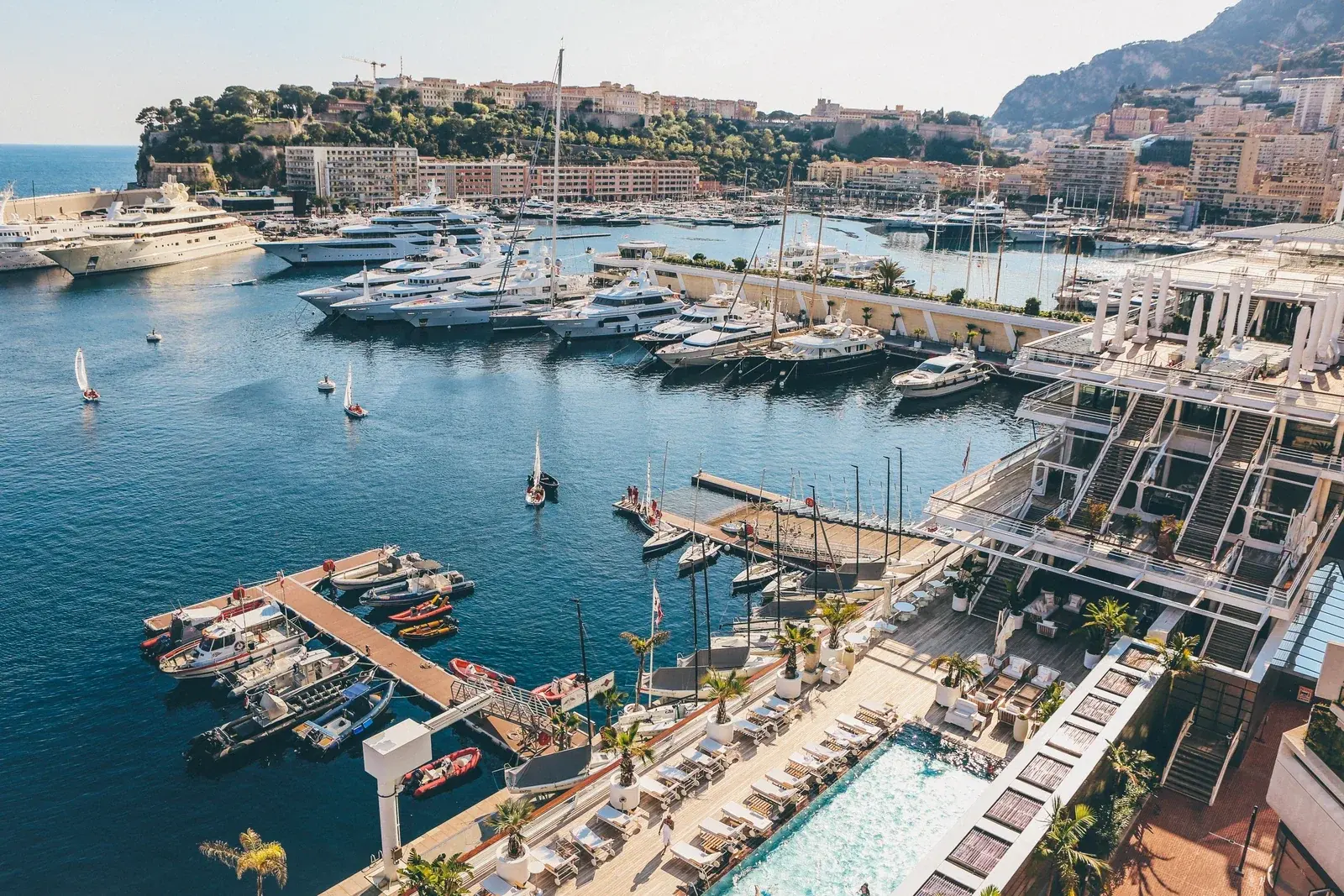
Owning a superyacht costs, as a working budget, about 10 per cent of the vessel's value every year: roughly USD 2 million a year on a USD 20 million yacht, USD 4–5 million on a USD 50 million one. Crew is the largest line, followed by berthing, maintenance and insurance, and the bill rises rather than falls as the boat ages. This guide breaks the annual figure into its parts, shows a worked budget for a 40-metre motor yacht, lists what 2026 crew salary guides actually say, and sets out the three levers experienced owners use to bring the total down.
The 10 per cent rule: a useful screen, a poor budget
The rule of thumb in superyacht ownership is that annual operating costs equal approximately 10 per cent of the vessel's value. It is a fair first screen for a new, lightly used, well-managed yacht. It is a poor budget for anything else, for a reason brokers keep repeating: value and running costs move in opposite directions over time.
Will Christie of Christie Yachts, writing in SuperyachtNews in October 2026, gives the example of a 30-metre yacht that cost EUR 10 million new and ran at about EUR 1 million a year. Ten years on it might be worth EUR 5 million, but its running costs will not have halved; if anything, surveys and repaints have pushed them up. Geoff Moore of West Nautical makes the same point to YachtBuyer: the rule gives "a very rough figure" for new yachts at best and cannot account for the two biggest variables, crew and berthing.
Use the 10 per cent figure to decide whether a size bracket is affordable at all. Then build the line-item budget below.
Purchase price and one-off costs
The acquisition cost of a superyacht is just the starting point. On top of the purchase price, budget for:
VAT or import duties. In EU waters, VAT applies to yachts used for private pleasure. Rates vary by jurisdiction: 20 per cent in France, 22 per cent in Italy. Structures exist to minimise VAT exposure legally, but they require careful planning and compliance with flag state and usage rules.
Survey costs. A full condition and valuation survey from a qualified marine surveyor is essential before purchase. For a 40-metre vessel, expect GBP 15,000–30,000 for a comprehensive survey. Never skip this step.
Class certification. Yachts over a certain size must be certified by a classification society (Lloyd's Register, Bureau Veritas, DNV). Initial certification or transition to a new class can cost USD 100,000–500,000 for a large vessel.
Crew: the largest line in the budget
Crew is typically the largest single operating cost category. A well-run 40-metre yacht requires a minimum crew of six to eight full-time staff: captain, first officer, chief engineer, bosun, chef, and steward(ess) crew.
The 2026 salary guide published by yacht recruiter Lighthouse Careers gives these monthly base salaries for the 40–50 metre band. Tips, bonuses and rotation uplifts are excluded, and actual offers vary with experience, certification and whether the yacht charters.
| Role (40–50 m yacht) | Monthly base salary, 2026 |
|---|---|
| Captain | EUR 8,500–12,500 |
| Chief Officer / First Mate | EUR 5,500–7,000 |
| Chief Engineer | EUR 6,500–8,000 |
| Head Chef | EUR 6,000–9,000 |
| Chief Stewardess | EUR 4,500–7,000 |
| Bosun | EUR 3,750–4,500 |
| Deckhand (junior) | EUR 3,000–3,200 |
| Stewardess (junior) | EUR 3,000–3,500 |
As a cross-check, the UKSA salary guide (market as of January 2025) puts a 45–50 metre captain at EUR 9,000–12,000 and a chief engineer at EUR 7,000–9,500 a month, so the two sources broadly agree at the top of the crew list. Total crew salary costs for a 40-metre vessel land in the region of USD 400,000–700,000 a year depending on crew size and seniority.
Add crew flights, visas, medical insurance, training certifications, and repatriation costs. Total crew overhead typically adds 20–30 per cent to base salaries. Crew rotation, where two captains or two chefs alternate, raises the bill further; West Nautical suggests it is worth considering from about 70 metres upwards, because it attracts and keeps better crew.
Paying a multi-national crew based across several countries is its own administrative task. A multi-currency business account such as Airwallex is a practical way for a management company to run payroll in several currencies without repeated conversion fees.
Maintenance and refit
Superyachts require continuous maintenance. Budget approximately 1–1.5 per cent of vessel value annually for routine maintenance: engine servicing, antifouling, mechanical systems upkeep, and cosmetic maintenance.
The maintenance calendar has three rhythms: annual servicing, a lift-out roughly every two years, and a full class survey and refit every five years. The five-year drydock covers hull inspection, replacement of anodes and running gear, and typically significant systems upgrades. For a 40-metre vessel, a comprehensive 5-year refit costs USD 500,000–2,000,000 depending on scope. Older vessels require more frequent and more expensive refits. Moore's advice on the big-ticket years is simple: put major refit work out to several yards, because competitive quotes can save "hundreds of thousands or more".
Marina and berthing fees
Marina fees vary enormously by location. A 40-metre berth in Monaco costs EUR 1,500–3,000 per night in peak season. Porto Cervo in Sardinia is comparable. Less prestigious marinas in Croatia or Greece cost EUR 200–600 per night.
For owners based in the Mediterranean, annual berthing costs, combining a home berth and seasonal cruising stops, typically run EUR 150,000–400,000. Water, electricity and a parking space by the home berth are usually charged on top. Moving the home berth from a popular Western Mediterranean marina to the Italian Adriatic or Montenegro saves about 30 per cent on berthing for a 40–60 metre yacht, according to West Nautical; above that size, with fewer berths to choose from, the saving is closer to 15 per cent.
Insurance
Marine insurance for a superyacht includes hull and machinery coverage plus protection and indemnity (P&I) liability coverage. Annual insurance premiums typically run 0.8–1.5 per cent of insured value for well-maintained vessels with experienced crew. On a USD 20 million vessel, that is USD 160,000–300,000 annually.
Premiums increase significantly for vessels with claims history, older machinery, or operating in higher-risk regions (certain Caribbean islands, parts of Southeast Asia).
Flag state and registration
The flag state of a vessel determines its regulatory regime, crew certification requirements, and tax treatment. Popular flag states for private superyachts include the Cayman Islands, British Virgin Islands, Malta, and the Marshall Islands.
Registration fees are modest, typically USD 5,000–15,000 annually. The ongoing compliance costs (surveys, certifications, port state control inspections) vary by flag state. Cayman and BVI have well-established infrastructure for superyacht compliance.
If the yacht will charter, the flag's commercial yacht code applies. For Red Ensign flags (the UK, Cayman, BVI, Isle of Man and others) that is the Red Ensign Group Yacht Code, in force since 1 January 2019, which merged the earlier Large Yacht Code (LY3) with the Passenger Yacht Code. Meeting it adds survey and equipment costs that a purely private yacht avoids. Our guide to choosing a flag state goes through the trade-offs.
Fuel
Fuel consumption varies enormously by vessel size, hull type, and speed. A 40-metre displacement motor yacht cruising at 10 knots consumes approximately 150–250 litres per hour. At the EUR 1.00–1.20 per litre marine diesel price used for planning in European waters when this guide was researched, a 200-hour cruising season costs EUR 30,000–60,000 in fuel alone. Check current bunker prices before budgeting; they move with the oil market.
Faster planing vessels, or yachts with multiple generators running air conditioning in warm climates, consume significantly more. On charter, guests normally pay for the fuel they use.
Chartering to offset costs
Many owners offset operating costs by chartering their vessel when not in personal use. A well-managed 40-metre yacht generating EUR 30,000–80,000 per week in charter revenue can meaningfully reduce net ownership cost.
However, charter use introduces additional wear, requires commercial certification (MCA or equivalent), and involves management fees of 15–20 per cent to the management company. Charter income is taxable in most jurisdictions. Both Christie and Moore are blunt on the headline promise: charter income can partially offset the budget, but the idea that it covers all running costs is, in YachtBuyer's words, "rarely the case". For the charterer's side of the same numbers, see how to charter a superyacht and what it costs.
Worked annual budget: 40-metre motor yacht, USD 15 million value
| Cost line | Annual budget | Share of total |
|---|---|---|
| Crew (including overhead) | USD 600,000 | 40% |
| Marina and berthing | USD 250,000 | 17% |
| Maintenance (routine) | USD 200,000 | 13% |
| Insurance | USD 180,000 | 12% |
| Management fees | USD 120,000 | 8% |
| Miscellaneous (provisions, repairs, administration) | USD 100,000 | 7% |
| Fuel | USD 60,000 | 4% |
| Total | approximately USD 1,500,000 | 100% |
That total is 10 per cent of the vessel's value, which is why the rule of thumb survives. It is before any major refit and excludes the amortised cost of the vessel itself. Shares are rounded.
Three levers that actually cut the bill
The owners who run their yachts well below the rule of thumb tend to pull the same three levers, each of which has a quoted result behind it.
- Run a single-season programme. Christie describes a 45-metre Feadship whose new owner moved from a year-round, two-hemisphere programme to a single season, dropped rotational crew and reduced winter crewing. The annual operating budget fell by around 40 per cent. The yacht was the same; the programme was not.
- Move the home berth east. The roughly 30 per cent berthing saving for a 40–60 metre yacht in the Adriatic or Montenegro versus the Côte d'Azur comes straight off the second-largest line in the budget, and the cruising grounds are a day's passage away. The Mediterranean charter routes guide covers both coasts.
- Tender the five-year refit. Refit is where budgets spike. Taking the specification to several yards rather than defaulting to the nearest one is the single largest controllable saving in the ownership cycle.
Own or charter?
Superyacht ownership is one of the most emotionally rewarding and financially demanding lifestyle choices available. The owners who are most satisfied are those who use their vessels intensively, 12 weeks or more a year, and who entered ownership with clear eyes about the total cost.
For those aboard under 6–8 weeks a year, charter almost always delivers better value per experience; the same ownership-versus-charter arithmetic applies to helicopters, and for the same reasons. For those who want availability on their own timeline, with their own crew, configured exactly as they prefer, ownership is irreplaceable.
Frequently asked questions
How much does it cost to run a superyacht per year?
Budget about 10 per cent of the vessel's value as a starting point: roughly USD 1.5 million a year for a 40-metre motor yacht worth USD 15 million, USD 2 million for a USD 20 million yacht, and USD 4–5 million for a USD 50 million yacht. Older yachts cost more to run relative to their value, because running costs rise while the resale value falls.
What is the biggest running cost of a superyacht?
Crew. On a 40-metre yacht, salaries plus flights, insurance, training and repatriation come to around 40 per cent of the annual budget. 2026 recruiter guides put a 40–50 metre captain at EUR 8,500–12,500 a month and a chief engineer at EUR 6,500–8,000 before tips, bonuses or rotation.
Does chartering a superyacht pay for its running costs?
Rarely in full. A well-managed 40-metre yacht can earn EUR 30,000–80,000 a week on charter, which meaningfully reduces the net cost, but charter requires commercial certification, adds wear, costs 15–20 per cent in management fees and is taxable. Treat charter income as a partial offset, not a business plan.
How can an owner reduce superyacht running costs?
The three levers with documented results are a single-season programme without rotational crew (around 40 per cent off one 45-metre yacht's budget), a home berth in the Eastern Mediterranean (about 30 per cent off berthing for 40–60 metre yachts) and competitive tendering of the five-year refit.
Sources
Continue Reading
Continue in this collection



Found this useful? Explore more in the Journal.
BACK TO JOURNAL