Smart Homes That Don't Look Like Spaceships: 2026's Best Discreet Tech
Last updated: 3 October 2026
Researched and drafted with AI assistance; reviewed, fact-checked and approved by Thomas Lovas Lokoy. Editorial policy
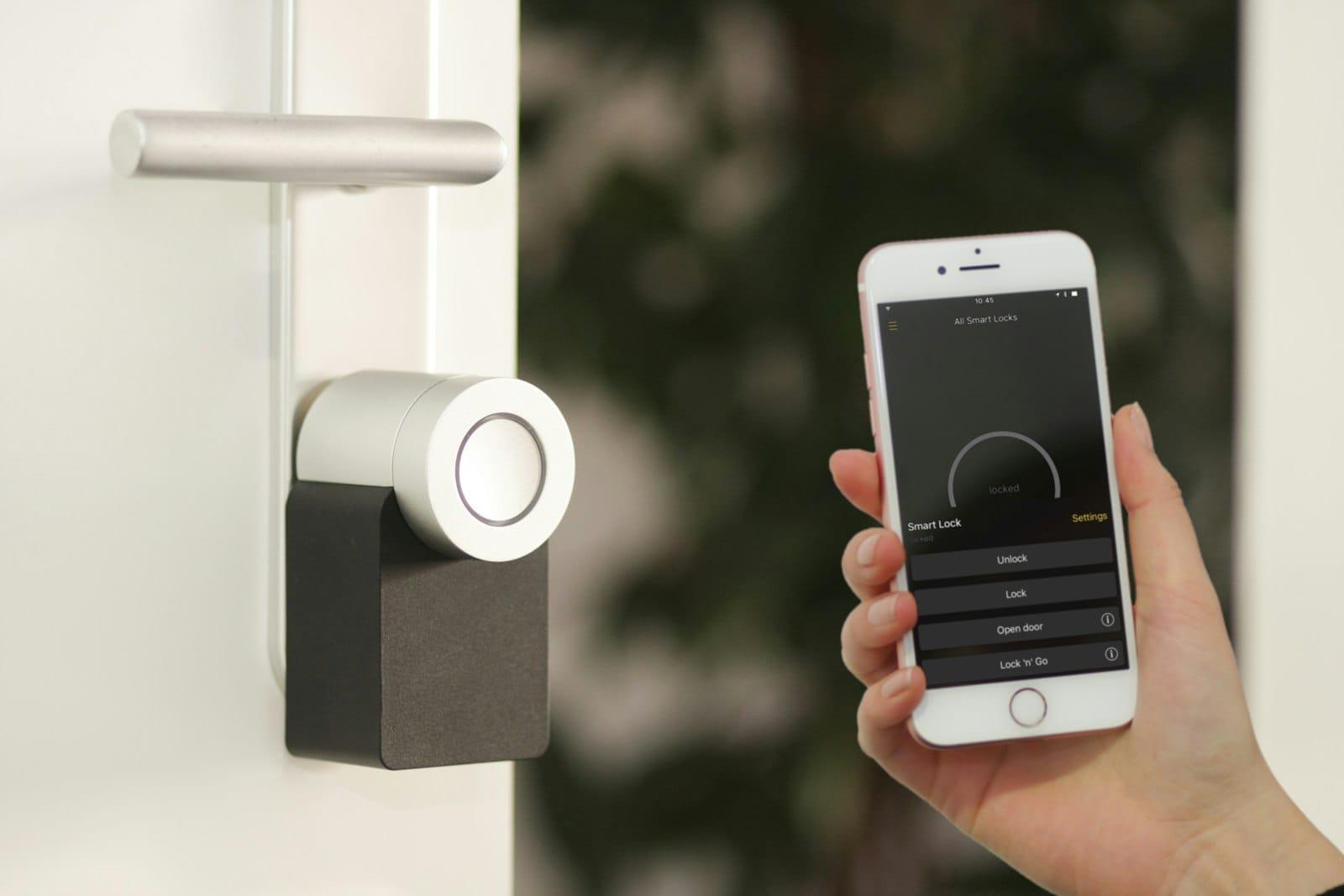
The era of the glowing blue LED and the touchscreen-clad refrigerator is finally over, replaced by an invisible intelligence that understands a room is for living, not orbiting.
There was a brief, unfortunate window in the early 2020s when "luxury" in the domestic sphere was measured by how closely your living room resembled the bridge of the USS Enterprise. We were told that the future was a series of touchscreens glued to mahogany, voice assistants that interrupted dinner parties with unsolicited weather reports for Reykjavik, and motorised blinds that moved with the aggressive whine of a dental drill. It was technology as performance art, and it was exhausting.
By 2026, the pendulum has swung back—not toward the Luddite, but toward the invisible. The discerning homeowner has realised that the ultimate flex is not a house that talks back, but a house that listens quietly and acts without being asked. We are seeing a return to tactile honesty: stone, timber, mohair, and oiled bronze. The silicon is still there, of course—more powerful than ever—but it has been tucked behind the wainscoting where it belongs.
The aesthetic is "quiet tech." It is the art of the disappearing act. If your guest can tell you have a smart home before they've been offered a glass of Ruinart, you have failed.
Every product named below is a real product, checked on its maker's own website on 30 September 2026. Prices are left out on purpose: most of this equipment is sold through installers and priced per project, so ask for a written quote.
The Death of the Control Panel
For a decade, the wall-mounted iPad was the status symbol of the Silicon Valley set. Today, a plastic screen bolted to a lime-wash wall feels as dated as a sunken conversation pit. The better interfaces now look like switches, sit where switches always sat, and do far more.
The Belgian firm Basalte is a good example. Its Sentido is a multifunctional design keypad with a multi-touch surface: a light touch sets the mood of a room, and from across the room it reads as a well-made switch in brushed black, satin white or brushed volcanic grey. Where a screen is genuinely useful, Basalte's Ellie touch display handles lighting and music from one panel. Both are installed and programmed by a home-technology integrator rather than bought off the shelf.
Voice control has gone the same way. Josh.ai, founded in Denver in 2015 and sold only through certified integrators, makes the Josh Nano, which it calls the world's first "architectural microphone": a small microphone designed to disappear into a ceiling or wall. Its Josh Core processor sits in the equipment rack and, in Josh's words, doubles down on local processing to keep each client's data private. With Lutron, Josh also offers a wallplate that combines Lutron keypads with Nano microphones, so the most used scenes stay on a button while everything else can be asked for in plain speech: "it's too dark in here" brightens the lights, and "turn off the master bedroom" turns off the lights, music, fans and TV.
Even audio has learned to hide in plain sight. Bang & Olufsen's Beosound Emerge, designed by Benjamin Hubert's studio LAYER and launched in 2021, is a slim, book-inspired Wi-Fi speaker with a footprint of only 6.7cm. It sits on a shelf among your first editions and looks like it belongs there. It is tech that respects your library.
The Kitchen: From Laboratory back to Hearth
We must address the kitchen. For years, the kitchen was the primary victim of "gadget creep." We were promised ovens that could tweet and fridges that could order milk, as if the modern professional was incapable of looking at a carton.
Extraction is the great vanishing act. The stainless-steel hood that looms over an island like an industrial chimney is being replaced by cooktop extractors, which pull cooking vapours downwards through the hob itself. The maker BORA built its business on exactly this, and its current range runs from the modular BORA Professional 3.0 and BORA Classic 2.0 to compact all-in-one systems such as the X Pure, M Pure, Pure and S Pure. The view over the island stays clear. Two caveats from BORA itself: a system cannot be retrofitted into just any kitchen without significant modifications, and it needs a specialist to install it.
Storage has also become intelligent without looking neurotic. Sub-Zero's Designer Series fridges are panel-ready, so they take the same fronts as the rest of the cabinetry and simply disappear. Inside, an air purification system that Sub-Zero says is based on technology developed by NASA scrubs the air of ethylene (the gas that speeds up ripening and spoilage) and odour every 20 minutes. A Night Mode dims the interior lighting by 90% when the room is dark, so a midnight glass of water does not light up the kitchen. The fridges are Wi-Fi enabled and can be linked to a smart home system, or simply left alone.
The Bedroom as a Sanctuary of Silence
If there is one room where technology has overstayed its welcome, it is the bedroom. The intrusion of blue light and "sleep tracking" headboards has done more to ruin a good night's sleep than the invention of the espresso machine.
The most convincing answer here is, tellingly, not technology at all. Hästens, the Swedish bed maker run by the same family since 1852, still builds its beds by hand from horsetail hair, cotton, wool and flax around individually hand-tied springs, in the familiar blue-and-white check or a fabric of your choosing. Its top models are the Grand Vividus and the Vividus. There is no app and no "sleep score". The bed simply does its job.
This move toward "passive tech" extends to the air. The Dyson Purifier Humidify+Cool Formaldehyde purifies and humidifies, but it looks like what it is. For those who would rather it looked like furniture, the Swedish company Livsdal makes air purifiers inspired by Swedish Empire design in oiled wood, stainless steel and stone, built in Falköping and Herrljunga. Inside are HEPA H13 particle filters and carbon filters from the Swedish filtration specialist Camfil, and the purification is purely mechanical: no ionisation or other add-on technology. It is the lungs of the house, dressed as a piece of furniture.
The Return of the Utility Room: The Brain of the House
To keep a home looking like a 19th-century villa while functioning like a 22nd-century spacecraft, one needs a serious equipment room. The "smart home" hasn't disappeared; it has just moved to the basement or the utility closet.
In large renovations, one common choice for the central nervous system is Crestron Home. Its CP4-R is a rack-mounted control processor designed exclusively to run Crestron Home OS, and it ties together audio, video, lighting, motorised shades, thermostats, door locks and sensors, with the homeowner controlling it all from the Crestron Home app. The processor lives in a rack in the equipment room; only the keypads and the app are ever seen.
Lighting is where the quiet approach pays off most. Lutron's Ketra lamps and fixtures produce white light across a range of 1,400K to 10,000K, from candle-warm to the cool of a bright northern sky, plus millions of saturated colours. Run through Lutron's HomeWorks system, the light can track the sun through the day, shifting its colour temperature and intensity from morning to night without anyone touching a switch.
None of this is cheap, and none of it is sold by the box. Crestron, Lutron HomeWorks, Josh.ai and Basalte all come through professional integrators, and the cabling is best planned before the plaster goes on. Get a written, itemised quote before committing.
For those not yet ready to open the walls, retrofit devices such as SwitchBot apply the same "invisible control" principle to existing switches, curtains, and locks without a full rewire.
Security: The Invisible Sentinel
Home security has also undergone a much-needed aesthetic overhaul. We have moved past the era of plastic cameras bolted to the doorway like a digital plague. The discreet approach is sensors built into the architecture, and far fewer lenses.
Some of the technology comes from much larger sites. Fiber SenSys, for example, makes the Terrain Defender TD100, a buried line sensor that detects an intruder crossing the ground above it and locates the crossing to within about a metre, as well as LiDAR-based sensors for interiors. The company's applications range from commercial and power-distribution sites to oil and gas and the military, so for a private estate the realistic route is to ask your security integrator which buried or beam-based perimeter sensors they install and support locally, and how they handle false alarms from animals and weather.
The Takeaway: A New Definition of Intelligence
The "smart home" of 2026 is a paradox: it is more connected than ever, yet it looks more traditional than it has in decades. We have finally realised that the point of technology is not to be seen, but to serve.
- Privacy starts with where the processing happens: ask whether voice and automation run on a processor in your own rack (as Josh.ai stresses with Josh Core) or in someone else's cloud.
- Buttons beat screens: well-designed keypads such as Basalte's Sentido or Lutron's keypads, plus hidden microphones, do most jobs better than a wall of glass.
- Hide the hardware, not the function: panel-ready fridges, cooktop extractors, book-sized speakers and furniture-grade purifiers keep the architecture intact.
- Plan it with an integrator: most of this equipment is installed and programmed professionally, and the wiring is far easier before the walls are finished.
The ultimate luxury in 2026? A home that behaves exactly as you want it to, while never once asking for your Wi-Fi password. After all, a house that needs to show off its IQ is probably just compensating for a lack of character.
Related reading: 2026 interior design trends, the art of the library room and commissioning bespoke furniture.
Sources
- basalte.be/en/projects/knokke-heist-belgium
- basalte.be/en/projects/affligem-belgium
- josh.ai/about
- josh.ai/stories/joshai-and-control4-a-complete-home-automation-experience-tog…
- bang-olufsen.com/en/be/reloved/reloved-beosound-emerge
- bora.com/en-gb/press/bora-m-pure-the-ultra-flexible-cooktop-extractor-system-…
- bora.com/en-au/guide/hood-alternative
- subzero-wolf.com/products/sub-zero/full-size-refrigeration/integrated-fridges…
- hastens.com/cy/retail/us/new-york/madisonavenue
- dyson.com/air-treatment/air-purifier-humidifiers/purifier-humidify-cool-forma…
- livsdal.com/sv
- crestron.com/Products/Catalog/Control-and-Management/Control-System/Residenti…
- lutron.com/us/en/lighting/lamps-track-lights/par-lamp
- fibersensys.com/product
- fibersensys.com/news-events/new-buried-line-sensor
Continue Reading
Continue in this collection


Found this useful? Explore more in the Journal.
BACK TO JOURNAL