Private Jet vs First Class: An Honest Cost-Benefit Analysis
Last updated: 16 October 2026
Researched and drafted with AI assistance; reviewed, fact-checked and approved by Thomas Lovas Lokoy. Editorial policy
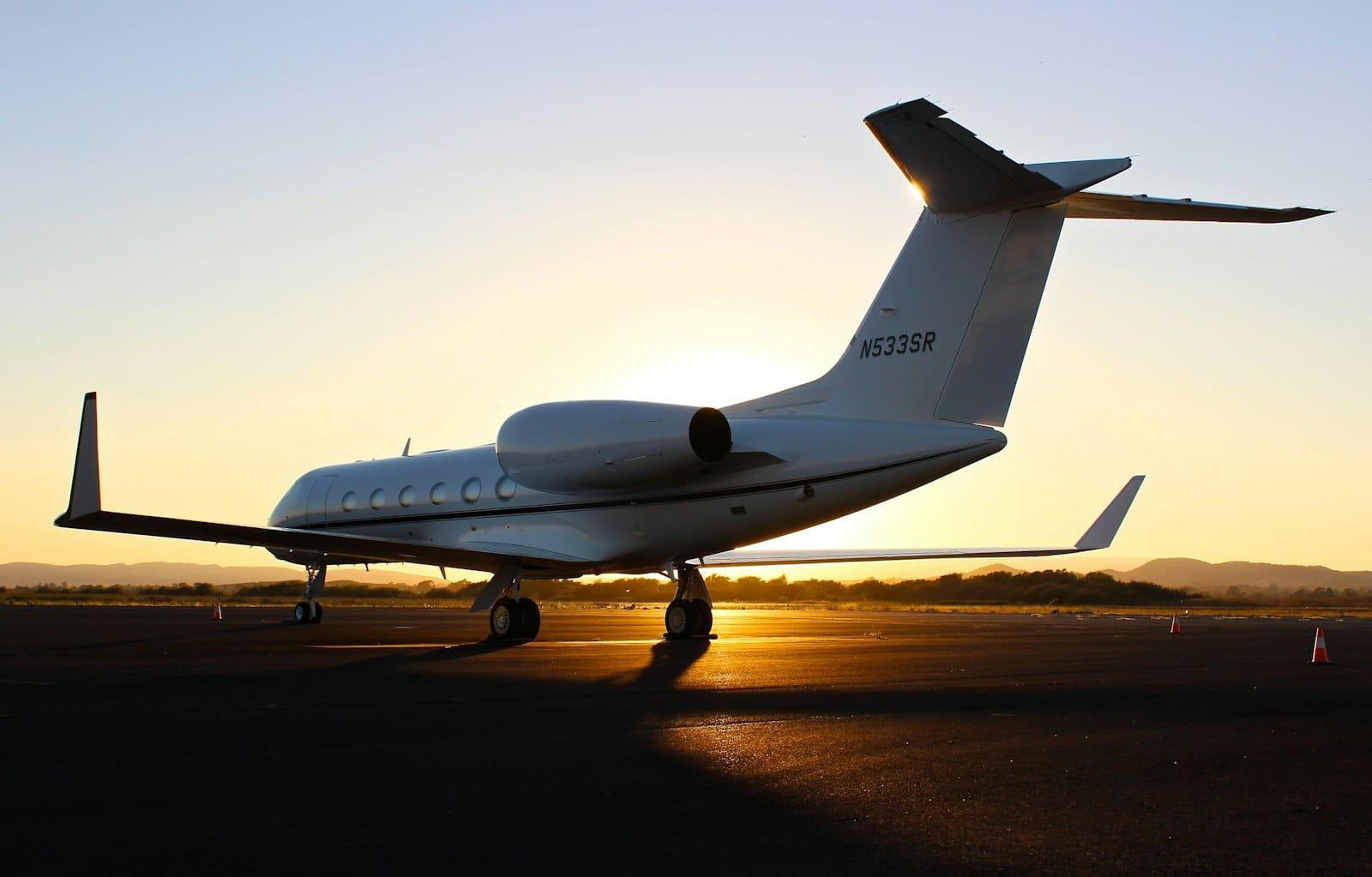
A cold-eyed look at whether the Gulfstream G650ER is a genuine productivity tool or merely a very expensive way to avoid looking at a stranger’s knees.
The Great Delusion of the Boarding Gate
There is a specific brand of quiet desperation that occurs at Terminal 5, Heathrow, even within the hallowed, pine-scented confines of the British Airways Concorde Room. One sits there, sipping a glass of Laurent-Perrier Grand Siècle, surrounded by the subtle clicking of Tumi suitcases and the soft rustle of The Financial Times, and one still knows—deep in the marrow—that the indignity is coming.
The indignity, of course, is the scheduled departure. The realization that despite your status, your net worth, or the impeccable cut of your Brunello Cucinelli blazer, you are ultimately a captive of an algorithm. You will board when they tell you. You will walk through a plastic tunnel. You will sit in 2A, and you will hope, with a fervour usually reserved for tax audits, that the toddler in 3B has been adequately sedated by their parents.
For the affluent traveller, the debate between First Class and Private Aviation is rarely about the money itself. If you are reading this, you are likely aware that a return ticket to Singapore on Singapore Airlines’ magnificent A380 Suites is sold at a published fare, while chartering a Global 6000 for the same route is priced by quote and runs far higher. The math is not the mystery.
The question is whether the delta in price—the "ego tax," as the less sentimental corner of private banking has it—is actually a purchase of the only commodity that matters: time tailored to your own whims. Or, more cynically, is it simply a way to ensure the only people you have to speak to are those you have explicitly invited to the cabin.
The First Class Renaissance: When the Front of the Plane is Enough
To suggest that first class is "slumming it" is a piece of theatre best left to the dinner table. In truth, the commercial product has never been better. We are currently living through a golden age of the "suite," a trend ignited by Emirates and perfected by Etihad’s The Residence, and now refined into a minimalist, Scandinavian-adjacent dream by Air France’s La Première.
If you are flying the Paris to New York route—the legendary AF006—La Première offers a level of curated sophistication that no mid-sized private jet can match. A Hertz DriveU chauffeur collects you, and at Charles de Gaulle you are driven to the aircraft in a Porsche Cayenne Hybrid. You are ushered into a lounge where Alain Ducasse oversees the menu. On board, the cabin feels like a private residence designed by someone who actually owns a private residence.
For the price of a La Première seat, you receive a bed that is arguably more comfortable than the divans on a Cessna Citation, and a wine and champagne list curated by Air France's head sommelier, Xavier Thuizat.
The benefit here is infrastructure. A commercial airline, even on its worst day, has a fleet of hundreds. If a mechanical issue grounds your 777, there is another one three gates down. If your chartered Falcon 7X developed a fuel pump hiccup at a secondary airport in the Peloponnese, you are not flying home tonight. You are instead spending a very long evening in a three-star hotel negotiating with a Greek mechanic named Spiros. There is an overlooked luxury in the sheer boring reliability of a legacy carrier.
However, the "benefit" of First Class ends the moment you reach the border. Even with the expedited "fast track" lanes at JFK or Dubai International, you are still a data point in a mass-transit system. You are still breathing the same recycled air as 300 people in the back who are currently arguing over the last chicken wrap.
The Private Reality: It’s About the FBO, Not the Caviar
The true argument for private aviation—whether by outright ownership, fractional share, jet card or on-demand charter—rests entirely on the existence of the Fixed Base Operator (FBO).
The FBO is the private terminal. The FAA's own definition is deliberately dry — a fixed-base operator is an organisation granted the right by an airport to provide aeronautical services such as fuelling, maintenance, hangarage and ground handling — and at the larger facilities that extends to a passenger lounge, ramp access and ground transport arranged to the aircraft. The definition undersells what it means in practice, because the FBO is where most of the friction of modern air travel has been designed out rather than merely reduced.
The departure therefore runs on a different pattern from the airline concourse. Passengers are received at the private terminal rather than a kerbside drop-off, bags are handled at the aircraft rather than routed through a hold-baggage system, and boarding is a walk across the ramp rather than a queue through a shared checkpoint and gate. The basis for that last difference is documented rather than folklore, at least in the United States: under 49 CFR § 1544.101(f), current as of 2026, a private charter must adopt the full airline-style security programme only when passengers board from or arrive into a sterile area, or when the aircraft exceeds 45,500 kg (100,309.3 lb) maximum certificated take-off weight, or seats 61 or more. The overwhelming majority of business jets fall under every one of those thresholds. Screening arrangements outside the United States are set by each state and operator, so treat this as the American rule rather than a universal one.
This is the benefit that resists a spreadsheet, and it is worth being precise about what it is. It is not the catering and it is not the cabin. It is the removal of the queue, the terminal transit and somebody else's schedule. What that is worth depends entirely on what an hour of the passenger's own time is worth — a calculation only the passenger can run, and one that collapses the moment the honest answer is "less than the charter invoice".
Then there is the matter of the destination. Commercial airlines are slaves to hub-and-spoke models. If you wish to go from Gothenburg to a specific vineyard in the Douro Valley, Lufthansa will demand you fly to Frankfurt, wait two hours, fly to Lisbon, and then drive four hours. A Pilatus PC-12—the Swiss army knife of the skies—will land you on a 1,000-metre strip twenty minutes from the tasting room.
The "Cost," however, is the opacity of the charter market. Outside a fixed-price subscription or membership programme, the buyer is dealing through brokers, and a category label does a great deal of work: "Heavy Jet" describes a class, not a specific cabin, a specific age of airframe or a specific standard of upkeep. Insist on the tail number and the operator before signing, because those two facts are what actually determine the aircraft that turns up. You are paying for the privilege of being the boss, which means when things go wrong, you are the one responsible for the contingency plan.
The Ledger, Plainly
Every figure below appears in the sections above. Nothing here is a quotation, and the charter market's opacity is the reason: outside a fixed-price subscription, a category label such as "Heavy Jet" describes a class, not a cabin, an airframe age or a standard of upkeep.
| First class | Private charter | |
|---|---|---|
| The fares named here | Singapore Airlines' A380 Suites to Singapore; La Première on the Paris to New York AF006, both priced on the day | A Global 6000 on that same Singapore route, priced by quote |
| Outright ownership | Not applicable | A large-cabin Gulfstream, before fractional shares, jet cards and on-demand charter enter the picture |
| What the money actually buys | A bed arguably more comfortable than the divans on a Cessna Citation, and a wine list curated by Air France's head sommelier | The FBO. Not the catering and not the cabin, but the removal of the queue, the terminal transit and somebody else's schedule |
| Where it can land you | The hub-and-spoke network. Gothenburg to the Douro Valley means Frankfurt, two hours, Lisbon, then a four-hour drive | A Pilatus PC-12 onto a 1,000-metre strip twenty minutes from the tasting room |
| Security screening | The full airline programme | Under 49 CFR § 1544.101(f), current as of 2026, the full airline-style programme applies only when passengers board from or arrive into a sterile area, or the aircraft exceeds 45,500 kg maximum certificated take-off weight, or seats 61 or more. Most business jets fall under all three. An American rule, not a universal one |
| The cost that is not on the invoice | Somebody else's schedule | Broker opacity. Insist on the tail number and the operator before signing, and accept that when things go wrong the contingency plan is yours |
The Fractional Compromise and the Rise of the 'Empty Leg'
For the discerning Nordic traveller, the binary choice between a BA ticket and owning a large-cabin Gulfstream is increasingly a false one. The market has matured into a nuanced spectrum of "private-ish" options.
Fractional ownership is the model for those who want the consistency of a fleet without the burden of running one. The buyer purchases a share in a specific aircraft — commonly quoted in sixteenths — which buys a contracted allocation of flying hours a year, and then pays a recurring management fee and an hourly rate on top of the capital outlay. NetJets is the best-known operator of this model, with several others competing on the same structure. The figures matter enormously and none of them are stable: share price, monthly fee, hourly rate and the guaranteed callout notice all vary by aircraft type, by programme and by year, so take them from the provider's own current contract rather than from any article, this one included. What the model buys is not a discount — it is availability on notice, and the removal of the need to employ pilots.
Then there are the "Empty Legs." When an aircraft has to reposition to reach its next booked passenger, that leg flies empty unless somebody buys it, so it is offered at a steep discount to whoever will take it on the operator's schedule rather than their own. Villiers Jets — which describes itself as a technology platform connecting customers with private jet operators rather than an aircraft owner — publishes available empty legs with routes and prices on its own site, and LunaJets and Victor run comparable listings. What any given leg costs depends entirely on which aircraft needs to be somewhere and when, and the inventory turns over constantly, so the only honest way to know whether an empty leg beats two last-minute First Class tickets is to compare the two on the day you actually want to fly.
The downside? You are a hitchhiker in a very fancy suit. If the primary charterer changes their mind and decides to stay in London for another day of shopping at Harrods, your flight is cancelled. It is luxury travel for people with very flexible schedules and zero desire for "reliability."
A History of Excess: How We Got Here
To understand the current tension, one must look at the 1960s. This was the era of the "Jet Set," a term coined when the first Boeing 707s made trans-Atlantic travel a possibility for anyone with money to spare. In those days, Pan Am’s First Class was, quite literally, better than any private jet currently in existence. You could stand at a bar. You could have a roast carved tableside.
The divergence happened in 1963 with the Learjet 23. Bill Lear didn’t just build a plane; he built a status symbol that redefined "exclusive." Suddenly, the wealthy realised that the ultimate luxury wasn’t a better seat; it was the lack of a schedule.
Throughout the 1980s and 90s, the gap widened. Commercial aviation became more democratised (read: miserable), while the Gulfstream G-series became the mobile office of the corporate raider. However, we are now seeing a strange convergence. As commercial first class becomes more like a "studio apartment in the sky," the private sector is focusing on "wellness"—circadian lighting, 100% fresh air exchange systems, and ultra-quiet cabins like those in the Bombardier Global 7500, which boasts four separate living areas.
The choice today is no longer about speed—Concorde is dead, after all, and we are all stuck at Mach 0.85—it is about the environment in which you choose to age while crossing the Atlantic.
The Psychological Toll of the "Upgrade"
There is a final, darker cost-benefit to consider: the psychological impact on one’s own expectations. Once you have tasted the autonomy of private flight, the commercial world becomes unbearable.
It is a well-documented pattern in how people adapt to comfort: the standard resets, and what was once a treat becomes the new floor from which every disappointment is measured. The "benefit" of First Class is that it remains a treat. The "cost" of Private is that it stops being one.
When you fly private, you are paying to remain in your bubble. When you fly First Class, you are paying for someone to pretend the bubble still exists while you sit six feet away from an insurance salesman from Düsseldorf.
For a flight under four hours—say, Stockholm to Zurich—the private jet is an undisputed winner. The time saved at the airport is substantial. For a long-haul trek to Los Angeles, unless you are flying on a jet with a dedicated bedroom and a shower (priced by quote, and not cheaply), the Air France La Première or the Cathay Pacific First Class product is often a more "rational" choice. You get a better bed, better food, and you don’t have to worry about the pilots’ rest cycles.
But then again, since when has rationality had anything to do with where we sit at 40,000 feet?
The Numbers: A Cold Comparison
Let us look at a typical mission: London (LTN) to New York (TEB) for a party of four. Treat the figures below as an illustration of the shape of the gap rather than as a quotation. Commercial first-class fares and charter rates both move constantly with season, demand, aircraft availability and fuel, and neither has been re-verified against a live quote for this piece — price the specific trip before you plan around any of it.
Route: London – New York (Return)
- British Airways First Class: four fares, priced on the day.
- Experience: Excellent lounge, a longer door-to-door day, a baggage claim wait and the airline's schedule.
- VistaJet Program (Global 6000): priced by quote.
- Experience: a shorter door-to-door day, private customs, bespoke catering (VistaJet has a long-standing Nobu partnership), absolute silence, zero interaction with anyone who doesn't report to you.
The "Cost-Benefit" here is a very large premium for a few hours saved and the absence of strangers. For a family holiday, it is an indulgence. For a merger negotiation where the participants need to speak freely without the fear of a rival sat in 3A with a directional microphone, it is a business expense.
The Takeaway
- The Three-Hour Rule: If the total flight time is less than four hours, Private wins on time-recovery alone. Anything over eight hours and the sheer infrastructure of a First Class commercial carrier (better beds, more reliable fleet) becomes surprisingly competitive.
- The "Spiros" Factor: Chartering is for those who enjoy the gamble. Ownership or Fractional (NetJets) is for those who cannot afford the reputational risk of a mechanical delay.
- Social Signalling: First Class says you are successful. Private says you are busy. There is a profound difference between the two, often reflected in how one treats the cabin crew.
- The Hub Paradox: If you live in a hub city (London, Paris, Dubai), First Class is effortless. If you live in the "periphery" (Oslo, Geneva, the Hamptons), Private is the only way to avoid the purgatory of connecting flights.
- The Ultimate Truth: You fly First Class to be pampered. You fly Private to be ignored. Choose your luxury accordingly.
Related reading: inside Aman, Rosewood and Six Senses, where the ultra-wealthy are actually going in 2026, the grand tour reinvented for modern Europe and, if you are flying commercial, how to book luxury travel for less.
Continue Reading
Continue in this collection



Found this useful? Explore more in the Journal.
BACK TO JOURNAL