What Survived the NFT Crash: Collecting Digital Art in 2026
Last updated: 16 October 2026
Researched and drafted with AI assistance; reviewed, fact-checked and approved by Thomas Lovas Lokoy. Editorial policy
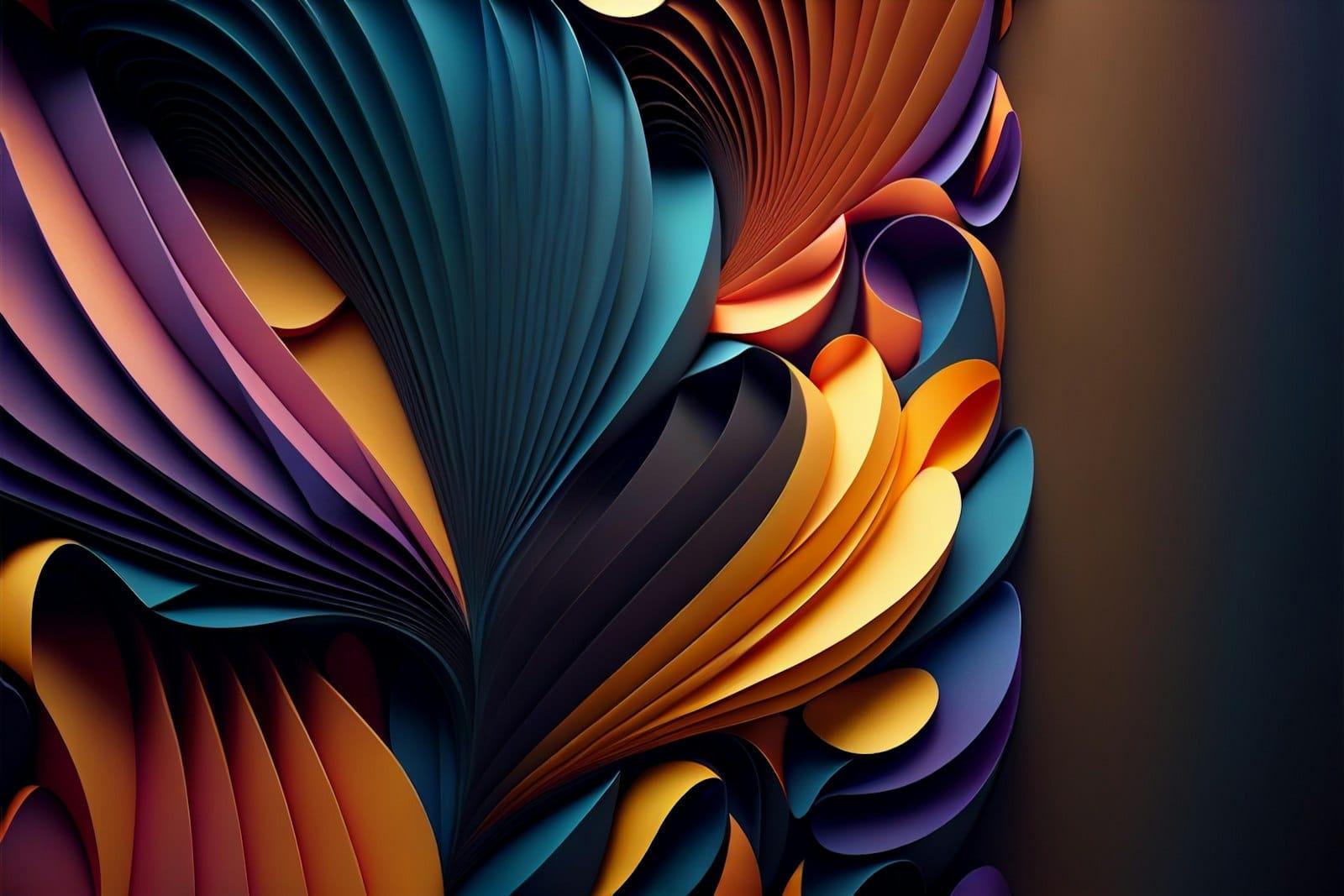
What survived the NFT crash is the part that was art all along: code-based generative work by artists with a real practice, early on-chain pieces with historical weight, and the pioneers of computer art whose work predates the blockchain by half a century. The proof is institutional: in February 2023 the Centre Pompidou in Paris acquired 18 blockchain-based projects by 13 artists, and the Los Angeles County Museum of Art accepted a gift of 22 generative works. What did not survive is the speculation: profile-picture collections, "metaverse" land and anything sold with a roadmap. Here is what changed, who and what to look at, how to display it, the risks, and a collector's checklist. Digital art is a volatile, illiquid market; buy what you would be happy to live with if its price went to zero.
After the cartoon primates and the grifters have cleared the room, the serious collectors have sat down to dinner.
Between the spring of 2021 and the winter of 2022, conversation at a certain kind of dinner was hijacked by people explaining the blockchain through a mouthful of turbot. The crash that followed was less a correction than a cleansing fire. Profile-picture projects sank, metaverse real-estate buyers found themselves holding deeds to empty pixels, and anyone who thought a pixelated punk was a substitute for a Rothko learned an expensive lesson about liquidity. But as the noise faded, something more interesting remained: digital art being collected, shown and preserved like art.
The Beeple moment and the rise of long-form generative art
On 11 March 2021, Christie's sold Mike Winkelmann's (Beeple's) Everydays: The First 5000 Days for $69,346,250, the moment that made "NFT" a household word. The flood of high-priced clip art that followed is largely forgotten. What has lasted is generative art: art produced by an autonomous system, usually code written by the artist.
Generative art is not new. Pioneers such as Vera Molnár and Herbert W. Franke were making computer-driven work in the 1960s. What changed was the delivery mechanism. Art Blocks, founded by Erick Calderon, whose genesis project Chromie Squiggle launched in November 2020, popularised "long-form" generative art: instead of the artist choosing a few favourite outputs, the collector triggers the code at the moment of purchase and receives a unique iteration. Tyler Hobbs's Fidenza, with its flowing, organic structures, became the emblem of the genre because it does not need a manifesto to be enjoyed; it needs an eye for composition.
The curatorial turn: from marketplaces to museums
The most important shift since the crash has been where this work is shown. In February 2023 the Centre Pompidou announced it had acquired, by gift or purchase, 18 projects by 13 French and international artists, including Jonas Lund's Smart Burn Contract – Hoarder, three of Rafaël Rozendaal's Horizon works, CryptoPunk #110 and Autoglyph #25 from Larva Labs. The same month, the Los Angeles County Museum of Art accepted a gift of 22 generative works from the pseudonymous collector Cozomo de' Medici, including pieces by Dmitri Cherniak, Cai Guo-Qiang, Matt DesLauriers and Monica Rizzolli.
When institutions of that weight give the work wall space, or screen space, the "it's just a fad" argument loses its teeth. Museums are not interested in flipping; they are interested in preservation, which has pushed the market towards professional advisers, careful documentation and gallery representation. Large immersive works by artists such as Refik Anadol, who uses machine learning to turn data into moving sculpture, have done for the medium's public image what no token ever could.
What the market rewards now
Look at the secondary market and a clearer hierarchy emerges:
| Category | Status after the crash | Why |
|---|---|---|
| Pioneer computer art (Molnár, Franke) | Strong institutional interest | Lineage back to the 1960s; museum history |
| Early on-chain work (Larva Labs' Autoglyphs, 2019) | Held in museum collections, including the Pompidou | Historical significance as early fully on-chain generative art |
| Curated long-form generative art (e.g. Hobbs, Cherniak) | The most resilient contemporary segment | Artists who write the code; strong aesthetics |
| AI-prompted imagery | Treated mostly as a tool or craft | Ease of production; questions of authorship |
| Profile-picture collections and metaverse land | Largely collapsed | Speculation without artistic lineage |
Sotheby's dedicated digital sales, under its head of digital art Michael Bouhanna, and Christie's equivalents remain the clearest public window on prices. The collectors buying now are not chasing a quick multiple; they are betting on art-historical significance, which is a long game.
The algorithmic lineage
The winners share an aesthetic that embraces the medium's constraints: clean, logical and quietly powerful, which suits a Scandinavian eye. Herbert W. Franke, who died in 2022, remains a touchstone for collectors of early computer art; Vera Molnár, who worked with computers when they filled rooms, has had her place in the canon confirmed. Among living artists, coders such as Casey Reas and William Mapan are taken seriously because their work continues a conversation that began decades ago. The flash-in-the-pan creators of 2021 had no lineage; the survivors do.
AI, and art that bridges physical and digital
Generative AI tools have complicated the story. The market is bifurcating between AI-prompted imagery, largely seen as a tool, and generative art, where the artist writes the system. For most collectors, the value remains in the human authorship behind the machine.
The physical-digital question was tested at scale by Damien Hirst's The Currency. Buyers of 10,000 works had a year to choose between keeping the physical painting or the NFT; when the window closed in July 2022, 5,149 chose the physical work and 4,851 the NFT, and Hirst then burned the corresponding physical works at his Newport Street Gallery in October 2022. The near-even split is the most honest data point the market has produced on how collectors value the two.
Living with digital art
The greatest practical hurdle has always been display. A television showing a slideshow looks like a television. The better solutions are matte, frame-style displays sized and placed like paintings, or bespoke installations integrated into the architecture, with proper control over brightness, scheduling and sound for time-based work. Treat the display as the frame: budget for it, and decide before you buy whether a piece is meant to be static, looping or responsive.
Two housekeeping points matter as much as the screen. Custody: understand where the token sits, who controls the keys, and how you would pass it on. Preservation: ask how the work is stored (fully on-chain, or depending on external servers that might disappear), because that affects its long-term survival as much as its price.
The risks, plainly
- Volatility and liquidity. Prices can fall sharply and buyers can vanish; there may be nobody to sell to.
- Platform and storage risk. Work that depends on a company's servers can break if the company does.
- Fraud and copies. Fakes, stolen art minted by strangers and wallet scams are common; buy from the artist, a reputable gallery or an established auction house.
- Tax and regulation. Rules on crypto assets differ by country and change; take advice.
If you hold crypto and would rather borrow against it than sell to fund a purchase, crypto-backed lenders such as Nexo offer that, but it is borrowing against a volatile asset: Nexo's own material describes features meant to protect collateral from liquidation in times of market volatility, which tells you liquidation is the risk. Availability depends on where you live. This is not financial advice; never borrow against crypto money you cannot afford to lose.
A collector's checklist
- Ignore anything with a "roadmap". An artist promising games, clubs or merchandise is a marketer.
- Look for generative and code-based work by artists with years of practice and, ideally, gallery representation or institutional collection.
- Check provenance and custody as carefully as you would for a painting.
- Plan the display before you buy.
- Buy what you love. The goal is not the next speculative collection; it is the next Agnes Martin who happens to use a laptop instead of a brush.
For the wider art market and how to buy without embarrassing yourself, see how to start collecting art, our guide to buying fine art online, art as an investment for the wealthy and Sotheby's versus Christie's.
Frequently asked questions
Are NFTs dead?
The speculative market for profile-picture collections and metaverse land largely collapsed after 2022. Digital art itself has not: in February 2023 the Centre Pompidou acquired 18 blockchain-based projects and LACMA accepted a gift of 22 generative works, and curated generative art remains the most resilient segment.
What is generative art?
Art produced by an autonomous system, usually code written by the artist. Long-form generative art, popularised by Art Blocks from 2020, lets the collector trigger the code at purchase to receive a unique output. Pioneers such as Vera Molnár and Herbert W. Franke worked this way from the 1960s.
Is digital art a good investment?
Treat it as a high-risk, illiquid collectible rather than an investment. Prices are volatile, platforms can fail and fraud is common. Buy work you would be happy to live with even if its resale value disappeared, from the artist, a reputable gallery or an established auction house.
How do you display digital art at home?
On a matte, frame-style display or a bespoke installation, sized and placed like a painting, with control over brightness and scheduling. Decide before buying whether the work is static, looping or responsive, and make sure you understand how it is stored and who holds the keys.
Sources
- aljazeera.com/economy/2021/3/11/power-to-the-beeple-digital-art-fetches-69-3m…
- finestresullarte.info/en/contemporary-art/centre-pompidou-in-paris-acquires-1…
- coolhunting.com/culture/lacma-acquires-22-generative-art-nfts
- designboom.com/art/damien-hirst-destroys-1000-physical-artworks-the-currency-…
- nexo.com/blog/nexo-brainer-episode-2-exchange-collateral-unlock-fixed-terms
Continue Reading
Continue in this collection

Found this useful? Explore more in the Journal.
BACK TO JOURNAL