How a Hermès Birkin Bag Is Made: Inside the Ateliers
Last updated: 30 September 2026
Researched and drafted with AI assistance; reviewed, fact-checked and approved by Thomas Lovas Lokoy. Editorial policy
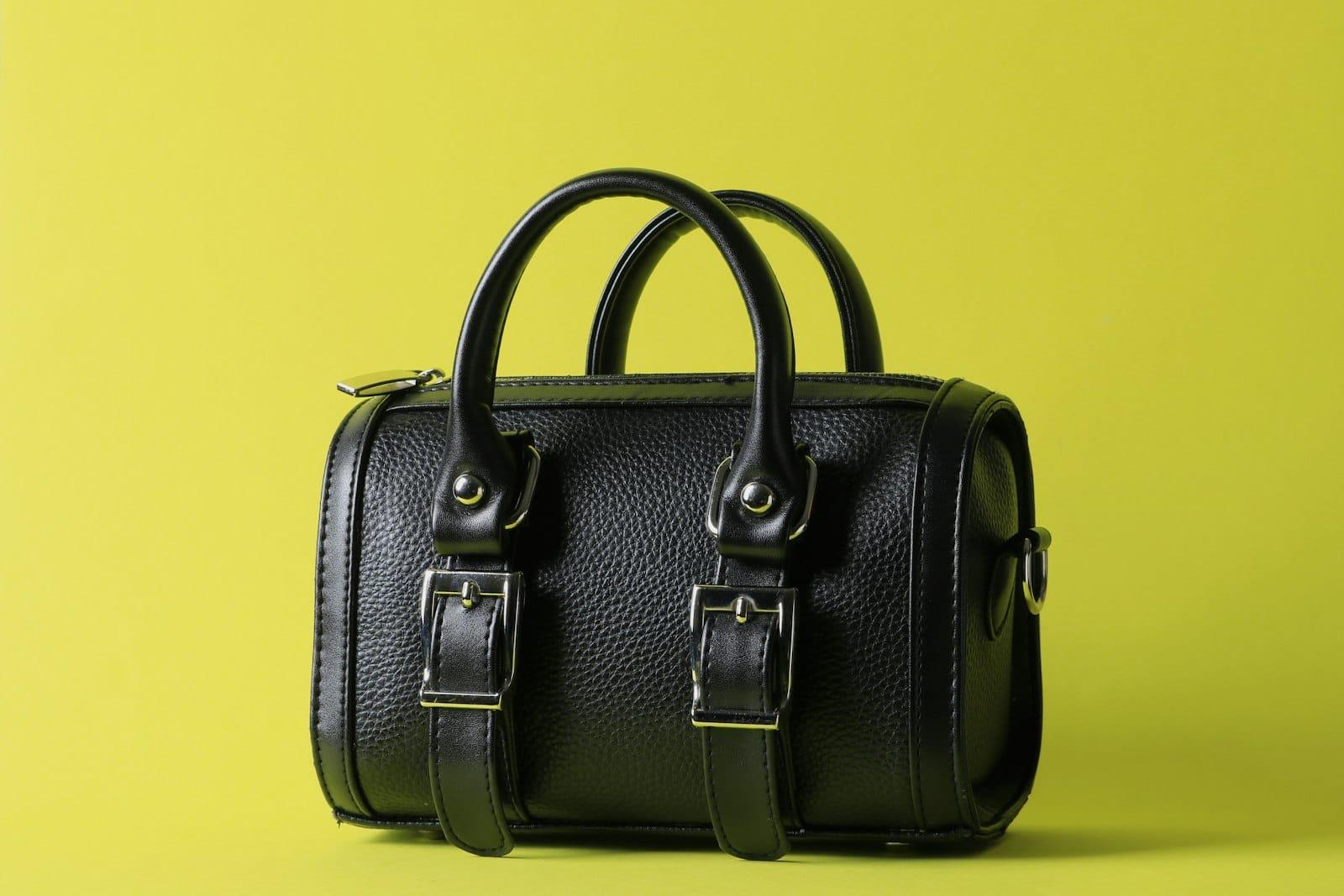
A study in the patient, slightly obsessive, and profoundly expensive pursuit of the perfect rectangle.
The short answer: a Hermès Birkin is made from start to finish by a single craftsman, by hand, in roughly 15 to 20 hours of work. The leather is cut, the panels are saddle-stitched with waxed linen thread and two needles, the edges are painted and polished, the hardware is fixed by hammering pins into domes, and the bag is turned right side out and shaped before it is stamped. Hermès trains its own craftsmen, which is why supply stays tight.
There is a specific kind of silence in the Hermès leather workshops spread across France. It is not the silence of an empty room, but the focused, rhythmic quiet of people working by hand. Here, the air doesn’t smell of perfume or the exhaust of Rue du Faubourg Saint-Honoré; it smells of beeswax, heated metal, and the earthy, expensive musk of high-grade calfskin.
To the uninitiated, the Birkin bag is a trophy, a financial asset in its own right, or a prop for a billionaire’s third wife. To the artisan, however, it is somewhere between 15 and 20 hours of meticulous labour and a singular test of manual dexterity. While the rest of the luxury world has embraced the "efficiency" of the assembly line, Hermès remains stubbornly, almost pathologically, committed to the unitaire method. One artisan. One bag. Start to finish. If the handle is slightly wonky, the artisan knows exactly whose fault it is. There is no one else to blame but the person in the mirror, and in the world of French luxury, that is the ultimate accountability.
The Raw Materials: From the Fermes to the Cutting Table
It begins not with a needle, but with a hide. Hermès is famously selective about its skins and works closely with its own tanneries. If you’ve ever wondered why your "luxury" high-street bag feels like cardboard after six months while a Birkin retains its dignity, the answer lies in the selection process.
The bag itself dates from 1984, when the actress Jane Birkin, carrying her belongings in a basket, complained about impractical handbags during a chance encounter with Hermès chief executive Jean-Louis Dumas — and asked for something four times larger than the Kelly. A large Birkin needs a substantial amount of flawless hide. The leather must be flawless. We are talking about animals that have lived remarkably sheltered lives, presumably far away from barbed wire, biting insects, or any other creature capable of causing a micro-scratch.
The coupeur, or cutter, is the first gatekeeper. Their job is part mathematics, part intuition. They must map the bag's various components—the front panel, the back, the gussets, the flap, and the handles—onto the hide, avoiding any natural imperfections. For an exotic-skin Birkin the stakes are higher still: in May 2017 a white Himalaya crocodile Birkin sold at auction in Hong Kong for HK$2.94 million (about US$377,000), a record at the time. One wrong snip and you’ve just turned a five-figure masterpiece into an exceptionally expensive pair of coasters. The cutter looks for symmetry, ensuring the scales or the grain match perfectly across the seams. It is a slow, quiet process that looks like a high-stakes chess match played against a piece of leather.
The Saddle Stitch: A 19th-Century Defensive Play
If there is a holy grail in the construction of a Birkin, it is the point sellier, or saddle stitch. Developed for the world of equestrianism, where a snapped thread could mean a fallen rider, the saddle stitch is functionally indestructible. Unlike a sewing machine, which uses two threads that loop around each other (a lockstitch), the saddle stitch uses a single long piece of linen thread with a needle at each end.
The artisan coats the thread in beeswax—both to protect it and to help it glide—and then crosses the needles through every single hand-punched hole. If one thread breaks, the other remains intact. To do this correctly across an entire bag takes real strength in the hands and forearms.
There is a particular sound to the saddle stitch: a double thwack-zip as the needles pass through and the thread is pulled taut. An artisan will do this thousands of times for a single bag. Even tension is everything: stitches pulled too tight pucker the leather, and loose ones loop.
The Architecture of the Handle: The Secret Geometry
The handles of a Birkin are its most underrated feat of engineering. They are not merely strips of leather sewn together; they are multi-layered structures built around a core. This core is usually made of several layers of scrap leather, stacked and glued to create a sturdy, rounded shape that will not collapse under the weight of the owner’s essentials (or, more likely, their several iPhones and a small dog).
Shaping the handle is a tactile, almost sensual process. The artisan uses a lime (a type of rasp) and sandpaper to smooth the edges before applying the astiquage—the edge paint. This isn't your standard acrylic. It’s a proprietary mixture applied in multiple layers, heated with a metal tool, and sanded down between each coat.
A high-quality edge should be as smooth as a river stone. If you run your finger along the handle of a Birkin and feel even the slightest ripple, it hasn't finished its tenure in the workshop. This process alone can take several hours. It is the sort of obsessive detail that makes people who buy "fast fashion" look at you like you’ve lost your mind, but then again, those people aren't the target audience for a bag that costs more than a mid-sized Volvo.
Hardware and the 'Pearling' Technique
Once the leather carcass is assembled, it is time for the jewellery. The hardware—the pontets, the touret, and the iconic four feet (the clous)—is made from solid brass, plated in gold or palladium. Unlike most luxury brands that use screws or simple rivets to attach hardware, Hermès employs a technique called "pearling."
The artisan places a tiny metal pin through the leather and the hardware, then uses a small hammer to tap the head of the pin into a perfect, rounded dome. When done correctly, the hardware is permanently fused to the leather. There are no screws to come loose. It is a permanent commitment.
The irony of the Birkin's hardware is, of course, the protective plastic film. You will often see collectors who refuse to peel it off, for fear of a single hairline scratch on the palladium. The bag was designed to be used, to be thrown on the floor of a private jet, and to age with grace. To keep the plastic on is roughly equivalent to buying a vintage Ferrari and never taking it out of first gear.
The Great Turning: The Birkin’s Final Metamorphosis
The most heart-stopping moment in the birth of a Birkin is known as the retourné. Most Birkins (and nearly all Kellys) are constructed inside out. This allows the artisan to work on the internal seams with greater precision. However, it means that at the very end of the process, the bag must be turned right-side out.
Imagine trying to fold a stiff, multi-layered leather briefcase through its own opening without creasing the hide or popping a stitch. This is the moment of truth. The leather is often warmed slightly to make it more pliable, and the artisan uses their hands and a wooden tool to push the corners out.
If the leather is too cold, it cracks. If the artisan is too forceful, the shape is ruined. Once the bag is turned, it is given its final mise en forme—a session of massaging and shaping to ensure it stands perfectly upright. A Birkin should never slouch until it has earned the right through twenty years of heavy use.
Only then does the bag receive its final stamp: the "Hermès Paris Made in France" in gold or silver foil, along with the artisan’s personal code and the year of manufacture. It is a birth certificate in heat-pressed foil.
The Economics of Patience
In a world addicted to next-day delivery, the Birkin remains a stubborn outlier. The wait times—often cited as months or years—are not entirely a marketing ploy (though the "scorched earth" approach to availability certainly helps the brand’s bottom line). The bottleneck is human.
There are only so many people in the world with the patience, the eyesight and the steady hands required. Hermès trains its own craftsmen — about a year and a half of instruction followed by several years of practice — and some 250 of them make Birkins in more than twenty workshops and factories across France.
The price of a Birkin — retail prices started at US$11,400 for a Birkin 25 in 2020 and climb steeply with size and skin, into six figures at auction for rare exotics — is, in many ways, an entry fee to a pre-industrial world. You are not just buying a bag; you are buying the better part of a working week of a highly skilled person’s life.
There is also the matter of the aftercare. Hermès also repairs and refurbishes its own bags — the service owners call the "Hermès spa" — and because the construction is so modular, a Birkin can be taken apart, restored and reassembled. This is why they appear so frequently at auction; they are one of the few luxury items that genuinely have a lifespan exceeding that of their original owner.
The Takeaway: Why it Matters
At Nordic CrEast, we often talk about "quiet luxury," a term that has been hijacked by anyone wearing a beige cashmere sweater. But the Birkin is the original silent operator. Despite its fame, its construction is rooted in the practical requirements of 19th-century travel.
- The Artisan is Alpha: Each bag is the work of a single person, making every Birkin a unique piece of functional art rather than a mass-produced accessory.
- Material Selection: Hermès is famously exacting about its skins, and works with its own tanneries.
- Indestructible Stitches: The hand-rolled saddle stitch is a redundant safety system for your handbag, ensuring that even if one thread fails, the bag remains intact.
- Longevity as Luxury: The ability to send a bag back to the original workshop for a "spa treatment" decades after purchase is the ultimate rebuke to the disposable culture of modern fashion.
- The Human Element: In an era of AI and automation, the small imperfections and the "hand" of the artisan are what actually provide value. The Birkin isn't perfect because a machine made it; it's perfect because a human tried very, very hard to make it so.
Ultimately, the Birkin is a reminder that some things cannot be rushed. You can buy influence, and you can certainly buy attention, but you cannot buy the decades of tradition required to turn a piece of calfskin into a cultural icon. If you’re lucky enough to own one, do the artisan a favour: peel off the plastic, put your keys inside, and actually use it. It’s what Jean-Louis Dumas would have wanted.
For those entering through the resale market rather than the waitlist, the safeguard is the seller, not the search. Buy only where a trained specialist physically inspects the bag and puts the authentication in writing, where the condition grade is published against a stated scale, and where a failed authentication after delivery is refundable. That is a considerably safer route than an unverified private listing, however good the photographs look.
If you are weighing a Birkin against other bags as a store of value, read which pre-owned luxury handbags hold their value before you buy.
Related reading: a slightly petty history of haute couture, investment pieces that outlive every trend and the pre-owned luxury boom and where to actually buy.
FAQ
How is a Hermès Birkin bag made?
By a single craftsman, by hand, in roughly 15 to 20 hours. The hide is cut, the panels are saddle-stitched with waxed linen thread using two needles, the edges are painted and polished, the hardware is fixed with hammered pins, and the bag is turned right side out, shaped and stamped.
How long does it take to make a Birkin?
Roughly 15 to 20 hours of work by one craftsman, according to published accounts — not the 48 hours often quoted online.
Where are Birkin bags made?
Only in France, in Hermès workshops and factories around the country, including Seloncourt and Montbron.
How much does a Birkin cost?
Retail prices started at US$11,400 for a Birkin 25 in 2020 and rise with size, leather and hardware. Rare exotics sell for far more at auction: a white Himalaya crocodile Birkin fetched HK$2.94 million in 2017.
What is a Himalaya Birkin?
A Birkin in crocodile skin in pale white and grey tones — among the rarest and most expensive Birkins, and the model behind the 2017 auction record.
Continue Reading
Continue in this collection

Found this useful? Explore more in the Journal.
BACK TO JOURNAL