A Brief History of Men's Grooming, From Barbers to Serums
Last updated: 16 October 2026
Researched and drafted with AI assistance; reviewed, fact-checked and approved by Thomas Lovas Lokoy. Editorial policy
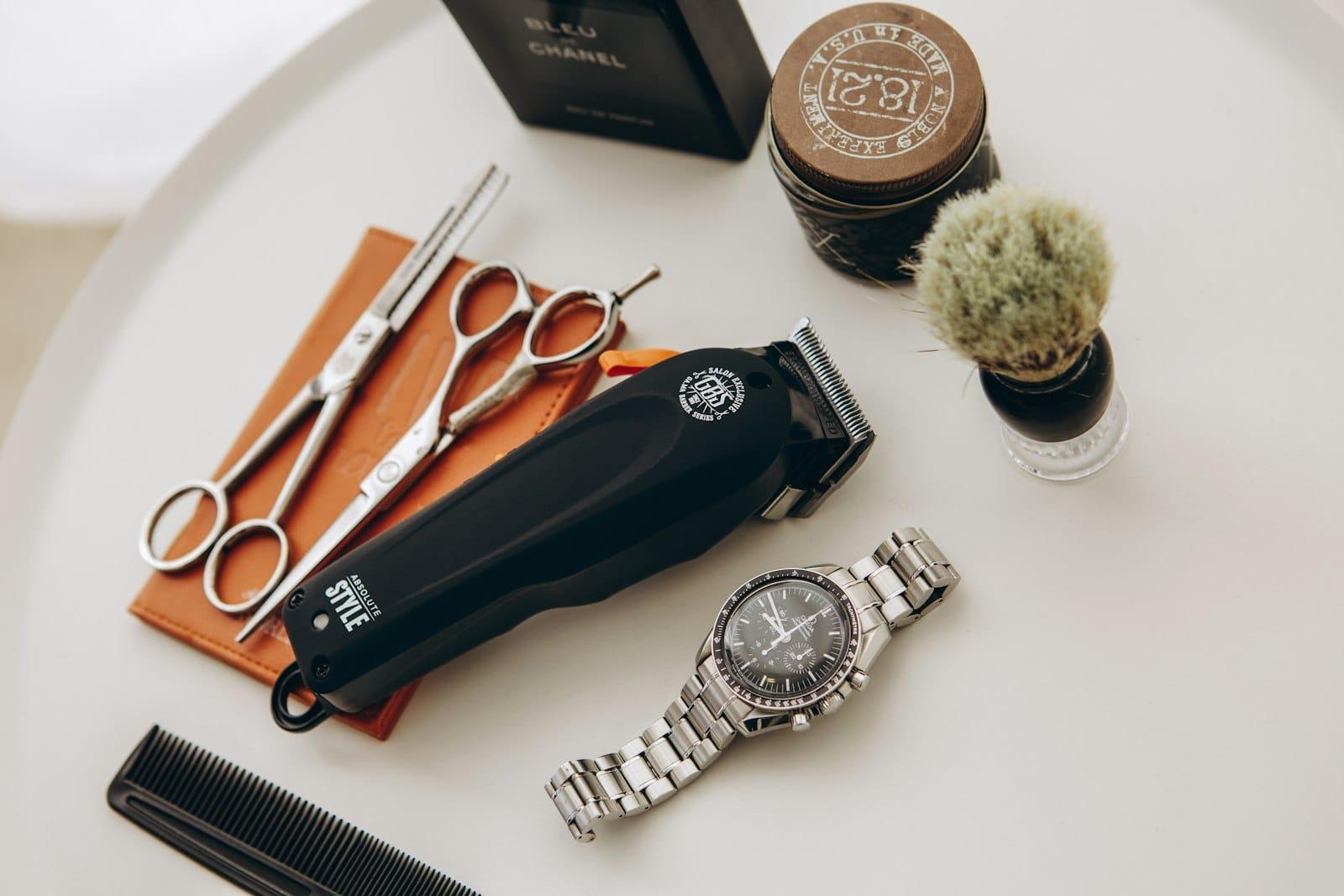
The history of men's grooming in brief: for centuries the barber was also a surgeon, licensed in London by a royal charter of 1462; the gentleman's barbershop took shape around 1805, when Truefitt & Hill opened in London; the safety razor, patented by King Camp Gillette in 1904 and issued to American troops by the million in the First World War, moved shaving from the barber's chair to the bathroom; men's fragrance and then men's skincare followed (Caron's Pour Un Homme in 1934, Clinique's men's line in 1976); and since the 1990s grooming has become a science-led routine alongside a revival of the traditional barbershop. Here is the story, a timeline, and what it suggests for a modern routine.
From the bloodletting basin to the serum on the bathroom shelf.
We tend to see the daily shave as a modern chore: a few minutes with a cartridge razor and a can of foam. For most of history, though, grooming was something done to men, in public, by a professional who might also pull your tooth. To understand today's preoccupation with skin barriers and serums, start with the barber-surgeon.
The barber as surgeon: blood, teeth and tallow
In medieval Europe, the barber was a medical man as much as a hairdresser. If you needed a shave, a tooth pulled or a bloodletting to rebalance your humours, you went to the same person. In London, the Company of Barbers received its first royal charter from Edward IV in 1462, giving it the power to regulate the practice of surgery in the City. In 1540 an Act of Parliament joined barbers and surgeons in a single Company of Barbers and Surgeons, while restricting each trade from doing the other's work (both could still draw teeth). The surgeons left in 1745, forming what eventually became the Royal College of Surgeons of England, and the barbers kept the razor.
The red-and-white pole, now a retro signifier outside many a fashionable barbershop, is usually explained by that medical past: red for blood, white for bandages, the pole itself for the patient to grip. The tools were basic: carbon-steel razors that rusted and needed constant stropping, and soap rendered from animal fat.
The idea of the barbershop as a gentleman's leisure began in the early nineteenth century. Truefitt & Hill first opened in 1805 at 2 Cross Lane, Long Acre, London, and is listed by Guinness World Records as the oldest barber shop business; it now trades from St James's. Grooming had begun its move from hygiene and medicine to an act of class-conscious leisure: the mahogany chair, the newspaper, the scent of sandalwood and citrus.
The safety razor and the move to the bathroom
For centuries, a smooth face meant either risking your own throat with a straight razor or paying a professional. The first guarded razor is usually credited to the French cutler Jean-Jacques Perret around 1762, who fitted a guard to an ordinary open blade. The real disruption came from King Camp Gillette, who applied for a patent on a safety razor with disposable double-edged blades in 1901 and was granted it in 1904.
Gillette's genius was the business model as much as the blade: an affordable handle and a steady trade in replacement blades. During the First World War, his company supplied US troops with 3.5 million razors and 32 million blades as standard field kit. Men came home with a new habit: shaving daily, at home, by themselves. The barbershop began its long shift from daily necessity to occasional indulgence.
Fragrance moved too. In 1934, Caron launched Pour Un Homme, which the house describes as the first men's fragrance in the history of perfumery, built on lavender and vanilla. It set a template for masculine scent: clean, herbal and safely distant from the floral.
The mid-century peak and the 1970s slump
After the Second World War, the ideal was the man in the grey flannel suit: short back and sides, a clean-shaven face and a bracing aftershave. Old Spice is a good example of how marketing shaped the category: Shulton launched it in 1937 as a women's line, Early American Old Spice, and a men's version followed within a year or so.
The 1960s and 1970s loosened everything. Beards and long hair returned, and the daily shave became, for some, a symbol of the establishment. Yet this was also when prestige skincare for men began. Clinique launched its men's line in 1976, widely described as the first prestige skincare range made specifically for men, with clinical packaging and plain language designed to reassure men that moisturiser did not compromise their dignity.
The metrosexual and the science-led sink
In November 1994 the journalist Mark Simpson coined the word "metrosexual" in an essay for The Independent, describing a young, urban man with a high disposable income who spent it on his appearance. The term aged badly; the market it predicted did not.
Products changed as well. The stinging, alcohol-heavy aftershave gave way to formulas built around skin care rather than sanitising. Aesop, founded in 1987 by the hairdresser Dennis Paphitis in Armadale, a suburb of Melbourne, helped turn the bathroom shelf into a sensory, design-led space with its plain brown bottles. At the top of today's market sit science-branded houses such as Augustinus Bader, founded by a professor of applied stem cell biology at the University of Leipzig, whose formulas are built around a patented technology the company calls TFC8.
The return of the specialist
Alongside high-science skincare, the traditional barbershop has made a strong comeback as a destination: the straight-razor shave, the hot towel and the unhurried chair are now a luxury rather than a necessity. On the bathroom shelf, many enthusiasts have gone back to the single-blade safety razor and a badger or synthetic brush, and wet-shaving makers such as Mühle in Germany sell to a new generation. The common thread is a rejection of disposable, multi-blade convenience in favour of a slower ritual, and a recognition that more blades are not automatically better for sensitive skin.
The sensible modern position sits between the two worlds. Expensive serums cannot compensate for poor sleep and no sunscreen, but a well-made razor and brush can turn a chore into the one quiet, offline part of the morning. For the routine itself, see the modern gentleman's skincare routine and our Nordic grooming routine.
A timeline in one table
| Year | Moment |
|---|---|
| 1462 | London's barbers receive their first royal charter, including power to regulate surgery |
| 1540 | Barbers and surgeons joined in one company by Act of Parliament |
| 1745 | The surgeons leave; the barbers keep the razor |
| c. 1762 | Jean-Jacques Perret's guarded razor |
| 1805 | Truefitt & Hill opens in London |
| 1904 | Gillette's safety-razor patent granted (filed 1901) |
| 1914–18 | 3.5 million Gillette razors and 32 million blades for US troops |
| 1934 | Caron's Pour Un Homme |
| 1937 | Old Spice launched by Shulton |
| 1976 | Clinique's men's skincare line |
| 1987 | Aesop founded in Melbourne |
| 1994 | Mark Simpson coins "metrosexual" |
What history suggests for a modern routine
- Respect the old tools. Straight and safety razors, good brushes and proper soaps have lasted because they work; modern is not automatically better.
- Let science lead the skincare. Choose products for what they contain and what your skin needs, not for a "manly" scent. A cleanser, a moisturiser and daily sunscreen are the foundation.
- Treat your barber like your tailor. Regular cuts from someone who knows your hair beat an expensive cut once in a while.
- Keep it short. You do not need a twelve-step routine; you need three or four steps you will actually do.
- Make fragrance your signature. Explore beyond the department-store bestsellers, and compare houses side by side before you commit; a retailer with a broad range, such as The Fragrance Shop, is a reasonable place to start, and our guide to the best niche fragrances of 2026 covers the houses worth knowing.
If you are building a kit from scratch, our step-by-step tutorial on building a men's grooming kit puts the history into practice.
Related reading: a no-nonsense guide to beard oil, balm and wax, men's grooming essentials and a history of wellness from Roman baths to Goop.
Frequently asked questions
Why were barbers once surgeons?
Medieval barbers had the sharp tools and steady hands for minor surgery, bloodletting and tooth-pulling as well as shaving. In London the barbers' company was given power to regulate surgery by royal charter in 1462; barbers and surgeons shared a company from 1540 until the surgeons left in 1745.
What is the oldest barbershop in the world?
Guinness World Records lists Truefitt & Hill as the oldest barber shop business. It first opened in 1805 at 2 Cross Lane, Long Acre, in London, and now trades from St James's.
Who invented the safety razor?
A guarded razor is usually credited to the French cutler Jean-Jacques Perret around 1762. The modern disposable-blade safety razor was patented by King Camp Gillette, who applied in 1901 and was granted the patent in 1904.
When did men's skincare start?
As a prestige category, in the 1970s: Clinique launched its men's line in 1976. Men's fragrance came earlier, with Caron's Pour Un Homme in 1934, and the market grew rapidly from the mid-1990s.
Sources
- barberscompany.org/history
- guinnessworldrecords.com/world-records/74087-oldest-barber-shop-business
- en.wikipedia.org/wiki/Safety_razor
- parfumscaron.com/en/pages/la-legende-pour-un-homme
- en.wikipedia.org/wiki/Old_Spice
- dermfnd.org/brands/clinique-for-men
- marksimpson.com/here-come-the-mirror-men
- en.wikipedia.org/wiki/Aesop_(brand)
- augustinusbader.com/pages/about
Continue Reading
Continue in this collection

Found this useful? Explore more in the Journal.
BACK TO JOURNAL