Beard Oil, Balm, or Wax? A No-Nonsense Guide for Men Who'd Rather Be Doing Anything Else
Last updated: 16 October 2026
Researched and drafted with AI assistance; reviewed, fact-checked and approved by Thomas Lovas Lokoy. Editorial policy
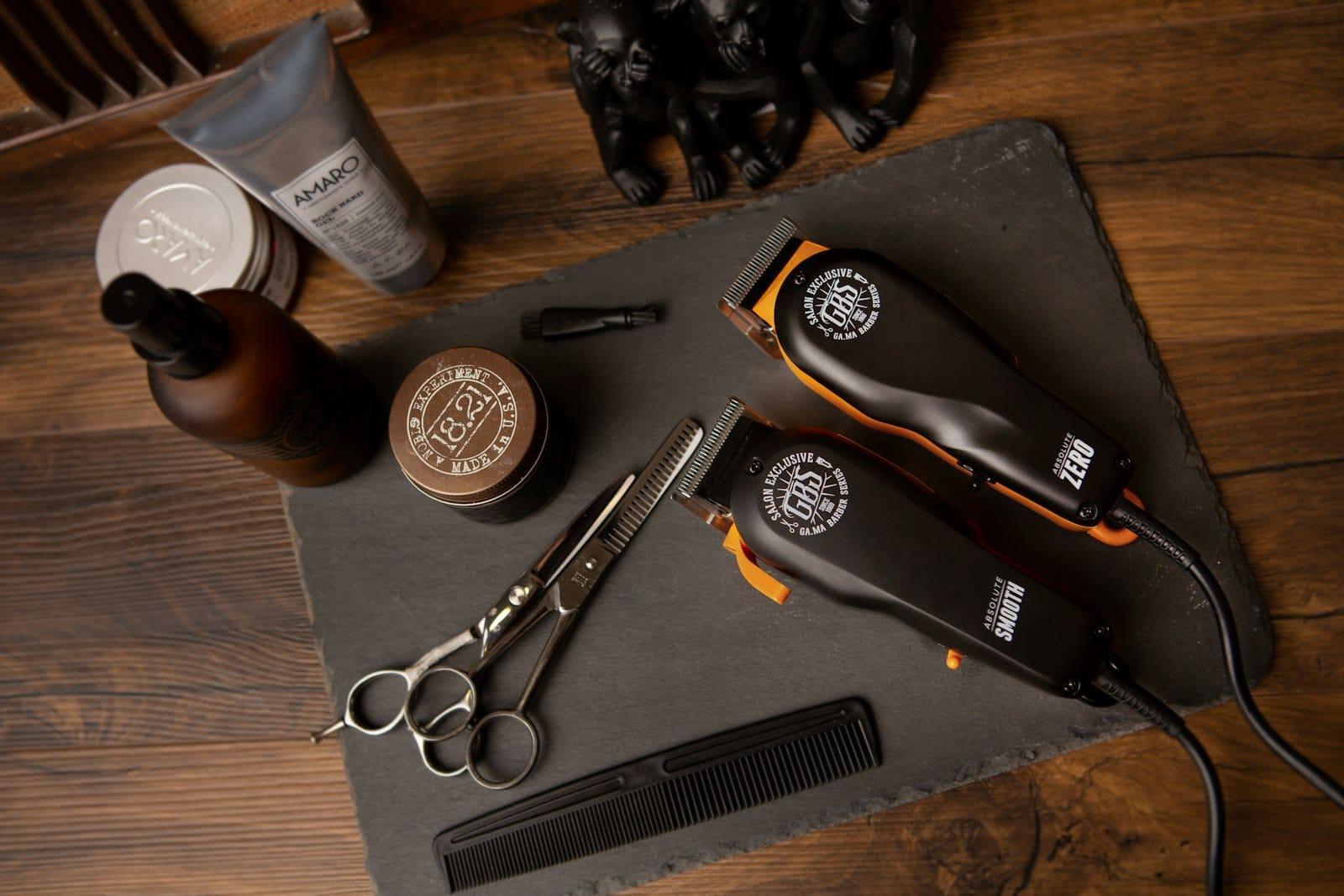
A definitive taxonomy of facial topiary preservation for the man who understands that grooming is a necessity, not a hobby.
There is a particular kind of misery reserved for the man who finds himself standing in the apothecary aisle of a department store—perhaps NK in Stockholm or Illum in Copenhagen—confronted by a wall of amber glass bottles and brushed aluminium tins. The labels speak of "sandalwood top notes" and "organic jojoba carriers," but what they are actually selling is a solution to the fact that your face currently feels like it is being colonised by a very stubborn, very dry gorse bush.
For the uninitiated, the world of beard maintenance is a thicket of marketing jargon designed to make you feel as though you need a chemistry degree to wash your face. It isn't that complicated. However, the stakes are reasonably high. Neglect the foliage, and you risk the "itchy phase" that has claimed more promising beards than the invention of the safety razor ever did. Worse, you risk "beardruff"—a term that should never be uttered in polite company, yet remains a biological reality for the man who thinks hot water is a sufficient moisturiser.
The goal here is simple: to look like a man who possesses a beard, rather than a man who is being slowly consumed by one. To achieve this, you need to understand the holy trinity of beard products. They are not interchangeable. They are tools. And like any tool—be it a Leica M11 or a Hultafors axe—they work best when you stop guessing what they do and just use them correctly.
The Oil: For the Man Who Values Stealth
If we were to trace the history of beard oil, we would have to look past the current "Brooklyn lumberjack" aesthetic and go back thousands of years, to the oils of the ancient world. The Romans preferred olive oil, though they usually smelled like a salad. The modern iteration, however, owes its existence to the realization that the skin on your face cannot produce enough sebum to keep up with four inches of coarse hair.
Beard oil is not, strictly speaking, for the hair. It is for the skin beneath it. It is a delivery system for moisture. It is also the only product in this list that you should be using every single day, regardless of whether you are trekking through the Jotunheimen mountains or sitting through a six-hour board meeting in Zurich.
When selecting an oil, the discerning nose should avoid anything that makes them smell like a teenage boy’s first attempt at "seductive" cologne. You are looking for high-quality carrier oils—argan, almond, out-of-the-way grapeseed—and a scent profile that evaporates within twenty minutes.
At the top of the market sits the Tom Ford Neroli Portofino Conditioning Beard Oil, an extension of the house's best-known fragrance rather than a purpose-built grooming line — which is precisely the trade being made: you are paying a fragrance premium for a small volume of oil, and whether that is worth it depends on how much you care that your beard oil and your cologne agree with each other. If you prefer something more Spartan, Mr. Natty's Frank's Beard Elixir is an honest, British-made alternative that doesn't feel the need to show off. Both houses change formulation and pack size periodically, so check the current volume and price on the brand's own site rather than trusting a figure quoted in an article. For a range built specifically around beard maintenance rather than borrowed from a cologne line, Viking Beard Gear is worth comparing too.
The method is simple: three drops into the palm, rub your hands together, and massage it into the skin. If you look like you’ve been dipped in a deep-fat fryer, you’ve used too much. If your face still feels like sandpaper, you haven't used enough. Adjust accordingly.
The Balm: The Middle Manager of Grooming
If oil is the foundation, balm is the structural support. It sits in that murky middle ground between liquid and solid, usually comprising a mix of oils, shea butter, and a tiny amount of beeswax. It is designed for the man whose beard has reached the "awkward teenager" stage—long enough to be noticeable, but not yet heavy enough to obey gravity.
Balm provides two things: hydration and "tame." It won't give you a sculpted look, but it will stop the stray hairs from venturing off into different time zones. It is the product for the man who wants to look like he hasn't tried very hard, even though he spent four minutes in front of the mirror this morning.
In the realm of balms, the Scandinavian approach is often the most sensible. L:A Bruket, hailing from Varberg, Sweden, makes beard care in the same natural, spa-inspired vein.
The balm is also your best defence against the elements. If you are spending your weekends skiing in Verbier, the cold air will strip every ounce of moisture from your facial hair, leaving it brittle enough to snap. A layer of balm acts as a thermal barrier. Think of it as a Barbour jacket for your jawline. You apply it by scraping a pea-sized amount out with the back of your thumbnail, melting it between your palms, and smoothing it over the surface of the beard. It is functional, reliable, and entirely unexciting. Just as it should be.
The Wax: For the Architect of Facial Hair
We now enter the territory of the specialist. Beard wax—and its more concentrated cousin, moustache wax—is not a moisturiser. It is a styling agent. It is the stiff-upper-lip of grooming products. If you are using wax, it is because you have a specific vision for your face that nature did not intend.
Wax is heavy on the beeswax or lanolin. It is designed to hold hair in place with the stubbornness of a Norwegian border guard. However, there is a fine line between a well-groomed gentleman and a man who looks like he belongs in a 19th-century circus. The goal is control, not caricature.
For those who take their grooming seriously, Captain Fawcett’s Expedition Strength Moustache Wax is the industry standard. Named after the brand's own fictional Edwardian explorer, Captain Peabody Fawcett, it is the kind of product that requires a hairdryer to soften before application. It is not for the faint of heart.
If you are dealing with a full beard that refuses to behave—perhaps you have a "cowlick" on your chin that makes you look perpetually windblown—a light beard wax can provide the silhouette you desire. Proraso, the Florentine house whose parent company dates to 1908, makes a Wood and Spice Moustache Wax that shapes and holds. It is arguably the best value-for-money item in your cabinet.
A word of caution: wax is difficult to wash out. Do not attempt to remove it with a mere splash of water. You will need a proper beard wash—something like the Aesop Coriander Seed Body Cleanser which, while technically for the body, does a marvellous job of breaking down resins without turning your chin into a desert.
A Brief Chronology of the Well-Maintained Face
To understand why we are currently obsessed with these tinctures, one must look at the historical arc of the beard. We are presently in the "Post-Hipster Restoration."
- 1850s–1890s: The Golden Age. In Victorian Britain and the Prussia of Bismarck, the beard was a sign of virility and naval prowess. Oils were heavy, often scented with bergamot and clove to mask the smell of coal smoke and horses.
- 1914–1918: The Great Shave. The advent of chemical warfare necessitated a clean-shaved face so that gas masks could seal properly. The beard was sacrificed for survival. For the next fifty years, facial hair was the domain of the bohemian or the revolutionary.
- 1970s: The Wild Years. The beard returned, but maintenance was low. This was the era of the unkempt, the shaggy, and the occasionally soup-stained. It was a dark time for grooming.
- 2010–2015: The Peak. The "Lumbersexual" trend hit London, New York, and Stockholm. Every man with a fixed-gear bike and a laptop suddenly looked like he was about to fell an oak tree. This heralded the explosion of the artisanal beard oil market—a period defined by expensive bottles of scented grease.
- 2024: The Discerning Present. We have moved past the trend and into the era of the "Quiet Beard." It is shorter, neater, and requires invisible maintenance. We no longer want our beards to be the first thing people notice about us; we want them to look as though they have always belonged there, perfectly maintained without fanfare.
Crucial to this modern look is the tool used to distribute these products. If you are using a plastic comb from the supermarket, you are doing yourself a disservice. Static electricity is the enemy of a neat beard. Invest in a Kent Saw-Cut Handmade Comb or, better yet, a boar-bristle brush. The bristles are designed to pull the oils from the skin down the hair shaft, ensuring that the ends—which are the oldest and driest parts of the hair—don't look like they’ve been through a shredder.
The Ritual: Efficiency Over Excess
The modern man does not have forty-five minutes to spend on his face. The Nordic sensibility is one of efficiency—the lagom approach. Not too much, not too little. Your routine should be integrated into your morning with the same muscle memory as making an espresso in your Jura Z10.
First, the wash. Use a dedicated beard shampoo. Regular hair shampoo is too aggressive; it’s designed to strip away the heavy oils produced by the scalp. The face produces much less. Murdock London Beard Shampoo is an excellent choice. It contains pH-balanced ingredients that won't leave you itching by lunchtime.
Second, the drying. Do not rub your face with a towel as if you are trying to start a fire. Pat it dry. Your hair is at its weakest when wet.
Third, the application. While the skin is still slightly damp and the pores are open, apply your oil. If the beard is long enough to require shaping, follow up with a small amount of balm. Use your brush to set the direction. If you have a moustache that interferes with your morning croissant, apply a tiny amount of wax to the tips and sweep them outwards.
The total time elapsed should be approximately three minutes. That is 180 seconds to ensure you don't look like a castaway for the remainder of the day. It is a small price to pay for social capital.
I should also mention the barber. No amount of oil or wax can fix a poorly shaped beard. Find a professional who understands your face shape. Whether it is Sharps Barber and Shop in London’s Fitzrovia or Barber & Books in Stockholm, a monthly trim is the difference between a beard that looks intentional and one that looks like a lapse in judgment. Ask for a "tapered" finish—shorter at the ears, fuller at the chin—which provides a more architectural, masculine silhouette.
The Takeaway
Grooming is not about vanity; it is about maintenance. A well-kept beard suggests a man who pays attention to detail, whereas a messy one suggests a man who has given up on more than just his appearance. Choose your tools based on your needs, not the branding.
- Oil is for the skin; use it daily to prevent dryness and the dreaded itch.
- Balm is for the hair; use it to manage flyaways and provide a light, natural shape.
- Wax is for the structure; use it sparingly when you need absolute control and a refined silhouette.
- Quality over Quantity: One bottle of Tom Ford or L:A Bruket is worth ten inferior products that will only clog your pores.
- The Brush Matters: A boar-bristle brush is non-negotiable for distributing product and exfoliating the skin beneath.
Related reading: a brief history of men's grooming, the modern gentleman's skincare routine decoded, the best niche fragrances of 2026 and, to put it all in one bag, how to build a men's grooming kit from scratch.
Continue Reading
Continue in this collection



Found this useful? Explore more in the Journal.
BACK TO JOURNAL