A History of Wellness, From Roman Baths to Goop (It's a Wild Ride)
Last updated: 30 September 2026
Researched and drafted with AI assistance; reviewed, fact-checked and approved by Thomas Lovas Lokoy. Editorial policy
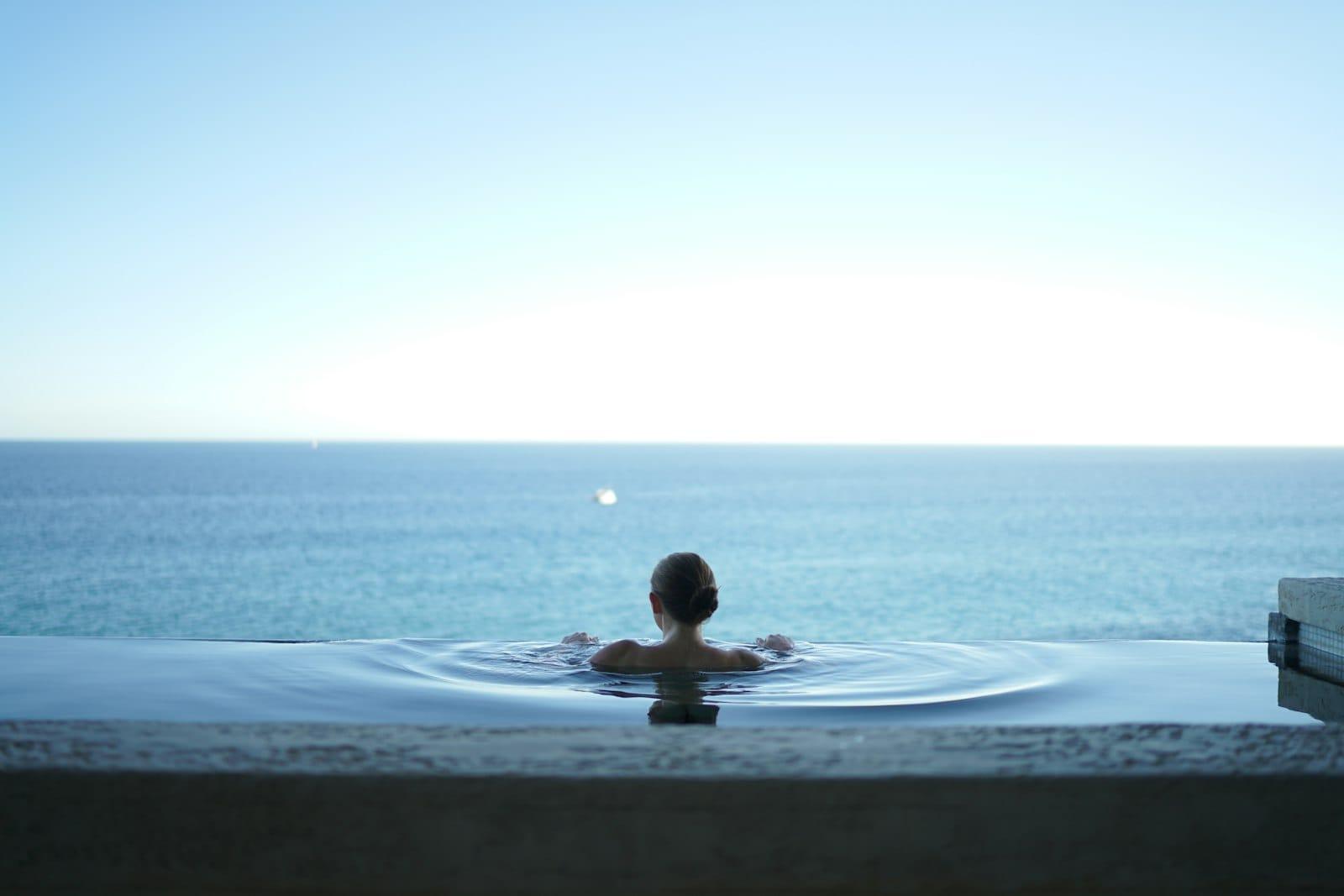
Tracing the arc of human vanity from the Balneae of Rome to the multi-trillion-dollar industry of feeling vaguely 'better'.
It is a charming paradox of the human condition that we spend the first half of our lives attempting to destroy our bodies with Barolo and late nights in Mayfair, and the second half paying exorbitant sums to ‘detox’ the damage away. We tend to view the modern wellness industry—a behemoth valued by the Global Wellness Institute at $6.8 trillion in 2024—as a contemporary narcissism, a product of the Instagram age. However, the pursuit of longevity and the elimination of ‘toxins’ (a word that has meant everything from literal plague to a mildly bloated ego) is an ancient preoccupation.
The story is not a linear march toward enlightenment. Instead, it is a cyclical loop of steam baths, questionable diets, and the recurring belief that if one simply sits in the right kind of water or eats the right kind of leaf, death might be persuaded to look the other way.
I. The Roman Sweat Equity
If one were to seek the spiritual ancestor of the modern Equinox club, one need look no further than the Baths of Caracalla circa 216 AD. For the Romans, wellness was not a luxury; it was a civic duty, albeit one performed with a great deal of public nudity and olive oil.
A day at the thermae was a choreographed performance of health. One began in the apodyterium (the changing room), proceeded to the tepidarium (warm room) to acclimatise, then the caldarium (hot room) to sweat out the excesses of last night’s symposium. There was no soap; instead, an attendant would coat you in oil and scrape it off with a metal strigil. This was the original ‘exfoliation’. It was effective, brutal, and deeply communal.
The Romans understood that wellness was inseparable from architecture and social standing. To be well was to have access to the Great Outdoors and the Great indoors simultaneously. Seneca, the stoic philosopher, complained bitterly about the noise of the baths—the thud of athletes, the shrieks of the hair-pluckers—but he went nonetheless. He understood that a man of stature could not be seen with a dull complexion. The price of entry was a mere quadrans, the smallest copper coin, making it perhaps the last time in history that high-level wellness was truly democratic.
When the Empire fell, so did the plumbing. Europe descended into a thousand years of being suspiciously grimy, transitioning from the communal steam of Rome to the ascetic belief that the body was merely a vessel for suffering. It took the crusaders returning from the Middle East with tales of Ottoman hammams to remind the West that there is no spiritual virtue in a lack of hygiene.
II. The Victorian ‘Cure’ and the Rise of the Sanatorium
By the 19th century, wellness had moved from the public baths to the private clinic. This was the era of the "Water Cure". If you were a member of the European elite in 1850 and felt a bit "peaked"—likely due to a diet of heavy game, lead-lined pipes, and stays—your physician would pack you off to Baden-Baden or Marienbad.
The philosophy was simple: if God created the spring, it must be medicine. Figures like Vincenz Priessnitz and Sebastian Kneipp (whose brand Kneipp still occupies the shelves of every high-end German pharmacy today) pioneered hydrotherapy. At places like the Sanatorium Purkersdorf—a Josef Hoffmann masterpiece of Secessionist design—wellness met high-concept modernism.
This period also birthed the ‘wellness influencer’ prototype. Enter John Harvey Kellogg. Long before he was a cereal titan, Kellogg ran the Battle Creek Sanitarium in Michigan. He was a man obsessed with the colon. He advocated for a diet of bland grains (to suppress ‘base’ urges), daily enemas, and "phototherapy" (basking under electric lamps). He was, for all intents and purposes, the 19th-century version of a biohacker. High-profile guests like Henry Ford and Mary Todd Lincoln flocked to his retreat to be pummelled by machines and fed bran. It was expensive, it was eccentric, and it set the template for the destination spa: a place where the wealthy pay to be told what they cannot eat.
III. The Mid-Century Pivot: Muscle and Mineral Water
Following the World Wars, the focus shifted from "curing" illness to "optimising" the body. This is where we see the birth of the modern gym culture and the commercialisation of mineral water. In the 1950s and 60s, wellness became something you could buy in a bottle or achieve through a specific set of callisthenics.
In 1940, Deborah Szekely founded Rancho La Puerta in Tecate, Mexico. It is often cited as the first true "fitness resort." It wasn't about hydrotherapy for gout; it was about movement and organic gardening. Meanwhile, in Europe, the focus remained slightly more decadent. The French Riviera became the epicentre of a new kind of wellness: the "thalassotherapy" (sea water therapy) movement. In 1964, cycling champion Louison Bobet opened the first modern thalassotherapy centre in Quiberon, Brittany. The theory was that because sea water and human plasma are chemically similar, being sprayed with warm kelp-infused water would somehow rebalance the soul. It was largely nonsense, but it felt marvellous, and that, as we know, is half the battle.
Parallel to this was the rise of Perrier and Evian. No longer was water something that came from a tap; it was a lifestyle choice. By the 1970s, carrying a bottle of Evian in Paris or New York was a signifier of health-consciousness, a precursor to the green juice that would dominate the 2010s.
IV. The 1980s: Aerobics and the Aesthetics of Effort
The 1980s was an era of profound contradiction. We were smoking Marlboro Lights while wearing neon Spandex. Jane Fonda’s 1982 Workout video changed the game, moving wellness into the living room. For the first time, "fitness" was a mass-market commodity aimed specifically at women, packaged as empowerment but deeply rooted in the "No Pain, No Gain" ethos.
This was also the decade when the high-end hotel spa began its ascent. The Oriental in Bangkok (now the Mandarin Oriental) opened its acclaimed spa in 1993, but the groundwork was laid in the late 80s. Wellness was rebranding itself as "Self-Care," a term originally used in medical contexts but quickly co-opted by the luxury sector. The message was clear: you are working too hard in the boardroom; you deserve to be wrapped in mud.
However, the 80s also saw the rise of the ‘super-supplement.’ The Vitamin Shoppe and similar retailers began to thrive. We began to outsource our health to the laboratory. If one didn’t have time for a balanced meal, a handful of multivitamins and a protein shake would suffice. It was wellness for the "Greed is Good" generation—efficient, chemical, and results-oriented.
V. The Goop Era: The Spiritualisation of the Selfie
Which brings us to the present. If the 20th century was about fitness, the 21st is about "Vibrations." The modern wellness landscape is dominated by a brand of secular spirituality that is uniquely Californian in its optimism and uniquely global in its reach.
Gwyneth Paltrow’s Goop began as a newsletter in 2008 and transformed into a cultural lightning rod. Love it or loathe it (and the medical community generally chooses the latter), Goop represents the ultimate merger of luxury lifestyle and health. We are no longer talking about "not being sick"; we are talking about "activating our cellular potential."
Today’s UHNW individual isn't just going to a spa; they are undergoing NAD+ IV drips at Lanserhof in the Austrian Alps. They are retreating to Amanpulo for a four-night wellness escape or investing in a home infrared sauna from Clearlight.
The industry has moved beyond the physical. We now have ‘cognitive wellness’ (supplements like Lyma), ‘sleep wellness’ (the Hästens Vividus bed), and even ‘digital wellness’ (ironically often sold via an app). We have come a long way from a cold splash in a Roman frigidarium. We have replaced communal bathing with isolated, high-tech optimization.
The humor, of course, lies in the complexity. We pay for DNA testing to tell us we should eat more broccoli. We buy wearable rings (Oura) to tell us we are tired—information our ancestors likely gleaned by simply noticing they were yawning.
VI. The Nordic Perspective: The Return to Simplicity
In the midst of this global madness, the Nordic region has remained remarkably steadfast. While the rest of the world was experimenting with crystal-infused water and vaginal steaming, Scandinavia was quietly doing what it has always done: Friluftsliv (open-air living) and the sauna.
The Finnish sauna is perhaps the most honest form of wellness remaining. There are an estimated 3.3 million saunas in Finland for a population of 5.5 million. It is not about "detotixication" in some mystical sense; it is about heat, cold, and the physiological reality of vasodilation. It is wellness without the marketing gloss.
Even in the world of high-end skincare, the Nordic influence is one of restraint. Brands like Verso (Sweden) or Nuori (Denmark) focus on "fresh" chemistry and clinical efficacy rather than Himalayan salt-cured promises. At Nordic CrEast, we have always maintained that true luxury—and true wellness—is the ability to disconnect. The most expensive thing you can own today is not a bio-hacking bed; it’s a cabin in the Lofoten Islands with no Wi-Fi and a wood-fired tub.
The Takeaway
As we survey the wreckage of ancient baths and the gloss of modern retreats, a few truths remain:
- Wellness is the ultimate status symbol. In the 1800s, it was a pale complexion (meaning you didn't work in the fields); today, it is "the glow" (meaning you have the time and money for regular facials and better-than-average genes).
- The technology changes, the impulse doesn't. Whether it's a Roman strigil or a Theragun, we are always looking for a tool to fix the fact that we sit at desks too much.
- Scepticism is the best supplement. If a treatment sounds like something a 17th-century alchemist would propose (e.g., "rebalancing your bio-magnetic field"), it probably is.
- Simple remains superior. The most scientifically backed wellness interventions remain the cheapest: sleep, walking in the woods, and occasionally sweating in a room with hot stones. Everything else is just theatre. Expensive, beautifully branded theatre, but theatre nonetheless.
If you want one cheap, unglamorous lever rather than an infrared cabin, a basic magnesium supplement such as BIOptimizers Magnesium is a modest, inexpensive addition to an evening routine, at a fraction of the price.
Related reading: the sauna renaissance sweeping Europe, longevity in 2026 and what is actually worth doing and sleep optimization, the highest-ROI habit.
Continue Reading
Continue in this collection


Found this useful? Explore more in the Journal.
BACK TO JOURNAL