A Brief History of Haute Couture: From Worth in 1858 to Now
Last updated: 16 October 2026
Researched and drafted with AI assistance; reviewed, fact-checked and approved by Thomas Lovas Lokoy. Editorial policy
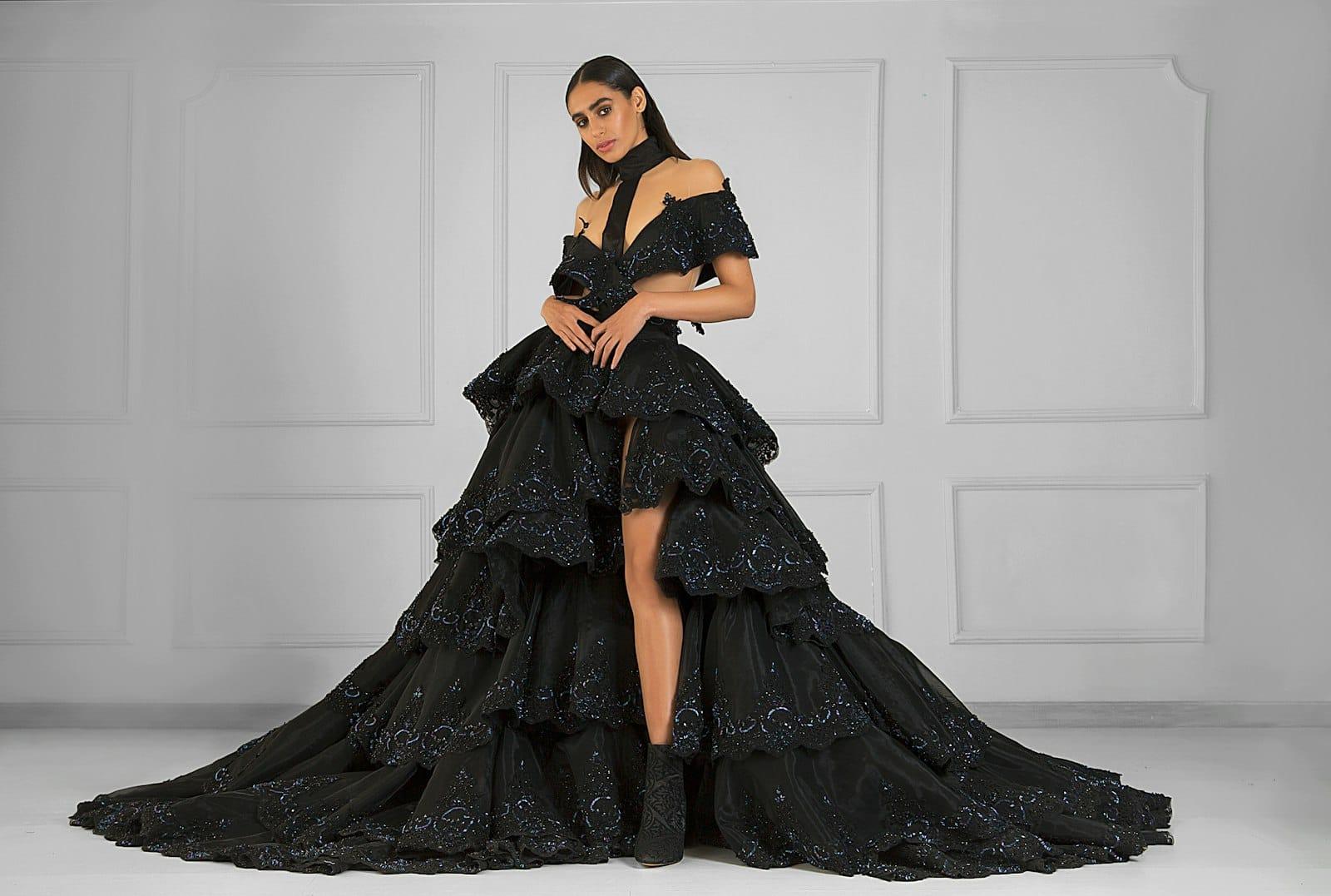
Haute couture began in Paris in 1858, when the English-born dressmaker Charles Frederick Worth opened his house at 7 rue de la Paix and turned the dressmaker from a tradesman who took instructions into a designer who set them. Today "haute couture" is a legally protected term in France: since 1945 it can be used only by houses granted the label by the French Ministry of Industry, on the advice of a commission within the Fédération de la Haute Couture et de la Mode, and in January 2026 only 13 houses held it. In between lies a century and a half of genius, rivalry and some magnificently petty behaviour. Here is the short version, with a timeline, the current rules and who runs the great houses now.
A century and a half of hand-stitched brilliance, industrial-strength egos, and a stubborn refusal to let ready-to-wear ruin a perfectly good silk tulle fantasy.
The Englishman and the Empress
To understand haute couture, first accept that it was invented by an Englishman in Paris. Charles Frederick Worth, born in Bourne, Lincolnshire, in 1825, arrived in Paris in 1846 with little French and very little money. In 1858 he and his Swedish partner, Otto Bobergh, opened Worth and Bobergh at 7 rue de la Paix.
Before Worth, dressmakers were treated as domestic help: the client gave instructions and they obeyed. Worth reversed the relationship. He is credited as the first designer to sew his name into the garments he made, and the first to show gowns on live models (his wife, Marie Vernet, was his early model). By the late 1880s his house was showing seasonal collections twice a year, the rhythm couture still follows. His great coup was Empress Eugénie, wife of Napoleon III, who admired a ball gown of his in 1860; he became her official dressmaker, and the court followed.
In 1868 Worth's initiative produced the first trade body for the business, the Chambre Syndicale de la Couture, des Confectionneurs et des Tailleurs pour Dames et Fillettes, the distant ancestor of today's Fédération. Worth died in Paris in 1895, leaving behind the idea that the designer, not the client, is the author of the dress.
The corset burners and the surrealists
By the early 1900s the S-bend silhouette, which rearranged a woman's internal organs with the subtlety of a tectonic shift, was on its way out. Enter Paul Poiret. If Worth was the architect, Poiret was the showman. He claimed to have liberated women from the corset, then promptly gave them the hobble skirt, in which walking was close to impossible. His taste ran to turbans and harem trousers, and in 1911 he threw a party called "The Thousand and Second Night" with guests in Persian costume: magnificent, expensive and entirely detached from the war that was coming.
After the First World War the mood shifted to Gabrielle "Coco" Chanel. She took jersey, a fabric associated with men's underwear, and made it the uniform of the modern woman. She and Poiret loathed each other; when he saw her in black and asked whom she was mourning, she is said to have replied, "For you, Monsieur." The story may be too good to be true, which is very much the point of couture anecdotes.
The 1920s and 1930s were a golden age of petty genius. While Chanel stripped things back, Elsa Schiaparelli, friend of Dalí and darling of the surrealists, put lobsters on dresses and shoes on heads, and made "Shocking Pink" her signature. Chanel is reported to have dismissed her as "that Italian artist who makes clothes", which in that world counted as a declaration of war.
The New Look and the golden age
The Second World War nearly ended couture. Paris was occupied, fabric was rationed and American buyers were learning to manage without Paris. Then, on 12 February 1947, Christian Dior showed his first collection at 30 avenue Montaigne, and Carmel Snow, editor of Harper's Bazaar, exclaimed: "It's such a new look!" The name stuck. Tiny waists and full, calf-length skirts used fabric on a scale that critics called wasteful after years of rationing, and the backlash was real: a group calling itself the League of Broke Husbands objected to the cost. Dior carried on, named later silhouettes after letters (the H-line, the A-line, the Y-line) and restored Paris as the capital of luxury.
This was the era of the giants. Cristóbal Balenciaga, whom Dior is said to have called "the master of us all", worked from 10 avenue George V, ignored the press and the socialites, and sculpted wool and silk into the sack dress, the chemise and the balloon jacket. While others decorated the body, Balenciaga redesigned it. In the 1950s Hubert de Givenchy arrived with his Bettina blouse and a lifelong friendship with Audrey Hepburn; the 1954 film Sabrina began one of the most successful partnerships between a designer and an actress ever filmed.
The saint, the Kaiser and ready-to-wear
If the 1950s were about structure, the 1960s were about its breakdown. Yves Saint Laurent took over Dior at 21 after Christian Dior's death in 1957, was pushed out, and opened his own house in 1961. In 1966 he introduced Le Smoking, a tuxedo for women, and launched the ready-to-wear line Rive Gauche. He had grasped that the future lay in selling the dream in quantity, not only the dream itself.
By the late 1970s couture was being treated as a terminal patient. Then, in 1983, Karl Lagerfeld took over a dusty Chanel and brought it back to life through force of will and a bottomless sequin budget. Lagerfeld understood that the couture show was not mainly about selling gowns; it was the advertisement for everything else the house sold.
The 1990s brought the British: John Galliano at Dior and Alexander McQueen at Givenchy, couture as theatre and provocation. Galliano's 2000 collection inspired by homeless people in Paris was widely condemned as insensitive, and remains the textbook case of couture's capacity for beautiful, tone-deaf arrogance.
What counts as haute couture today
The word is not a compliment you can award yourself. Since 1945 the "haute couture" designation has been regulated by the French Ministry of Industry and granted by ministerial decision, after review by a control and classification commission within the Fédération de la Haute Couture et de la Mode. As reported in January 2026, the criteria include:
| Requirement | What it means |
|---|---|
| Original, made to measure, by hand | Garments are made for individual clients, not sized stock |
| Designed by the house's permanent artistic director | Not licensed or bought in |
| Made in the house's own workshops in France | With two distinct ateliers: tailleur (structured tailoring) and flou (soft, draped work) |
| A permanent team | At least twenty employees |
| Shows in Paris | Two a year, in January and July, of at least 25 looks; smaller houses have been tolerated with 21 or 22, and the two-show rule has recently been relaxed |
In January 2026 only 13 houses held the official label, among them Dior, Chanel, Givenchy, Jean Paul Gaultier, Maison Margiela, Alexis Mabille and Schiaparelli. Seven more houses based outside Paris, including Armani, Valentino, Elie Saab and Viktor & Rolf, show as correspondent members, and the Fédération invites guest designers each season. Saint Laurent and Hermès, for all their prestige, are not on the list.
The modern era: new hands at the old houses
The last two years rewrote the map. Virginie Viard announced her departure from Chanel in June 2024 after five years, and Chanel named Matthieu Blazy, previously at Bottega Veneta, as its new creative director that December. Maria Grazia Chiuri left Dior in 2025 after nine years, and on 2 June 2025 Dior put Jonathan Anderson in charge of all its women's, men's and haute couture collections, the first time one designer has led every line since Christian Dior himself. Demna, who had reopened Balenciaga's couture salon in 2021 for the first time since 1968, left for Gucci in 2025, and in May 2025 Kering named Pierpaolo Piccioli, formerly of Valentino, to lead Balenciaga.
Meanwhile Daniel Roseberry has made Schiaparelli relevant again, with the gold-plated lungs worn by Bella Hadid and a Spring 2023 "Inferno" collection of faux-taxidermy lion, leopard and she-wolf heads that reminded everyone couture is, at its best, a little ridiculous. And the petty nature of the business has not gone anywhere: membership status, show slots and front-row seating are still fought over as fiercely as any hem.
A timeline in one table
| Year | Moment |
|---|---|
| 1858 | Worth and Bobergh opens at 7 rue de la Paix |
| 1868 | First couture trade chamber founded on Worth's initiative |
| 1911 | Poiret's "Thousand and Second Night" party |
| 1945 | "Haute couture" becomes a legally controlled designation |
| 1947 | Dior's first collection, 12 February: the New Look |
| 1961 | Yves Saint Laurent opens his own house |
| 1966 | Le Smoking and the Rive Gauche ready-to-wear line |
| 1983 | Karl Lagerfeld takes over Chanel |
| 2021 | Balenciaga's couture salon reopens for the first time since 1968 |
| 2024–25 | Blazy to Chanel, Anderson to Dior, Piccioli to Balenciaga |
The takeaway
- The Worth effect. Couture moved power from the client to the designer, and that hierarchy has held for more than 165 years.
- The marketing engine. The couture show is widely understood as the halo that sells perfume, eyewear and leather goods; the gown is a very expensive advertisement for the belt.
- The survival instinct. Couture has been declared dead during two world wars, the 1960s youthquake and every financial crisis since, and survives because some clients will always want what ready-to-wear cannot give them.
- The craft. Couture is one of the few businesses where time is not the constraint: if a dress needs hundreds of hours of hand embroidery, it gets them. In an age of fast fashion, that human obsession is the luxury. For how the same patience shows up in leather goods, see inside the ateliers where a Birkin is made.
For readers who want the accessible descendant of this world rather than a couture gown, a retailer such as Italist lists current-season designer pieces from Italian boutiques, the democratised end of exactly the halo effect described above. If you would rather buy one great piece than many, our designer fashion on a budget guide covers outlets, resale and sale timing.
Related reading: the 2026 quiet luxury reset, investment pieces that outlive every trend and Scandinavian versus French luxury.
Frequently asked questions
Who invented haute couture?
Charles Frederick Worth, an Englishman from Lincolnshire, who opened his Paris house at 7 rue de la Paix in 1858. He is credited with sewing his name into his garments, showing gowns on live models and presenting seasonal collections, and in 1868 he initiated the first couture trade chamber.
What makes a fashion house haute couture?
In France the term has been legally protected since 1945. The label is granted by the Ministry of Industry on the advice of a Fédération commission, and criteria include made-to-measure handwork, workshops in France with separate tailoring and dressmaking ateliers, at least twenty staff and Paris shows in January and July.
How many haute couture houses are there?
As reported in January 2026, 13 houses held the official haute couture label, including Dior, Chanel, Givenchy, Jean Paul Gaultier, Maison Margiela, Alexis Mabille and Schiaparelli, with seven correspondent members outside Paris such as Armani, Valentino, Elie Saab and Viktor & Rolf.
Who designs couture at Dior, Chanel and Balenciaga now?
Jonathan Anderson leads all of Dior's collections, including haute couture, since June 2025; Matthieu Blazy was named creative director of Chanel in December 2024; and Pierpaolo Piccioli was named to lead Balenciaga in May 2025, after Demna left for Gucci.
Sources
- en.wikipedia.org/wiki/Charles_Frederick_Worth
- en.wikipedia.org/wiki/Fédération_de_la_Haute_Couture_et_de_la_Mode
- fashionunited.uk/news/fashion/haute-couture-a-french-exception-under-high-pro…
- en.wikipedia.org/wiki/New_Look_(style_of_clothing)
- theindustry.fashion/jonathan-anderson-steps-in-to-unite-dior-under-one-vision…
- fashionunited.uk/news/people/matthieu-blazy-appointed-creative-director-of-ch…
- enca.com/lifestyle/italian-designer-piccioli-named-creative-director-balenciaga
Continue Reading
Continue in this collection


Found this useful? Explore more in the Journal.
BACK TO JOURNAL